
Related videos:
The Cuban government has approved a new increase in the fees charged for food inspection and quality control services, a measure that will affect both state-run enterprises and private micro, small, and medium-sized enterprises (mipymes) involved in food production and marketing.
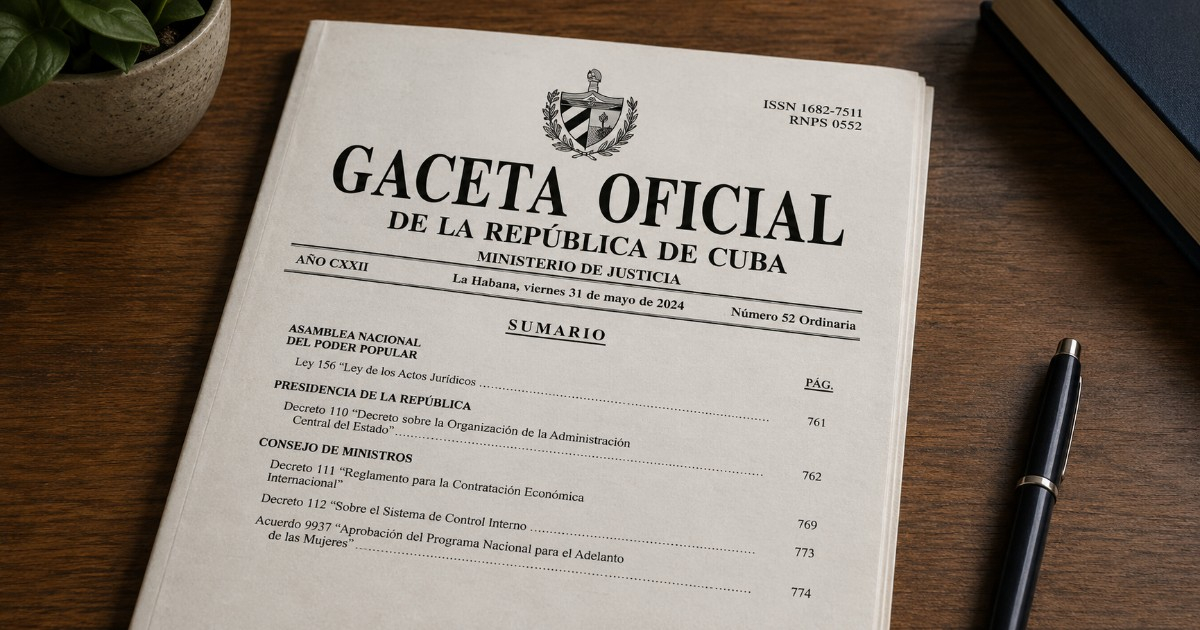
The decision is recorded in Official Gazette No. 52 Ordinary of 2026 through the , signed by Minister Alberto López Díaz.
The new pricing schedule updates the prices of over a hundred services provided by the National Office of State Inspection (ONIE), the agency responsible for overseeing the safety and quality of food and beverages in Cuba.
The revision involves significant increases compared to the rates currently in effect starting in 2024. In some of the most commonly used analyses, prices nearly double.
For example, the determination of pH by potentiometry increased from 97.44 Cuban pesos to 194.88 CUP, while the determination of alcohol content by pycnometry rose from 97.61 CUP to 195.21 CUP.
The most expensive services continue to be audits, which now amount to 4,935.85 CUP, followed by consulting through conferences, at 2,140.86 CUP. Fees for consulting services, specialized courses, and other technical services related to food quality control are also on the rise.
Among the laboratory analyses included in the update are microbiological tests to detect Salmonella, Escherichia coli, and Listeria monocytogenes, as well as physicochemical evaluations and sensory controls used by food and beverage producers.
The resolution replaces the regulations approved in 2020 and 2024, which .
According to MINAL, the update responds to the , a provision that mandated the review of wholesale prices across all state agencies following the monetary ordering process.
The measure comes in a context marked by persistent inflation, rising production costs, and the challenges faced by both state-owned enterprises and the private sector in ensuring food supply.
The ONIE has six accredited laboratories in the country and plays a key role in the health certification of food products, a requirement that both state and private producers must meet to market various goods.
The increase is particularly significant for small and medium-sized enterprises, whose share within the food sector has grown in recent years. In January 2026, Minister López Díaz reported that MINAL maintained over 4,000 contracts with private companies, and that these production linkages had contributed more than 68,000 tons of food during 2025.
With the new rates, the cost of meeting the quality and safety controls required by the State will now be higher for all parties involved in food production in Cuba.
Filed under: