
Related videos:
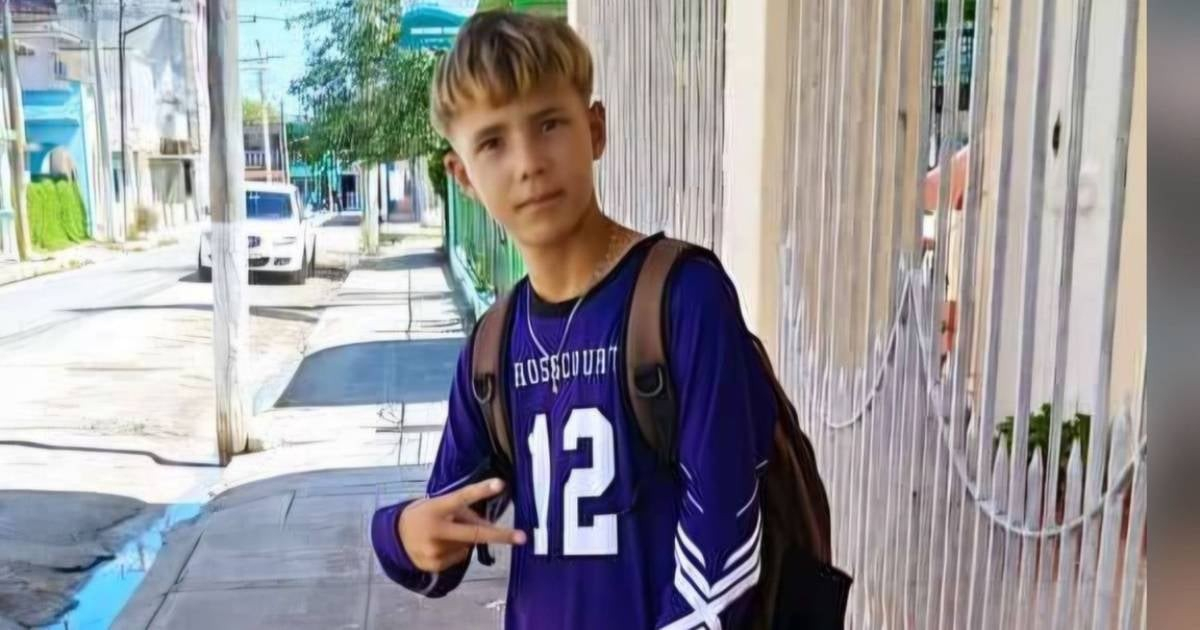
The United States Department of State demanded on Tuesday the immediate release of Jonathan David Muir Burgos, the 16-year-old Cuban teenager held in a maximum-security prison in Cuba, marking three months since his incarceration.
Riley M. Barnes, Assistant Secretary of State for Democracy, Human Rights, and Labor, issued the statement from the official @StateDRL account of the Department of State, turning the demand into an institutional position of the U.S. government.
"Today marks three months since Jonathan David Muir Burgos, 16 years old, was sent to a maximum-security prison in Cuba, allegedly for participating in a protest. He needs urgent medical attention and has not received it. No person — especially no child — should be imprisoned for their political or religious views. We call on the Cuban regime to immediately release him and all unjustly detained political prisoners," wrote Barnes in the official statement from the Department of State.
Jonathan was arrested on March 16, 2026 when he went with his father to a police summons in Morón, Ciego de Ávila, days after the protests on March 13, triggered by the prolonged blackouts, food shortages, and the economic crisis.
On April 2, the Municipal Prosecutor's Office of Morón ordered his pretrial detention and charged him with the crime of "sabotage," an offense in Cuba that can carry a sentence of up to 10 years in prison.
Despite being a minor, the regime transferred him to the Canaleta prison in Ciego de Ávila, a maximum-security facility for adults, in violation of international standards for the protection of minors.
His family has reported that he suffers from severe dyshidrosis, infections, intestinal parasitism, and vasovagal crises without receiving appropriate treatment.
On April 24, the Inter-American Commission on Human Rights (IACHR) granted precautionary measures in favor of Jonathan through Resolution 30/2026, considering that his life, integrity, and health were at risk of irreparable harm, and demanded that the Cuban state ensure him medical care, dignified conditions, and access to family members and lawyers.
The regime attempted to counter the allegations by disseminating images of the young man playing the piano in prison, but his father, the evangelical pastor Elier Muir Ávila, denounced that it was a manipulation and that the minor was deceived into having those photographs and videos taken without his consent.
The young man's mother, Minervina Burgos López, also publicly pleaded with the regime for his release, rejecting the images disseminated by the official media.
The case of Jonathan is not isolated. Cubalex documented at least 16 arrests linked to the protests in Morón, including four adolescents. Christian de Jesús Crespo Álvarez, also 16 years old, was similarly detained in Canaleta.
International pressure has been consistent: Congressman Mario Díaz-Balart demanded his release on April 28, a Member of the European Parliament denounced his imprisonment on April 23, and Freedom House added its voice to the call on May 16. Amnesty International has also called for his release.
Jonathan turned 17 years old imprisoned in Canaleta, becoming the most visible symbol of the Cuban regime's repression against minors following the protests in March 2026.
Filed under: