
Related videos:
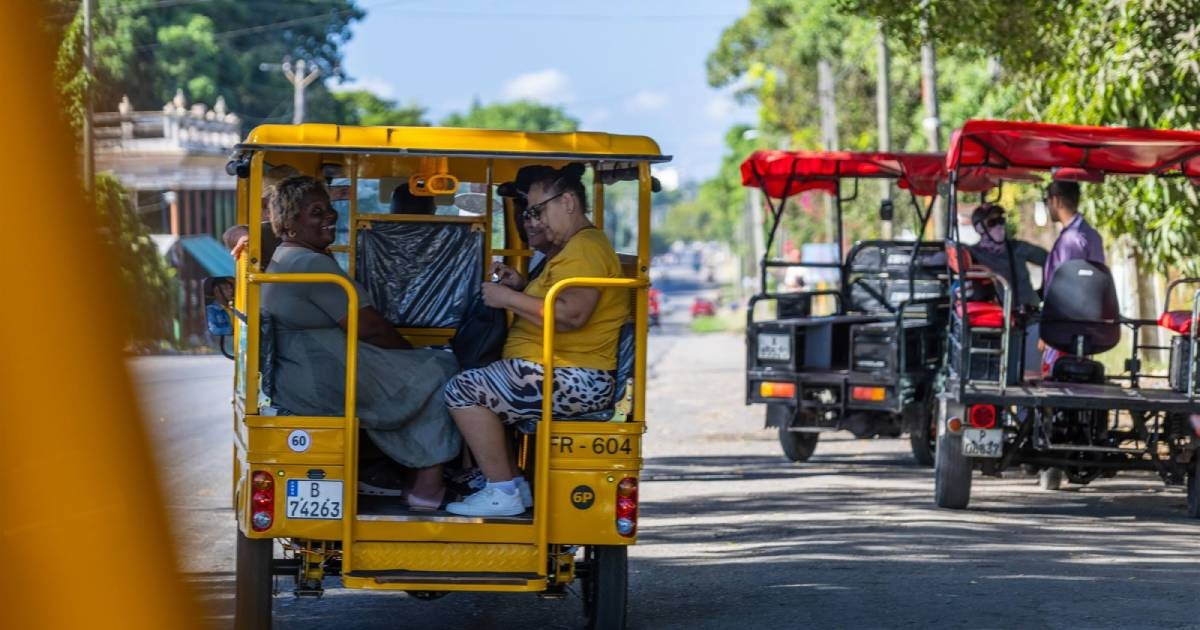
The rates for private tricycles in Matanzas will decrease after local authorities held a meeting with owners and drivers to reorganize the service and set official prices for several of the most frequently used routes in the city.
The meeting held this Tuesday between representatives of the Municipal Government, the Communist Party, and private transporters comes just a few days after users reported a significant increase in prices amid the public transportation crisis.
Until last week, some tricycles were charging 300 pesos for the ride to Peñas Altas and 150 pesos to the Bus Terminal. With the new agreed-upon rates, those amounts will be reduced.
According to journalist Yuni Moliner and confirmed by Radio 26, the established prices will be 250 pesos between Preuniversitario and Peñas Altas; 125 pesos from Preuniversitario to the Terminal; 125 pesos between Preuniversitario or the Cathedral and Versalles; and 150 pesos between Preuniversitario and Faustino Pérez Hospital.
The drivers had justified the recent increases due to the rising costs of batteries, spare parts, and other necessary supplies to keep the vehicles operational, in a context marked by the depreciation of the Cuban peso and the constant rise of the dollar in the informal market.
Beyond the rates, the meeting served to address the situation of a sector that has become a key component of urban mobility in Matanzas.
The authorities have committed to expedite the legalization of electric and combustion tricycles, taking advantage of an exceptional provision from the Ministry of Transportation that allows for processing operating licenses using the chassis number for vehicles that do not yet have official registration.
The creation of representatives for taxi stands was also announced, along with the initiation of the process of unionizing transport workers—a measure aimed at formalizing an activity that has experienced rapid growth in recent years.
Another agreement provides for the participation of some tricycles in prioritized services for Public Health and the Electric Company, as well as keeping drivers informed about the electric vehicle charging station projects being developed in the province.
The importance of these decisions lies in the dependence that thousands of people from Matanzas currently have on tricycles for transportation.
The decline of state transportation has left these private vehicles as one of the main mobility alternatives in the city. In recent months, numerous urban and intermunicipal routes have reduced or suspended operations due to a lack of fuel, spare parts, and available buses.
Given this reality, tricycles have shifted from being a complementary option to becoming an essential service for a significant portion of the population.
The authorities and the transport operators agreed on the need to maintain dialogue to seek a balance between the economic sustainability of the service and the users' ability to pay, increasingly affected by inflation and the economic crisis that the country is experiencing.
Filed under: