
Related videos:
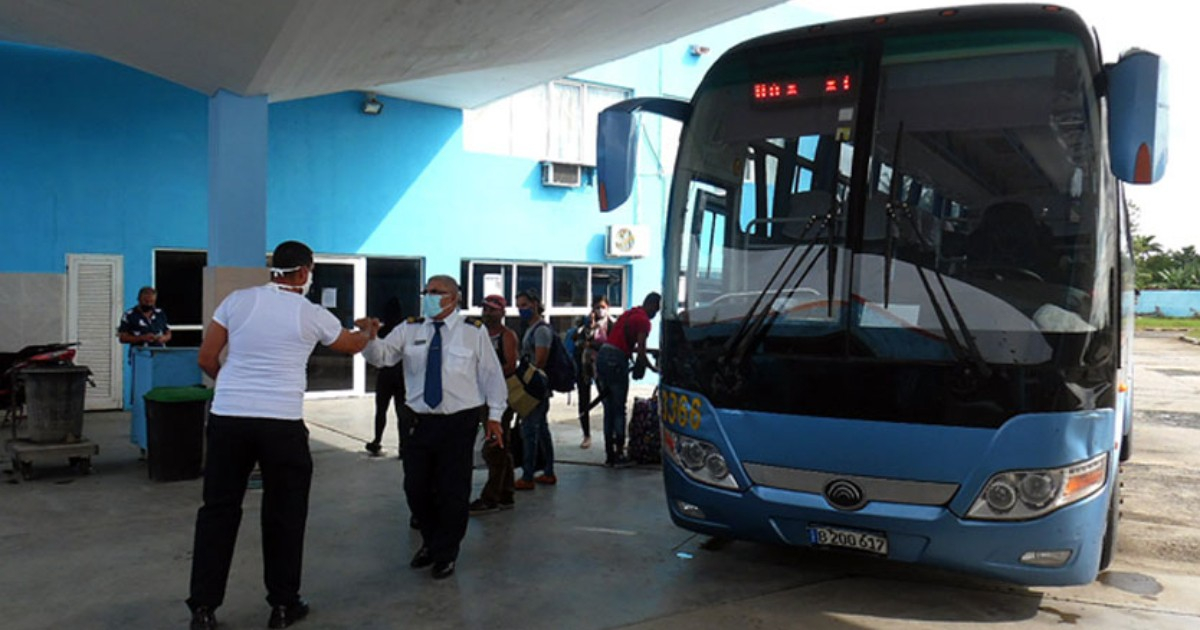
Ciego de Ávila will implement a new interprovincial transportation reservation system that eliminates open ticket sales and centralizes seat assignments in a provincial working group, according to announced by the Deputy Minister of Transport, Luis Ladrón de Guevara, during a meeting held last Tuesday in the province.
The new scheme is part of a national measure that comes into effect on June 18, the date on which the sale of tickets through the Viajando application for national travel will also be suspended.
Unlike the previous system, the spots will not be sold openly or through that application. "The allocation will be controlled by the corresponding working group, and the sale will be finalized subsequently through the Empresa Viajero, at its agencies and offices," specified the official newspaper Invasor.
The procedure will give utmost priority to what are known as "sensitive social cases": medical appointments, surgeries, health tourism, and the deaths of family members.
Ladrón de Guevara insisted that "there are no movement restrictions for the population," although he acknowledged that "the availability of interprovincial transportation will be reduced."
"People can travel whenever they need to. What will happen is a reduction in the capacities offered by domestic passenger routes," stated the deputy minister.
In the case of the railway, it is expected that a national train will run through the province in both directions every two days, with a defined capacity quota for the residents of Avilés.
As a new feature, the territory will have direct travel options to Isla de la Juventud, a convenience that previously did not exist for those needing to reach that destination.
The Medibus services and other health-related services remain unaffected and are even being strengthened, according to authorities.
The announcement comes in the context of a structural collapse of transportation in Ciego de Ávila: in March of this year, only two out of 135 state bus routes were operational in the province, and all seven train routes were halted due to a fuel shortage.
On a national scale, the decline is equally severe. By December 2025, only 219 out of the 558 interprovincial buses in existence were still operational, and Ómnibus Nacionales closed 2024 operating only 36% of the trips it made in 2019.
The most advanced case of the new system is Villa Clara, where a provincial commission will decide who can travel starting June 18. The representative of the Ministry of Transportation in that province, Juan Carlos Ferriol, confirmed that the procedure "will be similar to that applied during the COVID-19 pandemic."
The measure has generated backlash on social media. “The priorities will be the same as they are everywhere, the law of the strongest (MONEY),” questioned one user, while another internet user sarcastically remarked, “Soon we’ll have to ask for permission to go to the bathroom.”
Filed under: