
Related videos:
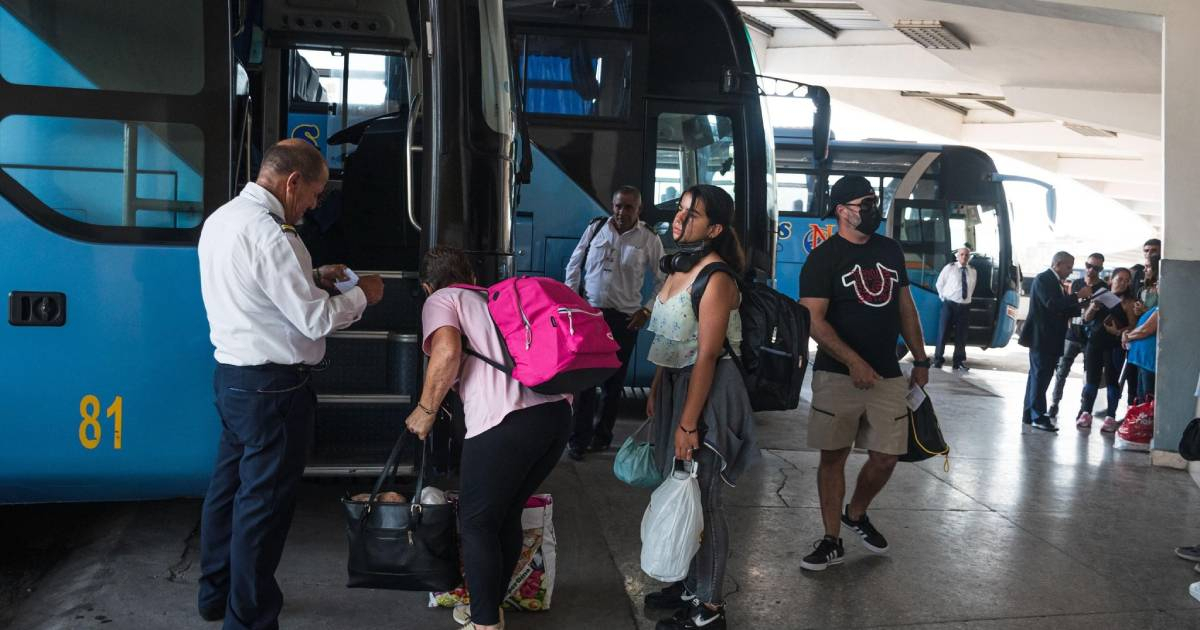
Transportation in Matanzas is operating under severe restrictions due to a fuel shortage, a situation that has rendered urban and intermunicipal routes inoperative and minimized national services.
Roberto Bernal Villena, the provincial director of Transport, informed the official newspaper Girón that in national transportation, only the Havana-Matanzas route remains operational with one daily departure, and the train to the eastern part of the country that passes through the province operates every eight days.
On an exceptional basis, a bus is managed weekly to Santiago de Cuba to transport specific cases related to illnesses or other situations assessed by the Provincial Transportation Directorate.
Regarding intermunicipal and urban transport, there are no authorized routes. In the city of Matanzas, only the panoramic bus covering the Ecil-Canímar route operates irregularly, along with an articulated bus intended for transporting healthcare workers from Canímar to the Faustino Pérez hospital, which also accommodates other passengers.
The authorities reiterated the directive that all state vehicles must stop and pick up passengers at designated stops.
To supervise compliance with this measure, patrol officers were increased at four locations with a high concentration of people in the provincial capital.
Currently, around 25 electric tricycles are in service in Matanzas and Cárdenas, with the possibility of having more from the private sector joining them.
In addition, priority is given to state vehicles that are empty to assist in the transport of food, and soon, four electric tricycles from the Postal Service will be incorporated for bread distribution.
The healthcare sector is among the priorities, with the maintenance of nurse transfers every three days, medical shifts to Havana three times a week, and the transportation of Pediatric Oncology patients to the capital twice a week, amid a scenario marked by an energy crisis and fuel shortages.
The transportation crisis in Matanzas has reached a critical point that particularly impacts those who support one of the most strategic sectors of the country: tourism workers.
Thousands of hotel employees and associated services—key to the national economy—face a daily odyssey to reach their workplaces and return home, in a context where system failures are no longer isolated incidents but part of the routine.
Filed under: