
Related videos:
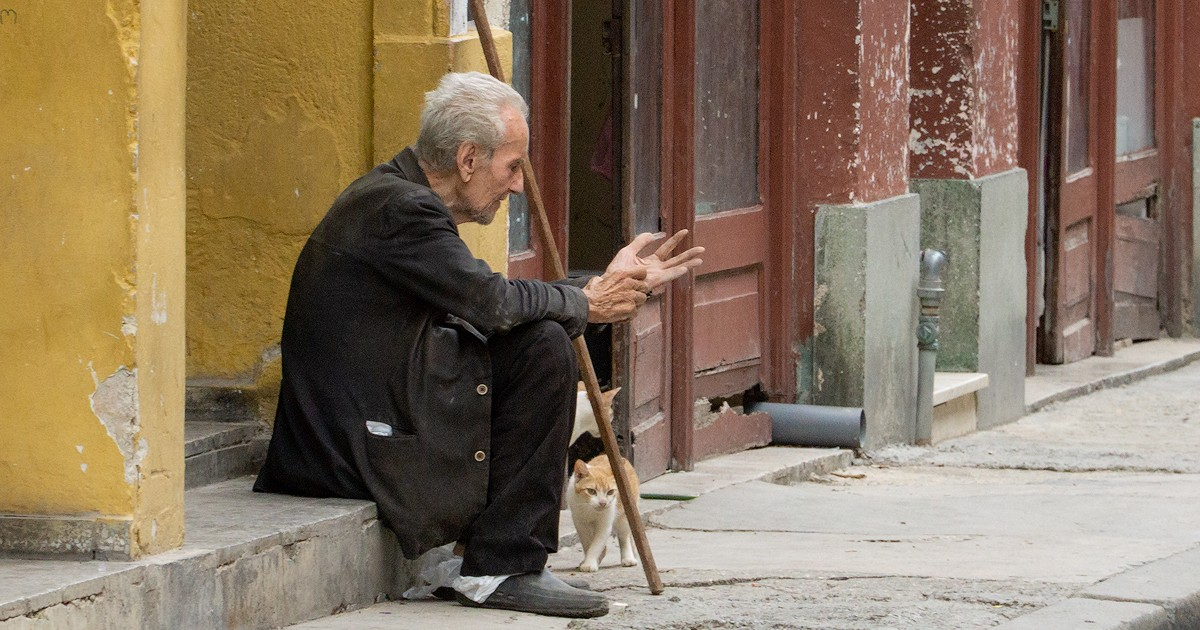
A report by the official media outlet Cubadebate about the Family Care System (SAF) triggered a wave of criticism on social media, where Cubans both on and off the island rejected the idyllic portrayal the article presented of a program that, according to complaints, barely survives amid scarcity, corruption, and state neglect.
The article from Cubadebate described the SAF as a network of about 1,445 units that serves more than 76,000 vulnerable individuals across the country, providing daily menus of five dishes—rice, protein, soup, root vegetables, salad, and dessert—along with bolero gatherings, collective birthday celebrations, and integrated medical care.
The response to the post on Facebook was immediate and forceful. "More inflated information," summarized one commenter on Facebook, a phrase that became the popular epitaph of the report.
"On the corner of my house, there's one... protein? dessert? birthday? Seriously? That looks more like a cave than a place to have lunch; let's not even talk about hygiene, and it's really sad because those who are there have no other option," wrote another user.
Critics pointed to a radical gap between the official narrative and everyday reality. "It seems that those who write the articles for Cubadebate do not live in Cuba or have never seen a SAF; they are all empty, providing none of the services for which they were created," denounced another commentator.
Several pointed out specific cases: "The elderly in Bejucal are dying of hunger" and "The situation in Güines is a national disgrace." A person with a visual impairment stated that they had never heard of the program, and another user mentioned that their 20-year-old son with a disability was also unaware of its existence.
Corruption was another recurring target. "What comes in better gets stolen," wrote a user. It's not an unfounded accusation: Granma itself reported in March 2026 that a director of Gastronomy and an administrator of a senior dining facility were diverting rice and oil meant for the most vulnerable.
The very report from Cubadebate, despite its triumphant tone, revealed signs of the real crisis. The SAF 0204 Villanueva, located in Boyeros, has been cooking with firewood for five months due to a lack of liquefied gas. Its director, Bárbara Mediaceja Hernández, admitted that the private businesses in the neighborhood stopped collaborating since December 2025: "They say they are subject to many inspections and are hit with numerous fines."
The context surrounding the SAF is one of structural collapse. According to the Cuban Observatory for Citizen Auditing, 79% of those over 70 years old are unable to have three meals a day, and 99% of retirees acknowledge that their pension does not cover their basic needs, which has been set since September 2025 at 4,000 pesos - less than 10 dollars at the informal exchange rate - compared to the 30,000 pesos estimated to be necessary for basic monthly nutrition.
The program survives in part thanks to external donations: the World Food Programme delivered 106 tons of canned meat to the SAF of Villa Clara in May 2026, and the government of the Canary Islands donated 75 tons of canned chicken in April. The regime itself admitted in March 2026 that “there are no resources to assist vulnerable people”.
"Stop publishing empty words and conduct field reporting; go to the place, investigate, see with your own eyes so that one day you do not regret having written so many lies, which will also be archived as evidence," demanded a commentator, summarizing the frustration of those who see the official report as a mockery of the Cuban elderly facing hunger daily.
Filed under: