
Related videos:
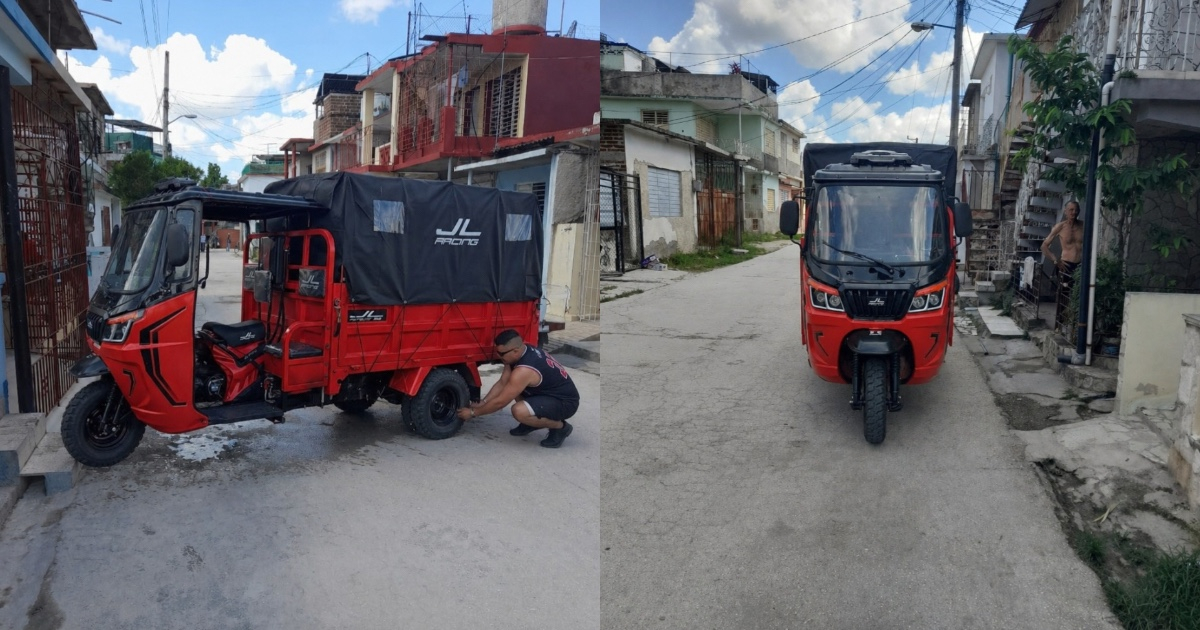
Claudia Y., a young Cuban originally from Holguín and currently residing in the United States, lost 6,000 dollars while trying to purchase an electric tricycle for her relatives in Cuba, in a scam that combined WhatsApp hacking with AI-manipulated images to simulate a delivery that never took place.
The young woman contacted a seller through social media whose profile appeared legitimate. She was drawn in by a condition that fostered trust: payment would only be made once the tricycle was in the hands of her family in Cuba.
"We reached out to someone on social media whose profile looked truly impressive because it stated that payment was made upon delivery of the electric scooters in Cuba," Claudia Y. explained in an interview with journalist Tania Costa.
The scammers first contacted the relatives in Cuba—elderly individuals with limited digital knowledge—and requested personal information, identification cards, addresses, and photos of the front of their houses, supposedly to process the legal documents for the vehicle and easily locate the houses for delivery.
In that process, they sent a verification code via WhatsApp under the pretext that it was the number for the vehicle's plate. The family member forwarded it without suspecting anything and lost control of their account. From that moment on, the scammers contacted Claudia Y., pretending to be her family member through text messages. Given the communication difficulties with Cuba, she suspected nothing.
The key to the deception was a photograph manipulated with artificial intelligence. The criminals took the image of the outside of the house that the relative had sent previously and inserted the tricycle to make Claudia Y. believe it had been successfully delivered. "They placed the picture of the scooter in front of the house. Even a familiar neighbor appeared in the photo. And at that moment, I paid the $6,000," she recounted.
The scammers deliberately took advantage of the energy and connectivity crisis in Cuba to evade any real-time verification. "They use artificial intelligence because in Cuba there are so many deficiencies with blackouts, internet access, electricity, with everything; making video calls is practically impossible," he pointed out.
The scam was discovered by chance. Claudia Y. returned home after a medical appointment with her three-month-old baby and wrote to her mom congratulating her on the tricycle. Her brother-in-law replied that they were still waiting for the delivery. When she called her father-in-law, who was supposed to receive it, he confirmed that nothing had arrived.
"You sent us a photo showing that the motorbike was at the house, that everything was fine, that they were very happy, that we were having coffee. And that’s when we realized we had been scammed," he recalled.
The payment had been made in two transfers of 3,000 dollars each to different accounts. Claudia Y. and her husband conducted their own investigation and identified two individuals linked to those accounts: one associated with a trucking company in the United States and the other in Miami. Both of them had a Cuban accent. All the information was provided to the police and the bank, but by the time of the interview, the money had not been recovered.
This type of fraud, which combines WhatsApp hacking and AI-generated images to simulate deliveries of motorcycles and solar panels, has been increasingly documented in 2026.
The Banco Bandec warned in April 2026 about the hacking of WhatsApp through SMS verification codes, stressing that no legitimate process requires sharing that code.
A Cuban in Miami reported a similar scam of $1,200 in September 2025 while trying to buy an electric motorcycle for his sister.
"It hurts me to think that so many people fall for this scam by unscrupulous individuals who take advantage of the needs of Cubans, the need to be able to help family members," said Claudia Y., who warned: "Social media is not a formal platform for doing any kind of business."
Filed under: