
Related videos:
The Russian Deputy Foreign Minister, Alexander Alimov, acknowledged this week that Moscow's efforts to channel fuel shipments to Cuba through the UN humanitarian agency have failed, according to the official Russian media outlet Vzgliad.
"The idea that fuel suppliers operate under the auspices of the UN through OCHA has not yet been resolved," the diplomat stated on June 16. He also noted that the international organization "could have done more" to support the island.
Alimov emphasized that the UN Office for the Coordination of Humanitarian Affairs (OCHA) requested only 94 million dollars in aid for Cuba, a figure notably lower than that allocated to other crises around the world, and even that amount is only funded at 34%.
In mid-May, the OCHA representative Edem Wosornu informed journalists about ongoing negotiations for oil shipments to Cuba for humanitarian purposes, but those efforts did not materialize.
The statements from the Russian deputy minister come amid the worst energy crisis that Cuba has faced in its recent history. Since late 2025, the island has been virtually without imported crude oil. The crisis worsened after the capture of Nicolás Maduro and the subsequent disruption of Venezuelan and Mexican shipments in January 2026.
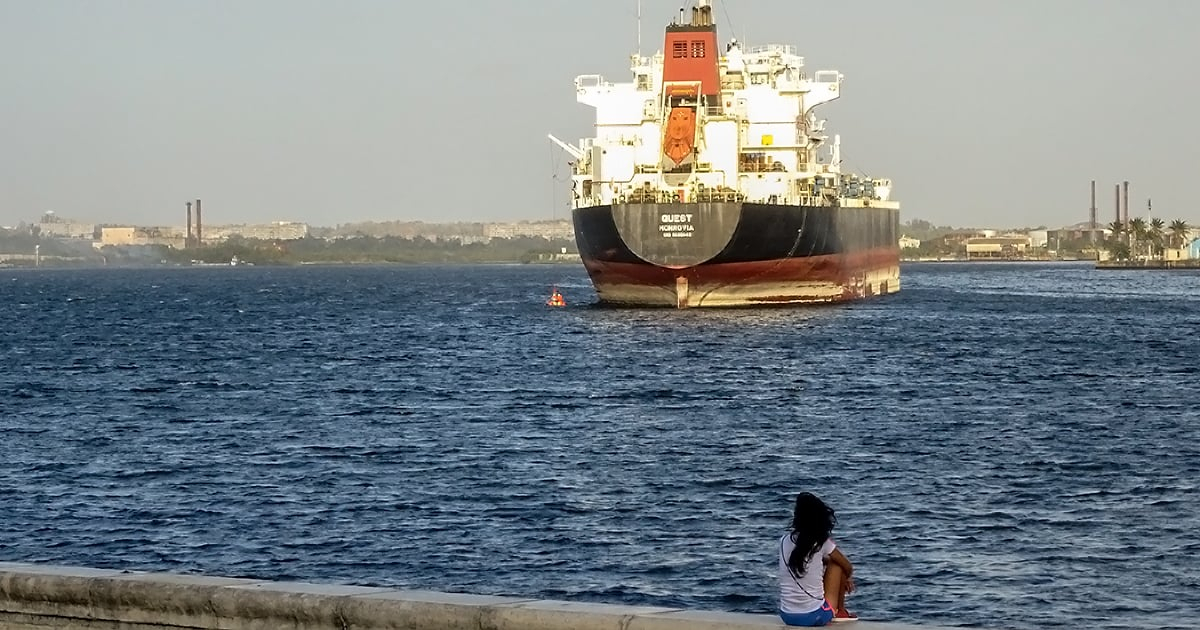
The last shipment of fuel that arrived on the island so far in 2026 was from the Russian tanker «Anatoly Kolodkin», which docked in Matanzas on March 31 with 100,000 metric tons of crude oil, enough for just between seven and ten days of national consumption.
On May 14, the Cuban Minister of Energy Vicente de la O Levy publicly acknowledged that Cuba has completely depleted its reserves of fuel and diesel. The island requires between eight and ten fuel tanker ships per month to meet its demand, but since December 2025, it has received only one.
A second Russian vessel, the "Universal," loaded with 251,000 barrels of diesel, drifted in the Atlantic for weeks without being able to reach its destination, blocked by sanctions from the United States, the European Union, and the United Kingdom. The Russian tanker Universal accelerated and moved away from Cuba amid a supply crisis.
The pressure on supply routes has also intensified in the judicial arena. The captain of the ship "Motor Tanker Bella 1," the Georgian citizen Avtandil Kalandadze, pleaded guilty on June 13 before a U.S. court for refusing to obey orders from the Coast Guard, becoming the first captain of the ghost fleet to plead guilty before U.S. authorities.
Moscow, for its part, recently assured that it has not given up on its commitment to Cuba.
At the Saint Petersburg International Economic Forum held in early June, Russian Deputy Prime Minister Dmitri Chernishenko announced that about 90 Russian companies are interested in investing in Cuba despite external pressure, with plans exceeding 1 billion dollars in sectors such as energy, mining, tourism, and infrastructure.
Meanwhile, the last U.S. license allowing operations with Russian oil expired on June 17, further narrowing the margin for Russian crude to reach the island through legal means, and leaving Cuba in a situation of almost exclusive dependence on direct shipments from Moscow, which in turn face the active blockade from Washington.
Filed under: