
Related videos:
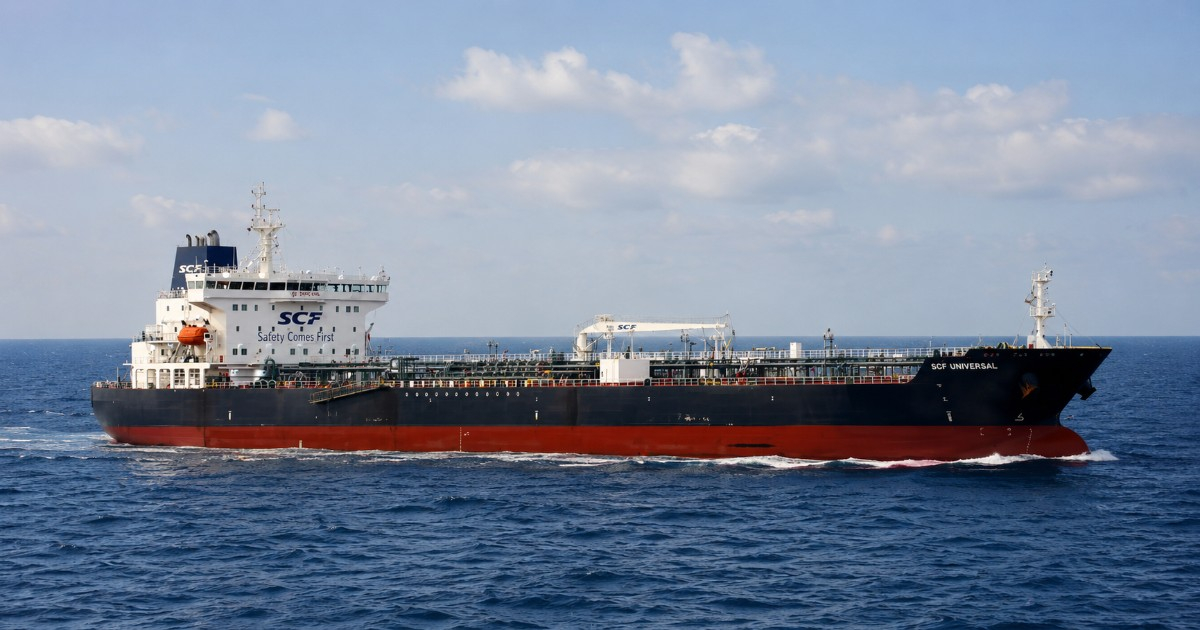
The Russian tanker Universal, which transports between 250,000 and 270,000 barrels of diesel, accelerated this Sunday from 1.3 knots to 10.5 knots and turned towards the South Atlantic, moving away from Cuba in the first clear operational signal of a possible concrete destination after weeks of erratic navigation.
According to data from the marine tracking of the vessel cited by researcher Jorge Piñón, the sudden change in speed and course represents the first clear operational signal of a possible specific destination, although the vessel's automatic identification system continued to show the destination as "FOR ORDER," meaning no assigned port of arrival.
The maritime tracking system estimated an arrival at the destination for June 7, but that projection was deemed unreliable until the ship declares a specific port.
El Universal had left the Russian port of Vysotsk on January 18 and crossed the English Channel on April 8 escorted by a Russian frigate, with an estimated arrival in the Caribbean on April 29.
However, the ship spent weeks sailing at minimal speed or practically adrift in the North Atlantic, about 1,600 kilometers from Cuba, without declaring a destination.
On April 27, it was moving at just 3.4 knots on a northwest course; on May 13, it reduced its speed even further, deepening the uncertainty about its final destination.
El Universal is sanctioned by the United States, the European Union, and the United Kingdom, and it is linked to Sovcomflot, part of the so-called Russian "shadow fleet" used to evade Western restrictions on oil trade.
The failure of the shipment to arrive exacerbates an energy crisis that the Cuban government itself has acknowledged as catastrophic.
The Minister of Energy and Mines, Vicente de la O Levy, admitted on May 14 that the island had no reserves of any kind: "We have no fuel, no diesel, only associated gas."
Cuba needs at least eight fuel ships per month to sustain electricity generation, but in April 2026, only one arrived.
The only Russian shipment that has successfully reached the island this year was that of the vessel Anatoly Kolodkin, which docked in Matanzas on March 31.
Shipments from Venezuela were halted in November 2025, and Mexico practically suspended its supplies in January 2026, leaving Cuba with no alternative sources of supply.
The U.S. regulatory framework also complicates any deliveries to the island. The Office of Foreign Assets Control issued the General License 134A on March 19, which permits certain transactions with Russian oil but explicitly excludes Cuba, and remains in effect until June 17.
The electrical deficit in Cuba exceeded 2,000 MW during peak demand hours this month, and on May 14, a massive blackout left seven out of fifteen provinces without electricity, from Ciego de Ávila to Guantánamo, as reported by Univisión.
If El Universal confirms a destination other than Cuba, the island would be left without immediate prospects for receiving the fuel it needs to sustain electricity generation in the coming weeks.
Filed under: