
Related videos:
The Cuban regime announced on Thursday the authorization of private banking on the island for the first time since the nationalization of the financial system after 1959, during an extraordinary session of the National Assembly where Prime Minister Manuel Marrero Cruz presented a package of 176 proposals for economic and social transformations to the deputies gathered at the Palace of Conventions in Havana.
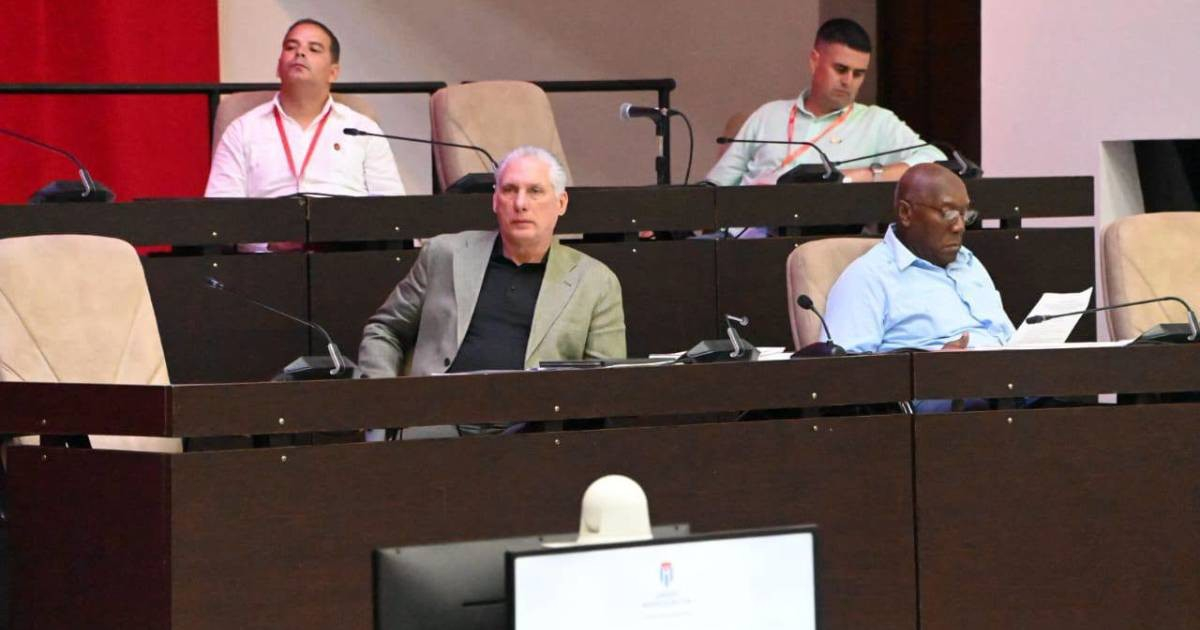
The session, broadcasted by Canal Caribe, featured the presence of Miguel Díaz-Canel in his capacity as the first secretary of the Communist Party and president of the Republic, along with participation via videoconference from Raúl Castro, who was introduced as the “leader at the forefront of the Revolution.”
According to the presented measures, private banking will operate under the supervision of the Central Bank of Cuba, on equal regulatory terms with state banking, marking a historic shift in a financial system that the State has controlled absolutely for more than six decades.
Among the financial reforms included in the package are the creation of non-banking financial institutions with private capital—either national or foreign—for the provision of microcredits, the opening of foreign currency accounts without prior administrative authorization, and the establishment of a regulatory framework for virtual assets and financial technologies.
The regime also announced the formalization of remittances through a private channel via the figure of "last mile payment agent," the removal of limits on bank transfers and withdrawals for individuals and legal entities, and the granting of a license to Transfermóvil as a non-banking financial institution.
Díaz-Canel justified the measures with an argument that contrasts with decades of official discourse: "Cuba needs more agile banks, more digital, closer to the people, and more useful for those who produce, export, import, invest, or start businesses."
The official also specified that foreign accounts for companies that import, export, or provide global services will be allowed, a measure unprecedented in the Cuban financial system since 1959.
The reforms arrive at the worst economic moment for the island since the Special Period of the 1990s. By May 2026, more than 50% of the ATMs in Havana had stopped working, and Cubans were enduring lines of four to six hours at bank branches to collect pensions or carry out basic transactions.
The most recent blow to the Cuban financial system occurred on June 3, when Visa and Mastercard suspended operations on the island through FINCIMEX, as a result of Executive Order No. 14404 signed by Donald Trump on May 1, 2026, which introduced secondary sanctions for foreign financial institutions linked to GAESA and FINCIMEX.
ECLAC projects a 6.5% decline in Cuba's GDP in 2026, with a cumulative contraction of 10.3% over the two-year period of 2025-2026.
The package of 176 proposals, grouped into 23 fundamental axes with 69 additional recommendations from the Political Bureau, was endorsed the previous day in the Extraordinary Plenary of the Central Committee of the PCC, where Raúl Castro supported the measures and signed the document. Castro himself warned, in a message read during that plenary, that "as important as the approval of these transformations is their proper and timely implementation," a sign that skepticism about the actual execution of the reforms also exists within the regime itself.
Filed under: