
Related videos:
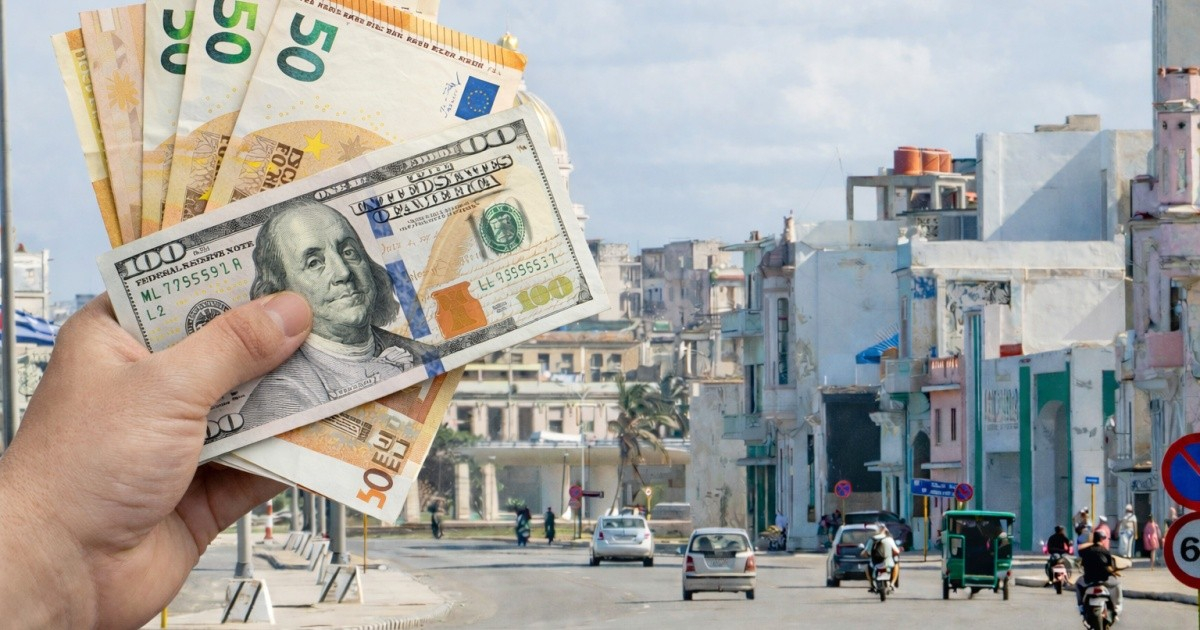
The dollar reached 685 Cuban pesos in the informal market this Thursday, according to real-time data from elTOQUE updated at 11:17 am, while the Communist Party of Cuba held an extraordinary plenary session to announce reforms that were met with derision and skepticism by the Cuban people.
The figure represents five pesos more than the close on Wednesday, when the dollar reached 680 CUP after a consecutive two-day increase.
Since May closed at 580 CUP, the Cuban peso has accumulated a depreciation of 105 pesos against the dollar, a decline of 18.1% in just 18 days of June.
The euro did not lag behind: this Thursday, it is quoted at 785 CUP, nine pesos more than the previous day, and it has accumulated a monthly drop of 125 pesos -18.9% - since the 660 CUP close at the end of May.
The gap between the informal market and the official one is becoming increasingly outrageous: the Central Bank sets the dollar at around 558 CUP, which is more than 127 pesos below what any Cuban pays on the street.
Analysts from the Currency and Finance Observatory of elTOQUE warn that internal inflationary pressures and the scarcity of foreign currency in formal channels continue to drive the escalation in the parallel market, with no signs of reversal in the short term.
All of this occurs while the regime holds meetings and announces changes.
On Wednesday, the Central Committee of the PCC met in an extraordinary plenary session chaired by Miguel Díaz-Canel to validate a package of over 20 economic and social reforms.
Raúl Castro participated via video conference and endorsed the measures with his signature, according to government reports.
Roberto Morales Ojeda, a member of the Political Bureau, opened the session with a phrase that encapsulates the spirit of the meeting: "The economic and social transformations we are analyzing here are aimed at preserving the Revolution and its achievements."
The Prime Minister Manuel Marrero presented the proposals organized into six key areas: economic management, municipal autonomy, business autonomy, agricultural recovery, foreign trade, and foreign investment.
Among the measures are the reduction of ministries from 27 to 21, greater salary autonomy for state enterprises, opening to investment from Cubans residing abroad, and the gradual replacement of universal subsidies with targeted assistance.
Marrero Cruz stated that the reforms "envisage a recognition of market mechanisms as instruments for the efficient allocation of resources," although he clarified that "they can only be driven by our own efforts," dismissing any external support.
The citizens' reaction was immediate and strong.
Cubans responded with massive skepticism on social media: "The same dog with different collars," wrote one user. Others called it "Ordering 3.0," referring to the failed monetary restructuring of 2021 that caused inflation to soar. "This is a series that has several seasons; it's unclear which one is the last," summarized another commenter.
The economist Pedro Monreal was more technical but equally devastating: without access to energy, foreign currency, technology, or external demand, the reforms are "unlikely" to be effective.
The context reveals everything: the session was held while protests shook Santiago de Cuba, Santa Clara, and Havana amid power outages lasting up to 22 hours a day, and on the screens of the meeting room, a Reuters ticker displayed the news that the United States would prevent two tankers carrying Russian fuel destined for Cuba from arriving.
This Thursday, the National Assembly is holding an extraordinary session at 2:00 PM to formally approve the "Proposals for Economic and Social Transformations," according to the announcement published in the Official Gazette.
The ECLAC projects a 6.5% decline in Cuba's GDP in 2026, which would make the island the worst-performing economy in Latin America for the second consecutive year.
Filed under: