
Related videos:
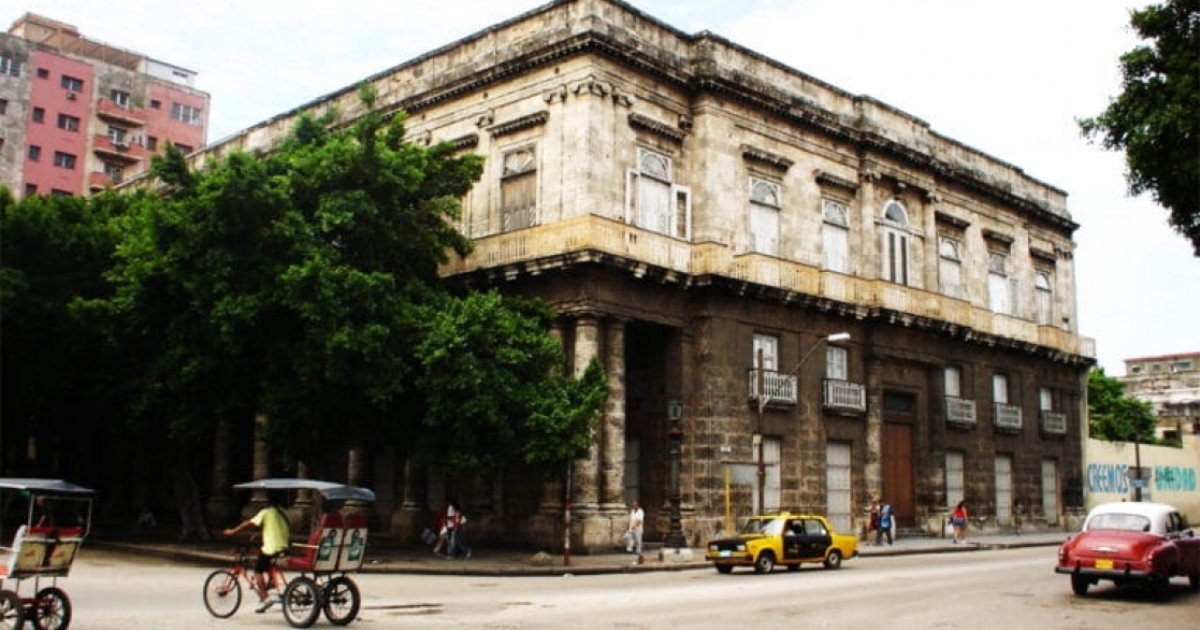
The Palacio de Aldama, regarded as the most architecturally significant civil work of the Cuban colonial period, faces an imminent risk of collapse that threatens to destroy the country's most important documentary heritage as well, according to a report by elToque.
The neoclassical mansion, built around 1840 and home to the Institute of Cuban History (IHC) since 1987, has endured decades of neglect that the regime has either refused or been unable to reverse.
But what was a chronic deterioration turned into an acute crisis earlier this year when a group of people stole 92 cedar beams from the roofs of the building by bribing a night guard.
"At the beginning of this year, a major theft occurred: a group of individuals took 92 cedar beams from the ceilings of the mansion. This has put the building in imminent danger of collapse and raised the real possibility of losing a significant portion of the immense documentary collection," reported an IHC worker on the condition of anonymity, fearing reprisals.
Workers at the center identified the culprits as members of the brigade that demolished the building of the Higher Institute of Design (ISDI), razed last March after years of deterioration and similar looting. The cedar beams, highly sought after in the informal market, can fetch up to 35,000 Cuban pesos each.
What is at stake is not just a historical façade.
The IHC houses more than 60,000 volumes including books, brochures, periodicals, and engravings, as well as complete collections of magazines such as Bohemia and Carteles, and newspapers like Diario de la Marina and Prensa Libre.
With the rainy season underway and the threat of hurricanes, workers warn that debris could fall directly onto the document storage facilities.
In the face of the state's inaction, it is the employees themselves who organize night watch shifts to protect the perimeter.
"They bribed one of the night guards and have left the mansion, which previously had structural issues, at risk of collapse. For several months now, we have been doing night watches to protect the perimeter," recounted another worker.
The history of institutional negligence is long.
In 2014, a repair of the Mendoza Theatre - the former assembly hall of the mansion - was carried out with such incompetence that the installed plaque collapsed a few years later, bringing down two levels of the Palace and destroying original frescoes and interior decorations that were irreplaceable.
The IHC should have moved to premises in the Cerro municipality, where the Communist Party's Transportation Unit used to operate, but that relocation has not taken place.
Meanwhile, the institution's website is down, its Facebook profile hasn't been updated since 2023, and its director, Rigoberto Santiesteban Reina, is unreachable.
The historian Mildred de la Torre Molina summarized the outrage of the academic community in a social media post: "Who is accountable for such a genocide? How long will we wait? When will their last pieces fall? And the heritage of their books and documents (...) are they not worth anything? It is nothing but shame."
The case of the Palacio de Aldama is not an exception, but rather part of a systematic pattern of destruction of Havana's heritage that the regime has neither been able to nor wanted to stop.
The capital sees the collapse of approximately 1,000 buildings each year; by the end of 2025, there were 185,348 properties in poor condition, and the collapses that year resulted in at least six fatalities.
Architect Abel Tablada criticized days ago that the regime invested "hundreds of millions" in isolated hotels while urban heritage is being destroyed.
The historian Jorge R. Ibarra expressed it with bitterness: "Many missed opportunities to recover the Palacio de Aldama. I wish there were still time, but these are matters of architecture more than miraculous that has endured much neglect (...) and, in recent times, a lot of vandalism that has taken advantage of that negligence to plunder this valuable work."
Filed under: