
Related videos:
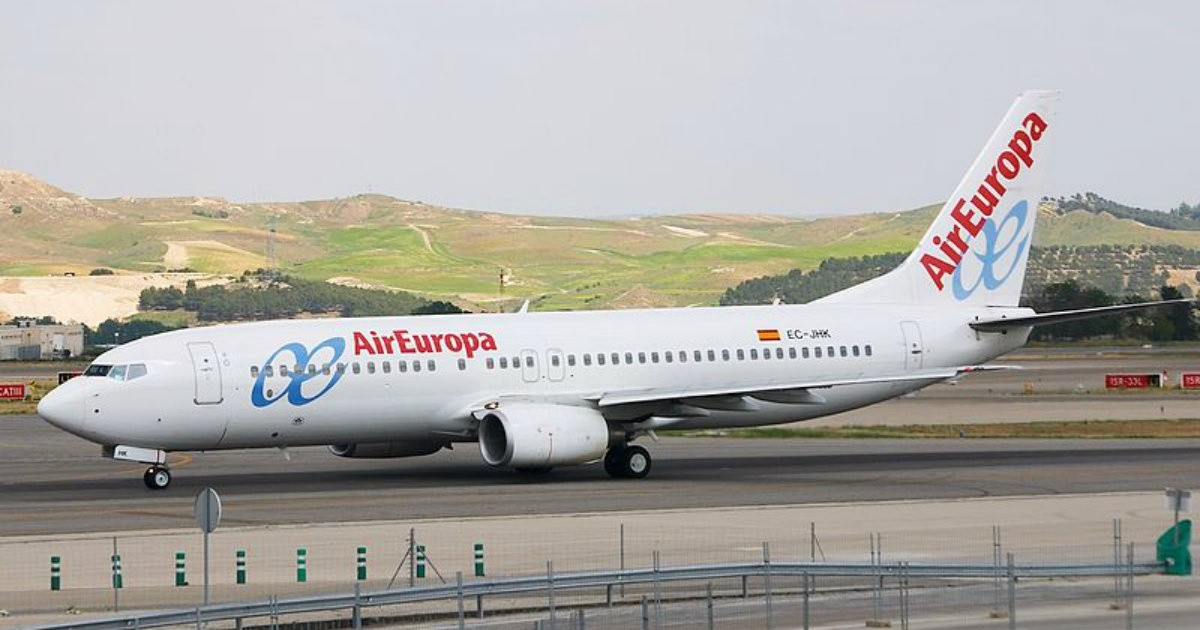
Air Europa announced this Friday that it will increase its weekly flights on the Madrid-Havana route to four starting in July, as confirmed by the company to the agency Europa Press.
The decision makes the airline the only direct air bridge between Spain and Cuba at a time when the island is experiencing its worst tourism crisis in decades.
The company currently operates three weekly flights—on Wednesdays, Saturdays, and Sundays—and the new service will add a fourth day starting next month.
The airline acknowledged that it "maintains continuous monitoring of the route's development, analyzing both its behavior and the existing demand."
The only Spaniard who endures
While Air Europa expands its operations, the other Spanish airlines have left Cuba one after another.
Iberia suspended its direct Madrid–Havana route on June 1, 2026, after gradually reducing its frequencies since April.
The company described the measure as a decision that "exclusively affects Cuba, due to its exceptional situation", and did not rule out a possible return in November if conditions improve.
World2Fly, part of the Iberostar group, operated its last flight on May 20, and Cubana de Aviación canceled its route to Spain on May 12, citing risks stemming from the Executive Order signed by the Trump administration on May 1, 2026.
So far this year, at least 11 international airlines have suspended flights to Cuba, resulting in more than 1,700 canceled flights.
The list includes Air Canada, WestJet, Sunwing, Air Transat, LATAM Perú, Magnicharters, Air France, Rossiya, Nordwind, and Turkish Airlines.
Exorbitant prices and a shortage of options
The drastic reduction in supply has driven prices to historic levels.
A one-way ticket from Havana on Air Europa can exceed 800 euros -in some cases up to 2,000 dollars-, while round-trip flights in June and July have reached nearly 4,000 euros.
From Madrid, only Air Europa and Air China (on its Beijing–Madrid–Havana route with two weekly flights on Wednesdays and Saturdays) offer direct connections to the island.
As part of recent operational adjustments, Air Europa has relocated its technical refueling stop on return flights from Havana: starting June 13, planes will stop in Punta Cana (Dominican Republic) instead of Santo Domingo, where they had been refueling since February 2026.
A crisis with structural roots
The operational trigger for the air exodus was NOTAM A0356/26, issued on February 9, 2026, which alerted to the unavailability of Jet A-1 fuel at nine Cuban international airports, including José Martí in Havana.
The alert has been extended until at least April 10.
The underlying cause is the interruption of Venezuelan oil supplies, which accounted for two-thirds of Cuban imports, compounded by the sanctions imposed by the Trump administration and the cessation of shipments from Pemex.
Cuba produces only about 40,000 of the 110,000 barrels per day that it needs.
The impact on tourism is devastating: in the first quarter of 2026, the island received just 328,608 international visitors, a drop of 55.8% year-on-year, with a hotel occupancy plummeting to 18.9%. The Meliá and Iberostar chains have also abandoned dozens of hotels on the island in compliance with U.S. sanctions.
Regarding its future planning, Air Europa warned that "the schedule we have planned starting in November is based on an initial plan that could be adjusted depending on these factors," leaving open the possibility of further cuts if the situation in Cuba does not improve.
Filed under: