
Related videos:
The Cuban regime authorized on Thursday the street vending of products —including coffee, cigarettes, and second-hand items— as part of a broad package of economic transformations approved in the Third Extraordinary Session of the National Assembly of People's Power (ANPP), held at the Palace of Conventions in Havana.
The Prime Minister Manuel Marrero Cruz presented to the deputies a document containing 176 proposals for transformations categorized into 23 fundamental axes, described by the government itself as the most extensive since the reforms of the VI Congress of the Communist Party of Cuba in 2011.
The session featured the telematic participation of Army General Raúl Castro, who supported the reforms, and the presence of President Miguel Díaz-Canel in the room.
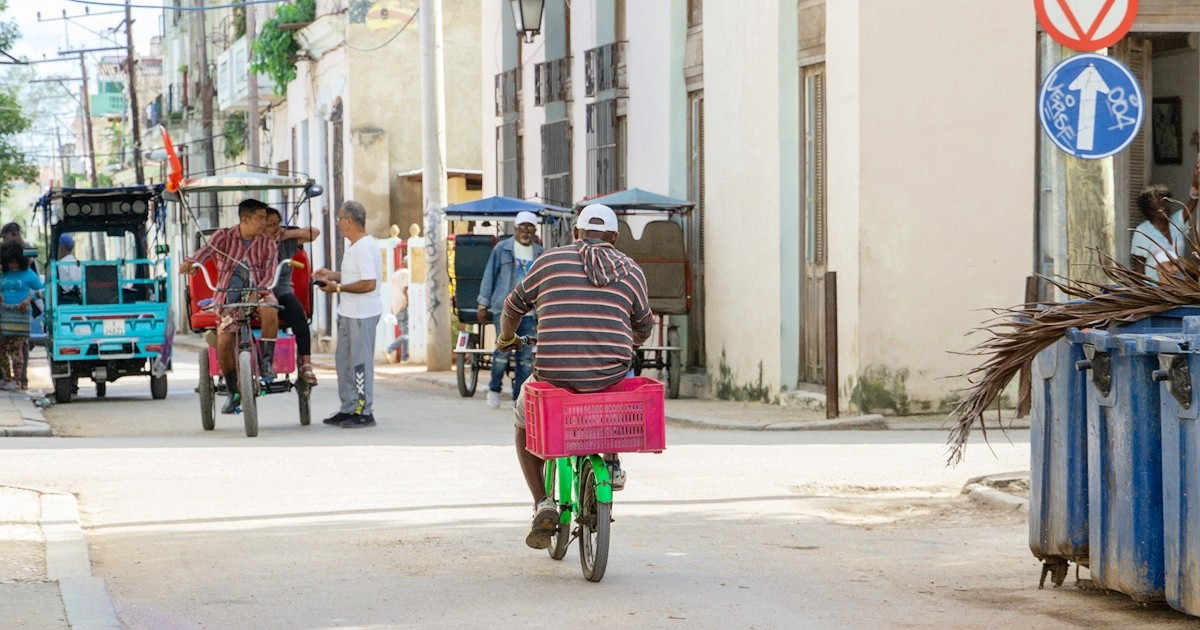
The authorization of street vending formalizes a practice that existed informally and has served as a lifeline for thousands of Cubans, particularly older individuals with minimal pensions.
The journey of this activity has been erratic: in 2017 the government eliminated the "carretillero" license and suspended the issuance of new licenses for various self-employment modalities.
In 2020, Resolution 13 formally reintroduced the position of "street vendor of goods" into the labor system, but with restrictions. More recently, Decree-Law 91/2024 established fines of up to 72,000 pesos for those who sell without a license.
Beyond street vending, the approved package includes other significant measures: the elimination of the cap of 100 workers for private mipymes, the authorization for Cubans residing abroad to invest on equal terms through Decree-Law 117/2026, and the reduction of the number of ministries from 27 to between 20 and 21.
It was also approved that municipalities can import, export, and manage foreign currencies without state intermediaries, and the salary scale in the state business system was eliminated, instead establishing a minimum wage linked to inflation levels.
Marrero Cruz framed the reforms as a response to "the most complex context the country has faced since the Special Period," attributing the crisis to U.S. sanctions that have disrupted fuel supply and sources of foreign currency income, although he also acknowledged errors and shortcomings of the government itself.
The prime minister presented the transformations under the guiding principle of "doing what is necessary to preserve what is essential," and emphasized that "they do not constitute a concession, but rather a sovereign adjustment of development tools to the specific circumstances of the country."
However, according to an analysis by Diario Las Américas, experts describe the reforms as "partial," "incremental," and "insufficient," and characterize them as a "tactical readjustment" that does not release the power of the system.
Out of the 390 proposals received during the consultation process, the regime accepted 66.7% and also included 69 recommendations from the Political Bureau to form the final document presented to the ANPP.
Filed under: