
Related videos:
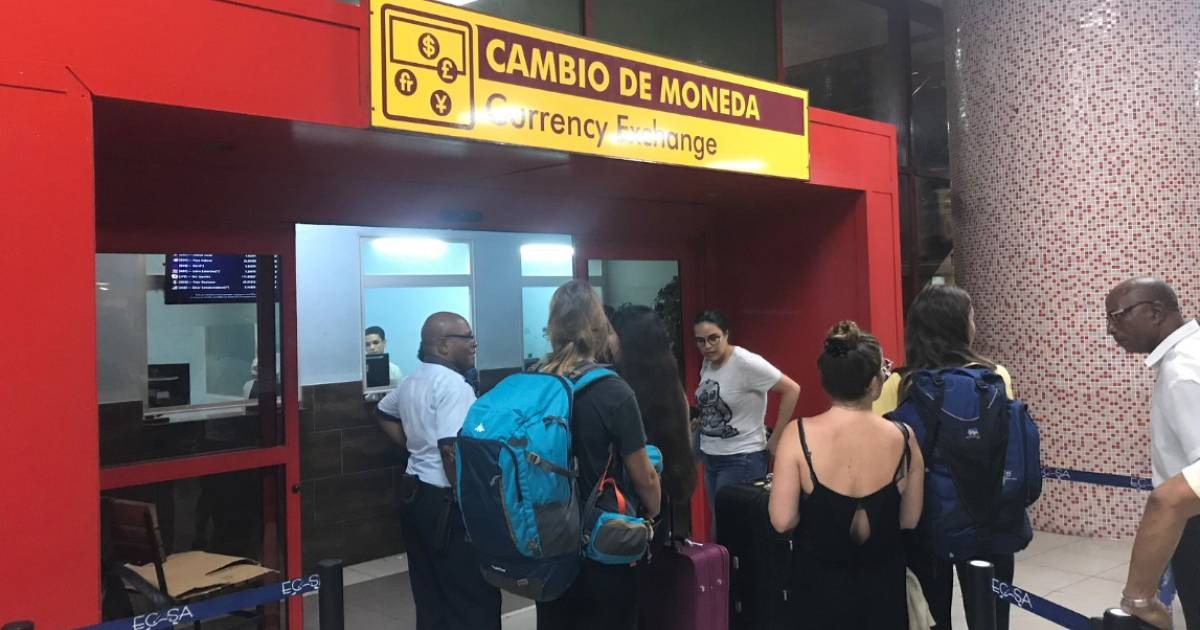
The Cuban regime announced this Thursday that it will allow the creation of private exchange houses and authorize private mechanisms for remittance management, marking an unprecedented economic shift in decades aimed at attracting foreign currency amid the profound financial crisis the country is experiencing.
The measures are part of a package of 176 proposals for economic transformation presented by Prime Minister Manuel Marrero Cruz at the Third Extraordinary Session of the National Assembly of People's Power.
According to the leader, the reforms aim to correct distortions that have accumulated over the years and to respond to what he described as "the most complex context the country has faced since the Special Period."
Among the most significant changes is the authorization of licenses to operate private exchange houses, the creation of a real-time digital currency market with authorized operators, and the implementation of new mechanisms to channel remittances through private entities.
The plan also includes the establishment of non-banking financial institutions, both state-owned and private, that will be able to participate in foreign exchange operations and in the receipt and distribution of remittances.
The decision comes at a time of extreme weakness for the Cuban peso. While the official rate of the Central Bank remains well below informal market values, the national currency has experienced accelerated depreciation in recent years.
For example, the dollar in the informal market was quoted this Thursday at 685 Cuban pesos, compared to an official rate from the Central Bank of Cuba of 558 pesos, a gap of more than 127 pesos per dollar.
The gap between both markets has become one of the main economic problems in the country, driving the growth of informal operations and reducing the government's ability to capture foreign currency.
Remittances play a central role in this strategy. Various estimates place money transfers from abroad between 1.2 and 2.5 billion dollars annually, making them one of the main sources of income for the Cuban economy.
However, a large part of those resources is currently circulating through unofficial channels, beyond state control.
The authorities implicitly acknowledge this reality by proposing mechanisms aimed at drawing those flows back to government-regulated structures.
The reforms also include the introduction of new forms of private banking, the removal of limits on certain bank transfers, the possibility of opening accounts in foreign currencies without prior administrative approvals, and the establishment of a regulatory framework for virtual assets.
Additionally, Transfermóvil will receive a license as a non-banking financial institution, while the government plans to implement a currency auction system and continue gradually adjusting the official exchange rate to bring it closer to market values.
Marrero warned that state-owned companies unable to adapt to the new exchange conditions could disappear.
The approval of these measures received political backing from the regime's leadership. Raúl Castro participated virtually in the parliamentary session, and Díaz-Canel had already previewed some of the reforms.
Despite the magnitude of the announcements, the government insists that they do not represent a departure from the socialist model.
"The life, the reality, the dramatic situation that the world is experiencing forces us to do what we would never have done otherwise," said Marrero, quoting a phrase spoken by Fidel Castro in 1993, during another period of deep economic crisis.
The measures come after several years of ongoing economic deterioration. Cuba has experienced three consecutive years of economic contraction and is facing a combination of foreign currency shortages, inflation, power outages, declining domestic production, and reduced revenue from exports and tourism.
In this context, the openness to private exchange houses and private remittance operators reflects an acknowledgment of a reality that for years the state itself tried to restrict: a significant portion of the dollars that support the Cuban economy circulates outside official channels.
Filed under: