
Related videos:
A Polish minister, a friend of the cause for Cuba's freedom, jokingly told us (Javier Larrondo from Prisoners Defenders and me) on May 7th that the tragedy experienced by the largest of the Antilles is our fault (the Cubans). He said that if we hadn't gained independence from Spain, we would be members of the European Union and would be doing very well.
My response was that 1898 is long behind us, but now, the misguided policies of the Spanish socialist government and its supporters are going to cause Spain, and all of the European Union, to lose Cuba for a second time. When we Cubans live in a free homeland, we will remember very well who our friends were and who helped sustain the criminal Castro-communist regime.
The European Parliament voted yesterday on a resolution regarding political repression and the humanitarian situation in Cuba. This is not an isolated event. For years, the Eurochamber has passed resolutions condemning the repression by the Cuban regime, demanding the release of political prisoners, denouncing the persecution of opponents, independent journalists, artists, religious activists, and human rights defenders, and calling for European policy towards Havana to be contingent upon the effective respect of fundamental rights and freedoms.
The European Parliament has passed significant resolutions regarding Cuba in 2018, 2019, 2021, and 2024, repeatedly calling for an end to repression and for the activation of the mechanisms of the Political Dialogue and Cooperation Agreement, including the provision for suspension due to serious human rights violations.
The new resolution comes at an especially critical moment. The European Parliament itself had announced that the vote would address the humanitarian crisis, political repression, and the role of the European Union in the future of the Island. It also recalled that the prior debate was held with the EU's High Representative for Foreign Affairs, Kaja Kallas.
The text that was put to a vote was registered under the name “Resolution Proposal on Political Repression and the Humanitarian Situation in Cuba.” According to the official website of the European Parliament, several motions on the same issue were submitted, dated June 12, 2026, and subsequently a joint resolution proposal, identified as RC-B10-0285/2026, dated June 16, 2026.
It is the strongest initiative regarding Cuba presented in the European Parliament. Driven by the European People's Party, the largest group in the Parliament, along with other forces such as the European Conservatives and Reformists, and with aligned positions from liberal and democratic right sectors calling for a less accommodating European policy towards Havana.
The Popular Party requested in that resolution, which was ultimately approved, substantial assistance for Cuba as soon as a credible democratic transition occurs and demanded the suspension of the Political Dialogue and Cooperation Agreement with the Cuban regime if clear, concrete, and significant measures towards the democratization of the Island are not taken.
The group European Conservatives and Reformists expressed support for the "Cuban Liberation Agreement" and called for direct dialogue with opposition platforms and civil society in Cuba.
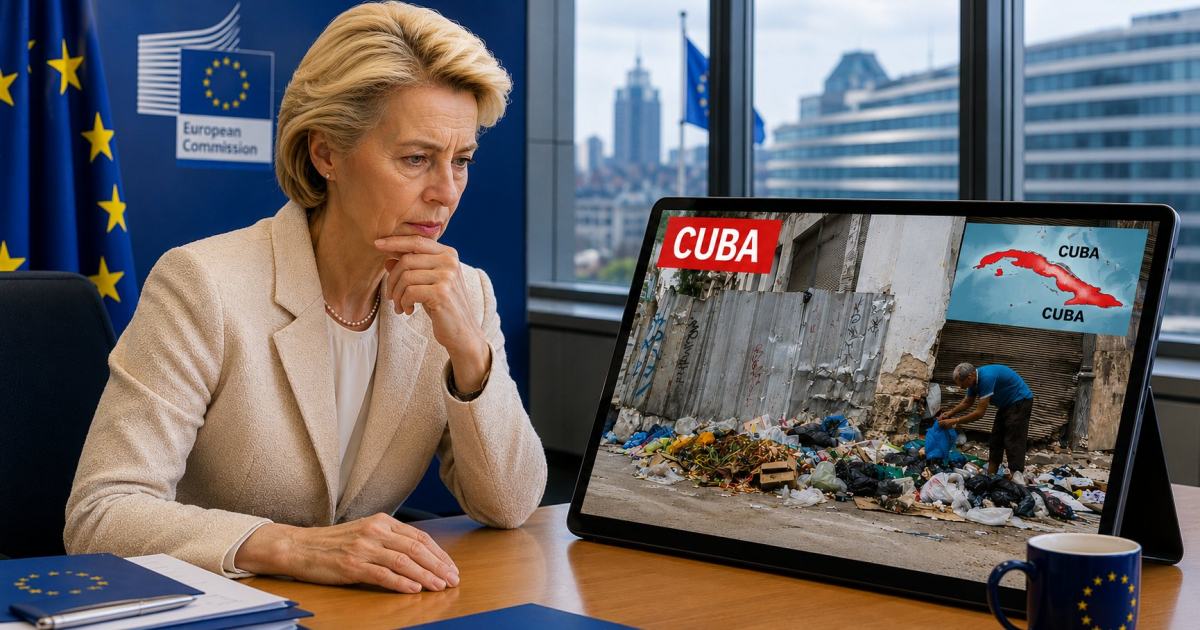
The resolutions of the European Parliament have been morally clear, but the European Commission, the European Council, and EU diplomacy have not acted with the same firmness. For too long, they have maintained a tepid, bureaucratic, and even complicit policy, clinging to “dialogue” with a dictatorship that does not engage in dialogue with its people, which arrests, intimidates, and forces them into exile.
The Political Dialogue and Cooperation Agreement between the European Union and Cuba was born with promises of openness, respect for human rights, and spaces for civil society. The reality has been quite the opposite.
Under that agreement, the Cuban regime has continued to imprison opponents, torture, and even let hunger and disease kill them in its dark prisons, repress peaceful demonstrations, harass the families of political prisoners, violate religious freedom, criminalize independent media, and convict young people, women, activists, and artists simply for demanding freedom.
Europe can no longer finance and legitimize a criminal tyranny that is not only an enemy of the Cuban people but also of the essential values that the European Union claims to uphold: democracy, freedom, respect for human rights, political pluralism, a market economy, and the rule of law. Moreover, the Cuban regime is a political and strategic ally of Russia (which supports the invasion of Ukraine), Belarus, Venezuela, Nicaragua, Iran, and other declared enemies of the free world.
This resolution, which was finally approved, cannot be just another one. If the European Parliament speaks clearly again, the Commission and the Council cannot continue to look the other way. It is not enough to issue statements and condemnations; action is required. The agreement with the dictatorship must be suspended, all cooperation that strengthens its repressive structures must be cut, support for independent civil society must be provided directly, democratic opposition must be recognized, and the European assistance policy for the transition process must be prepared.
The European Union can no longer be complicit in tyranny. It must remain true to its principles, stand firm against the undemocratic regime, and show solidarity with the victims. It is time to unite with its old ally, the United States, which upholds a policy of maximum pressure against the communist regime and provides direct assistance to the oppressed people. Either it aligns itself with the right side of history, or it will find itself in a very unfavorable moral, political, and economic position in Cuba.
When we achieve the longed-for freedom, we Cubans will be grateful for and prioritize our relationships with those who were truly our friends.
Those who were, until the very last moment, closer to the oppressors than to the victims, will not win the sympathy of our people. We are affected by the current policy of the 27 towards Cuba, and the European Union should not lose a people that admires it and wishes to have it as an ally and important trading partner.
Filed under:
Opinion piece: Las declaraciones y opiniones expresadas en este artículo son de exclusiva responsabilidad de su autor y no representan necesariamente el punto de vista de CiberCuba.