
Related videos:
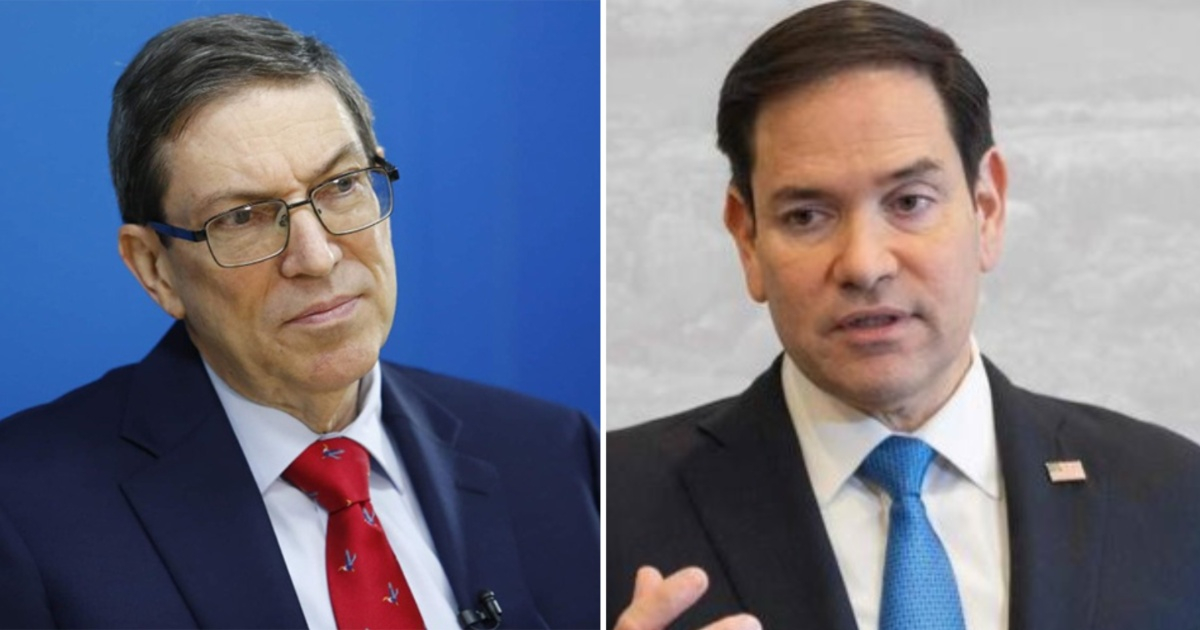
The Cuban chancellor Bruno Rodríguez Parrilla launched a strong criticism this Saturday against the United States Secretary of State, Marco Rubio, accusing him of "chronic lying" and contradicting President Donald Trump himself by denying the existence of a total fuel blockade against Cuba.
In a post on his X account, Rodríguez noted that the White House has acknowledged this energy blockade, while Rubio publicly denies it and attributes the island's electricity crisis to the "incompetence" of the Cuban government.
"When the U.S. Secretary of State speaks of incompetence in Cuba, one must ask him why he chronically lies and contradicts the President of the United States and his spokesperson by denying the existence of the total fuel blockade that the White House acknowledges," the chancellor wrote.
Rodríguez's argument relies on a documented contradiction within the U.S. administration itself.
It is true that Trump signed an executive order on January 29, 2026, authorizing sanctions and tariffs against countries supplying oil to Cuba. However, on February 20, 2026, he signed another executive order that terminates the additional tariffs imposed under the International Emergency Economic Powers Act (IEEPA), including those related to Executive Order 14380 against the Cuban government.
In March of that same year, he stated that he had "no problem" with a Russian tanker delivering approximately 730,000 barrels of crude oil to the island, downplaying the incident with the remark "Putin loses an oil ship." The White House spokesperson, Karoline Leavitt, later clarified that the sanctions policy had not changed, but the contradiction was evident.
Rodríguez described the situation as an "economic suffocation plan" devised by Rubio, which includes preventing foreign companies from selling parts or technologies for Cuban thermoelectric plants, sanctioning any company that sells oil to the island, and imposing sanctions on CUPET, the state-owned Cuban fuel logistics company.
The chancellor also denounced that Washington's measures affect nickel companies, threaten businesses involved in tourism and mining, revoke the ESTA visa rights for foreign citizens visiting Cuba, and pressure countries that maintain medical cooperation agreements with Havana.
"If there were incompetence, why implement the oil blockade and secondary sanctions? In every reference you make to the situation in our country, there is an attempt to avoid any responsibility and to present yourselves as the savior," Rodríguez questioned.
The chancellor described the set of measures as "a total blockade, similar to a military one" and accused Rubio of openly calling for the subversion of Cuba's constitutional order and of "diligently seeking a U.S. military intervention in Cuba."
This exchange is the latest in a series of confrontations on social media between Rodríguez and Rubio that have intensified since Trump's return to the presidency in January 2026, alongside a crisis of severe blackouts that, according to the Cuban government, has reduced the island's energy imports by 80% to 90% as a consequence of U.S. sanctions.
Rubio, for his part, has denied on multiple occasions the existence of a "formal oil blockade" and has blamed the Cuban government and the military conglomerate GAESA for the energy crisis due to "incompetence," a position he reiterated on Friday to media outlets such as Telemundo, describing Cuba as a "failed state due to mismanagement and incompetence."
Filed under: