
Related videos:
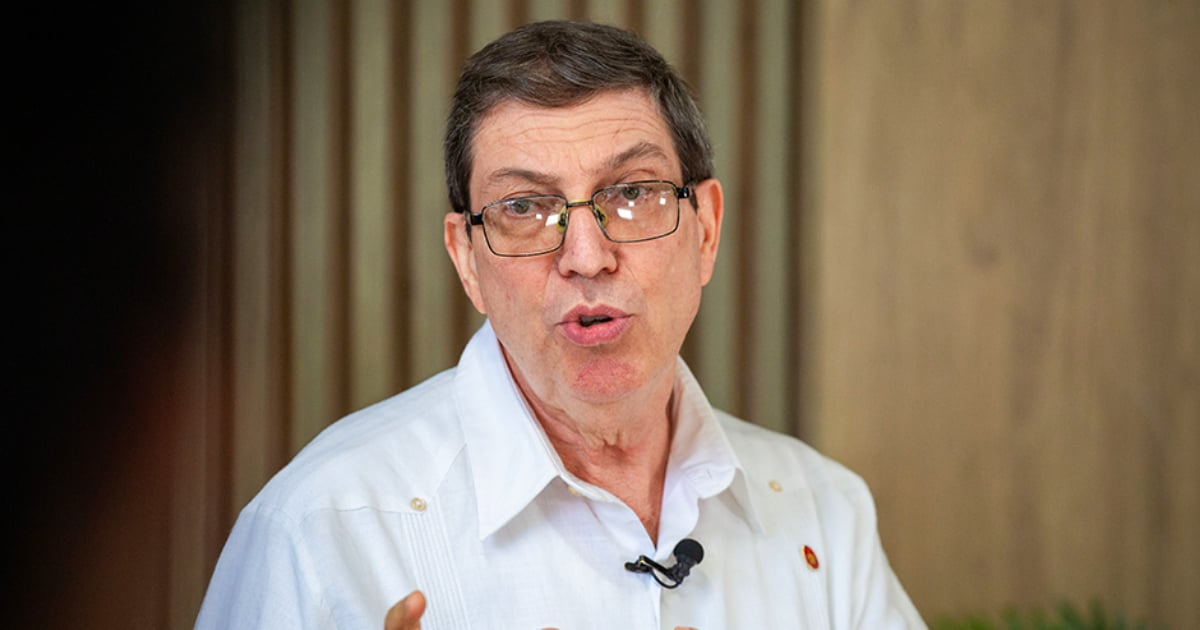
Cuban Foreign Minister Bruno Rodríguez Parrilla used his account on X to showcase the therapeutic vaccine candidate HEBERSaVax as a symbol of scientific sovereignty, but the response from Cubans was an avalanche of criticism that exposed the regime's central contradiction: announcing biotechnological advancements while the population cannot find aspirin in pharmacies.
In his Monday post, Rodríguez attributed the shortage of supplies in Cuba to "the policy of suffocation and U.S. economic warfare" and presented HEBERSaVax —a vaccine candidate against solid tumors developed by the Center for Genetic Engineering and Biotechnology (CIGB) in Havana— as evidence of "determination, resilience, creativity, and independence" in the face of imperialism.
The reaction in the comments was immediate and overwhelming.
"Liar. In Cuba, there aren't even aspirin. Go deceive the few fools who believe you," wrote one user. Another was more direct: "Assholes, they export everything and nothing for the people. GET OUT, CRIMINALS." A third summed up the collective indignation: "Cuba is a failed state; having three medications doesn't solve the thousands of problems that exist."
Some comments included images of sick individuals being transported in horse-drawn carts: "This level of misery is not new; it has always been like this," wrote one user.
The irony pointed out by Cubans is backed by concrete data. Just ten days before Rodríguez's message, Miguel Díaz-Canel himself admitted in an interview that "approximately 50% of those medications could not be distributed due to a lack of fuel" and that the basic supply was affected "by more than 67%."
The medication crisis in Cuba is structural: out of 651 products in the basic supply list, 461 are either completely missing or have low availability. More than 100,000 patients are waiting for surgeries, including 11,000 children. Approximately five million chronic illness sufferers lack vital treatments.
Infant mortality nearly tripled between 2018 and 2025, rising from 3.9 to 9.9 per 1,000 live births, and the survival rate of children with cancer fell from 85% to 65%, according to data collected by international organizations.
Meanwhile, the regime exports vaccines and sells medications abroad: Cuba sold pharmaceuticals to Mexico for over 84 million dollars in 2023 and 2024, sent doses of Abdala to Nicaragua, and signed pharmaceutical production agreements with Brazil and Vietnam in 2025, while in Havana the informal market is the only access channel to medications for millions of people.
HEBERSaVax, also known as CIGB-247, has been in clinical trials for nearly 10 years and is designed to treat hepatocellular carcinoma and ovarian cancer. Despite the official rhetoric that it is "unique in the world," it remains an investigational candidate, not an approved drug for general use.
The contradiction that the Cubans pointed out to Rodríguez is not new: the regime has been using biotechnological achievements as a propaganda shield for years to divert attention from an unprecedented health crisis that the Minister of Public Health, José Ángel Portal Miranda, acknowledged before the National Assembly in July 2025.
Filed under: