
Related videos:
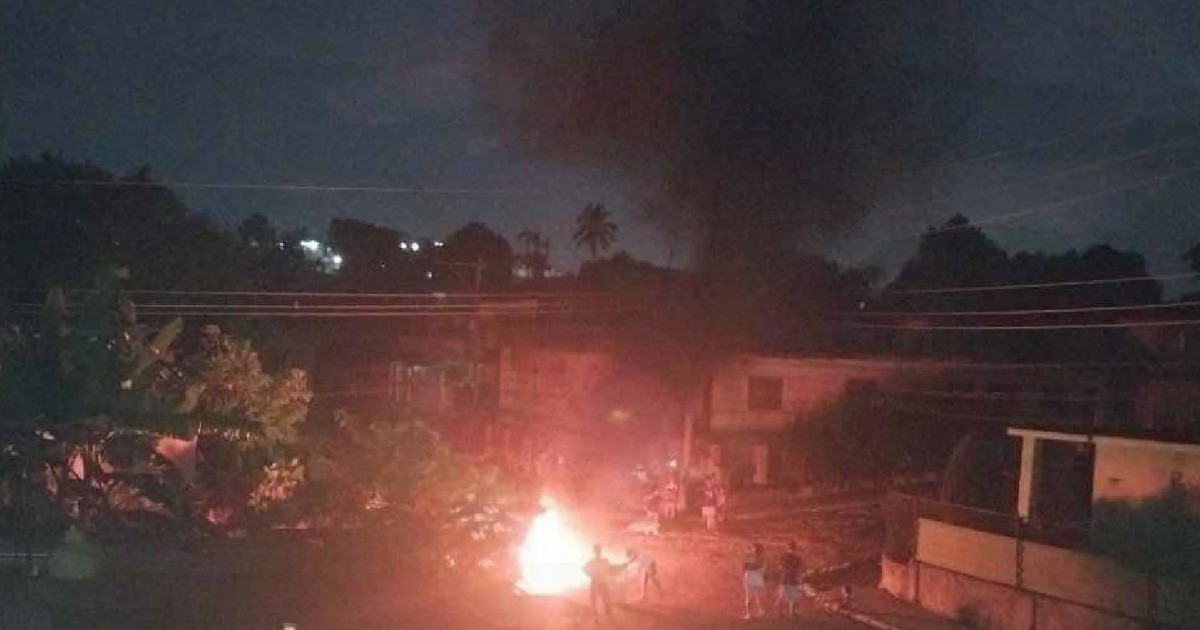
A new night of protests shook Havana this Friday, featuring a cacerolazo and tire burning in the Afán neighborhood, municipality of San Miguel del Padrón, documented by journalist Mario J. Pentón on his Facebook account.
Pentón published a nighttime photograph that shows a large fire in the street, black smoke rising between houses and palm trees, with neighbors gathered around the flames.
"#Urgent | Noise demonstration with burning tires in the Afán neighborhood, San Miguel del Padrón, Havana. Protests are taking place in several areas of Havana at this hour, with street closures and noise demonstrations," wrote the journalist.
In the comments of that post, the user Alejandrito Díaz Méndez confirmed that the protest was not isolated: “Cacerolazo in Güinera now”.
Additionally, another mass protest with pots and pans took place in the Carlos III area in Havana, after several consecutive days without electricity in that area.
La Güinera is a neighborhood in the Arroyo Naranjo municipality with significant symbolic weight: it was one of the epicenters of the historic protests on July 11, 2021, the largest anti-government demonstrations in decades in Cuba.
San Miguel del Padrón has its own history as well. In March 2026, a failure in a 110 kV line left all the blocks in the municipality without electricity, and residents reported at the time: “Not even half an hour of power and we are already in an emergency; this is inhumane.”
The protests this Friday are part of a sustained wave of noise protests that began on March 8, 2026, triggered by the collapse of the national electrical system.
On June 17, the Electric Union projected a shortfall of 2,080 MW during peak hours, with a mere availability of 950 MW against a demand of 3,000 MW, leaving 69% of the country without service, according to Bloomberg Línea.
In Havana, power outages have reached 20 to 22 hours daily during May and June. In some areas of Matanzas, reports indicate up to 85 consecutive hours without electricity.
Caribbean Channel announced on June 18 a "highly complicated night" regarding electricity, foreshadowing what would lead to new street protests.
The wave of protests in 2026 has encompassed dozens of neighborhoods in Havana —Cayo Hueso, El Vedado, Playa, Regla, Luyanó, Alamar, El Cotorro— and has spread to other provinces such as Santa Clara. The slogans have escalated from demands for basic services to shouts of "down with the dictatorship" in the streets.
At least 14 people have been detained in Havana in connection with these protests between March and June 2026, according to reports from organizations monitoring repression on the Island.
Filed under: