
Related videos:
The recent interview given by Raúl Guillermo Rodríguez Castro, known as "El Cangrejo", to the Emirati newspaper The National has opened a new front of controversy within the Cuban opposition and exile.
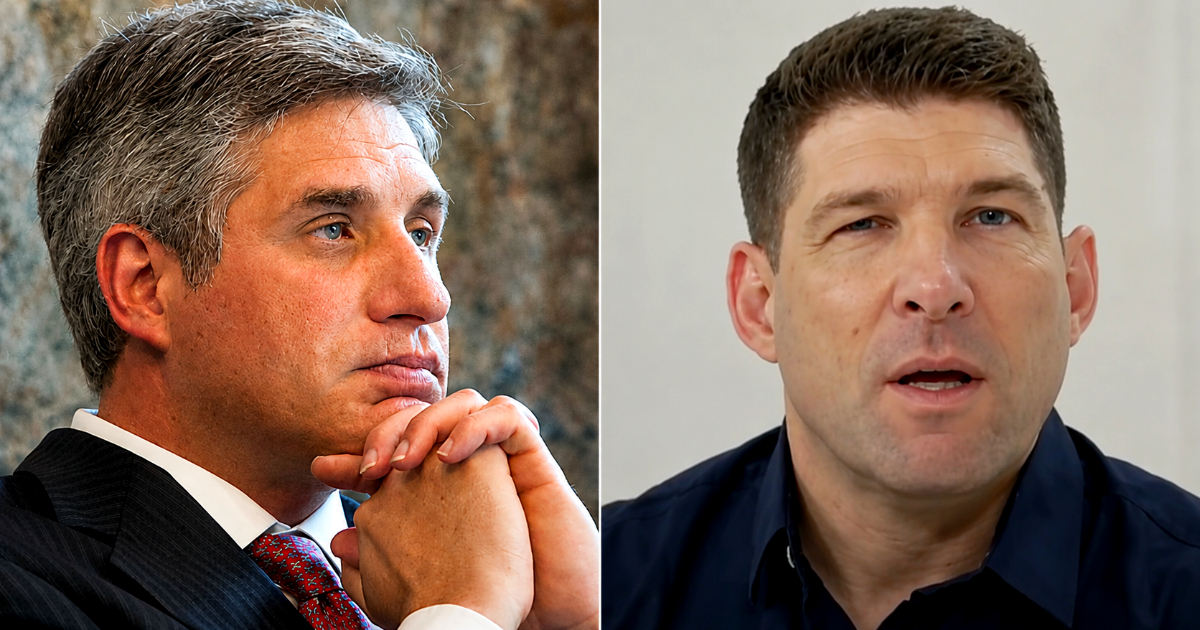
However, the criticisms have not focused solely on the content of the interview, but also on the public support expressed by the Cuban academic Arturo López-Levy, who celebrated having contributed to the report.
It was a pleasure to contribute to this work: 'We Are Not a Threat': Raúl Castro's grandson, 'Raulito', presents Cuba's case before the United States and the world, wrote López-Levy on the social network X.
The post provoked an immediate reaction from the Cuban activist and intellectual Anamely Ramos.
"As if the Cangrejo interview wasn't disgusting enough, now we have this gem from his cousin López-Levy (read as López-Calleja)," she wrote on Facebook.
"The levels of shamelessness of these criminals are beyond words, really," he added.
The response reflects an increasingly widespread perception among critical sectors of the regime: that the growing public exposure of Rodríguez Castro is part of an effort to project a renewed and politically acceptable image of a new generation linked to the historical core of Cuban power.
The role of López-Levy in crafting the narrative
The controversy takes on an additional dimension due to the background and family connections of Arturo López-Levy.
The academic, whose full surname is López-Calleja Levy, is a cousin of Luis Alberto Rodríguez López-Calleja, the late head of GAESA, former son-in-law of Raúl Castro and father of Raúl Guillermo Rodríguez Castro (El Cangrejo).
Graduated from the Higher Institute of International Relations (ISRI), López-Levy was an official of the Ministry of the Interior (MININT) between 1992 and 1994 before emigrating abroad and pursuing an academic career in the United States.
For years, he has become one of the most prominent voices advocating for rapprochement between Washington and Havana. He founded the organization Cuban Americans for Engagement (CAFE), has championed the normalization of bilateral relations and has systematically opposed U.S. economic sanctions against the Cuban regime.
His critics argue that his analyses often emphasize the need for dialogue with Havana while paying less attention to issues such as the lack of political freedoms, the existence of political prisoners, or the economic and political weight of GAESA within the Cuban system.
For many observers, López-Levy's relevance in this episode lies not only in his political opinion but also in the fact that he simultaneously appears as an academic, a media commentator, a collaborator, and a member of a family closely connected to the main centers of power built around the Castros.
From an unknown figure to an international interlocutor
The interview with The National is not the first episode that puts the Crab in the spotlight.
In recent months, various reports have linked Raúl Castro's grandson to discussions and contacts held between U.S. representatives and the power circle surrounding the former Cuban leader.
His name began to appear in reports related to discreet negotiations and high-level political contacts, raising questions both inside and outside of Cuba.
The issue attracted particular attention because Rodríguez Castro does not hold any known significant position within the Council of State, the Council of Ministers, or the visible structure of the Communist Party.
Despite this, his presence in political discussions and international contacts began to position him as a figure capable of engaging in dialogue on strategic matters for the future of the island.
That situation generated a recurring question among opponents, academics, and political observers: what is the actual representativeness of "El Cangrejo" and on whose behalf does he speak?
The weight of the surname
The political relevance of Raúl Guillermo Rodríguez Castro does not stem from his own institutional career.
He is the grandson of Raúl Castro and the son of Luis Alberto Rodríguez López-Calleja, considered for years one of the most powerful men in Cuba due to his control over GAESA, the military-business conglomerate that dominates large sectors of the national economy.
For a significant part of his public life, he was primarily identified as a key member of his grandfather's inner circle and as the person in charge of his personal security.
Precisely for this reason, for many critics of the regime, his emergence as a spokesperson before international actors is a sign that real power continues to operate through familial and informal structures that transcend the official institutions led by Miguel Díaz-Canel.
More than an interview
The controversy generated by López-Levy's support for the interview goes beyond the debate surrounding a specific journalistic publication.
What many opposition members perceive is an attempt to transfer political legitimacy from the old generation of Castroism to its family heirs by using international media, academics, analysts, and public figures who portray those heirs as valid interlocutors before Washington and the international community.
In that context, the interview with The National and the promotion carried out by López-Levy are seen by his detractors as part of a public relations operation aimed at normalizing the public presence of a member of the Castro family whose main political asset continues to be his closeness to the historical core of power.
The question that remains open is whether the growing media exposure of "El Cangrejo" is solely due to journalistic interest in a previously unknown figure or if it is part of a broader strategy to construct a new narrative around the heirs of Castroism at a time of uncertainty regarding Cuba's political future.
Filed under: