
Related videos:
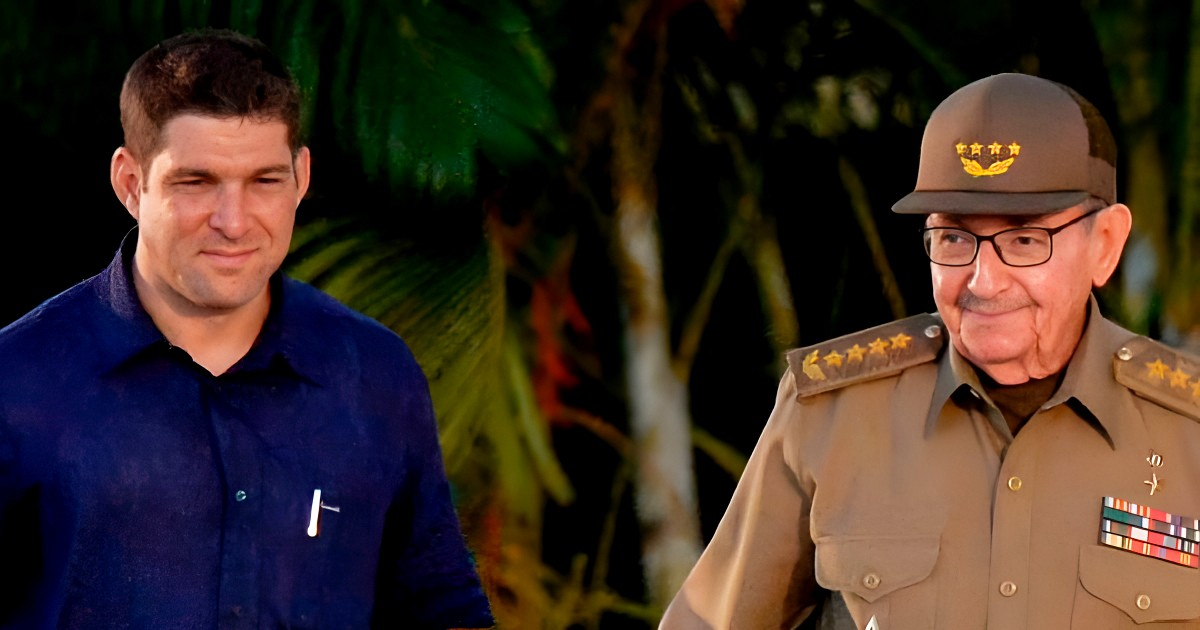
Raúl Guillermo Rodríguez Castro, known as "El Cangrejo," grandson of the former leader Raúl Castro, made a statement this Friday that sparked conversations on social media among Cubans both on the island and abroad: "As long as the revolution exists, Cuba will leave no Cuban behind or forgotten."
The statement is part of his first public interview, granted to the media The National from Havana.
The irony perceived by thousands of Cubans is hard to overlook: the phrase is spoken in the context of the largest exodus in the history of Cuba, with more than a million people having left the island since 2021, which has reduced the effective population from 11.3 million to between 8.6 and 8.8 million inhabitants.
According to data from the National Office of Statistics and Information (ONEI), in 2024, 250,000 Cubans officially emigrated, although independent studies raise that figure to more than 500,000 in that year alone. A survey on the desire to emigrate among Cubans revealed that 93% of Cubans would leave the country immediately if given the opportunity.
Raulito, 41 years old, does not hold an official position in the government, but he is a lieutenant colonel in the Ministry of the Interior and has been the head of the General Directorate of Personal Security for his grandfather since 2016.
It is considered an informal channel between Havana and Washington, and according to a report by El País, it participated in meetings with U.S. officials linked to advisers of Marco Rubio during a visit to Havana on April 10, 2026.
In the interview, the grandson of the former ruler attempted to convey an image of openness toward the United States. "Cuba does not pose the slightest threat to the interests and national security of the United States. We continue to offer that civilized relationship, that relationship based on respect and equality," he stated.
He also insisted that dialogue is possible, but without conditions: "We still believe that the path of dialogue is what brings us closer, not confrontation. However, those opportunities will never be based on conditions, on impositions, or on our people bowing to demands that cannot be met."
The interview takes place at a time of immense pressure on the regime. Grandfather Raúl Castro has just been charged by U.S. authorities for the downing of two civilian planes in 1996, U.S. warships have been repositioned in the Caribbean, and Cuba is experiencing blackouts lasting over 20 hours a day.
The UN High Commissioner for Human Rights, Volker Turk, warned this month that children are dying due to a lack of medications as a result of fuel restrictions and extraterritorial sanctions in place since January.
Raulito's appearance coincided with the approval on Thursday of an economic emergency package containing 176 measures that includes increased opportunities for private capital, private banking, buying and selling shares of state-owned companies, and the participation of emigrated Cubans in the economy.
The president Miguel Díaz-Canel stated that the plan is inspired by the models of China and Vietnam.
The U.S. Vice President JD Vance responded cautiously: "Let's see what they do. If they make smart decisions, we will have a much better relationship with that island."
Professor William LeoGrande from American University pointed out that it is Secretary of State Marco Rubio who leads the pressure campaign, and that Rubio himself acknowledged that he and Congressman Mario Díaz-Balart are the ones writing the Cuban policy of the Trump administration.
While Raúl Castro's grandson promises that the revolution leaves no one behind, the Cuban exodus that has accumulated since 2021 tells its own story: that of a country that has lost more than one in every ten inhabitants in just five years.
Filed under: