
Related videos:
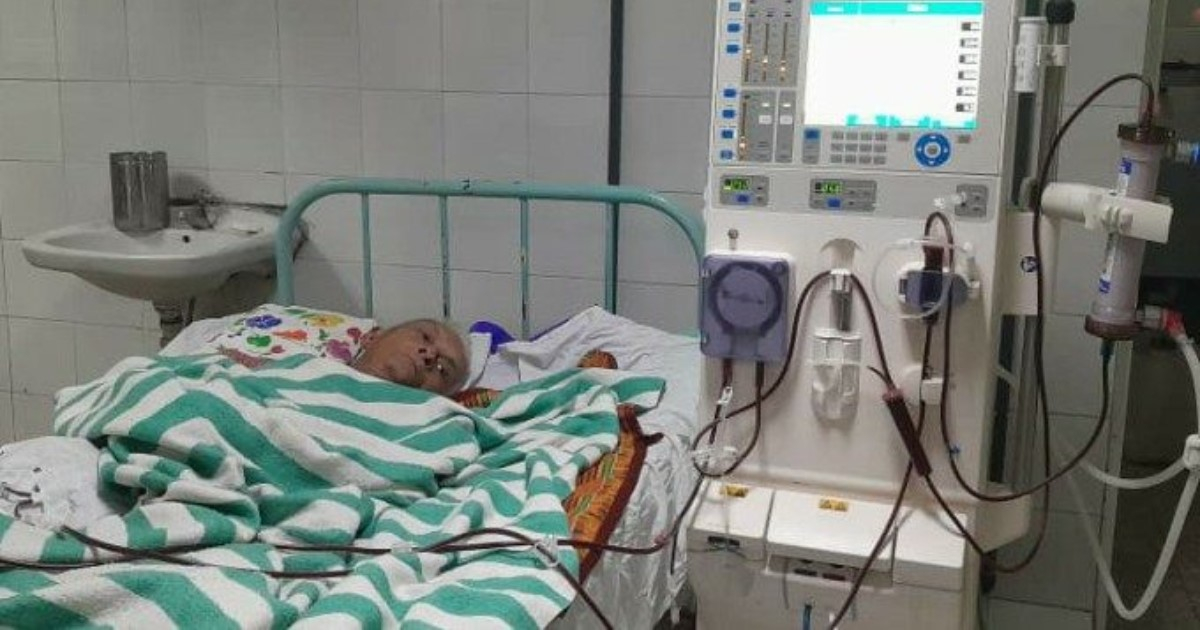
Dozens of kidney patients at the Manuel Ascunce Domenech Provincial Hospital in Camagüey have gone nearly a week without receiving hemodialysis after essential chemical supplies for operating the dialysis machines ran out, according to a report published this Saturday by the independent Cuban journalist José Luis Tan Estrada.
The interruption began on Saturday, June 14, starting with the shift at two in the morning. The cause: the unit lacks acid concentrate and bicarbonate, the two components that are mixed with purified water to create the dialysate solution, without which the equipment cannot operate.
One of the affected individuals summarized the situation starkly: "The problem with the acid concentrate and bicarbonate continues. They are going to kill us all en masse."
Tan Estrada warned that the urgency is extreme: "A renal patient without hemodialysis cannot wait. Their body collapses in hours."
The journalist, originally from Camagüey and currently in exile in Mexico, directly challenged the authorities: "Where is the hospital's administration? Where is the provincial Public Health? Where are the authorities while the sick wait in line to die?"
What happened in Camagüey is not an isolated incident. Cuba has approximately 3,000 patients who depend on hemodialysis, spread across 56 units throughout the country, according to data from the president of the Cuban Society of Nephrology, Luis Pérez-Oliva Díaz.
During the last few months, transportation for dialysis patients has been paralyzed in several provinces —Las Tunas, Granma, Pinar del Río, Ciego de Ávila, and Villa Clara— due to the fuel shortage. In a partial response, the government announced in May the introduction of 200 electric vehicles for the transportation of these patients, a measure considered insufficient given the magnitude of the problem.
The Provincial Hospital of Camagüey itself has a long list of complaints in 2026: flooded basements, exposed wires, mold, and the presence of rodents documented by the Cuban Observatory of Human Rights. In February, the facility acknowledged that it did not have norepinephrine — a first-line drug for septic shock — when a 26-year-old patient passed away.
The deterioration of the Cuban healthcare system has an official diagnosis. In February 2026, the Minister of Public Health José Ángel Portal Miranda acknowledged that the system was "on the brink of collapse," while the Ministry of Public Health recognized disruptions in essential services, including hemodialysis, due to fuel shortages.
While the authorities remain silent, kidney patients in Camagüey continue to go without treatment and without a specific date for the resumption of supplies.
Filed under: