
Related videos:
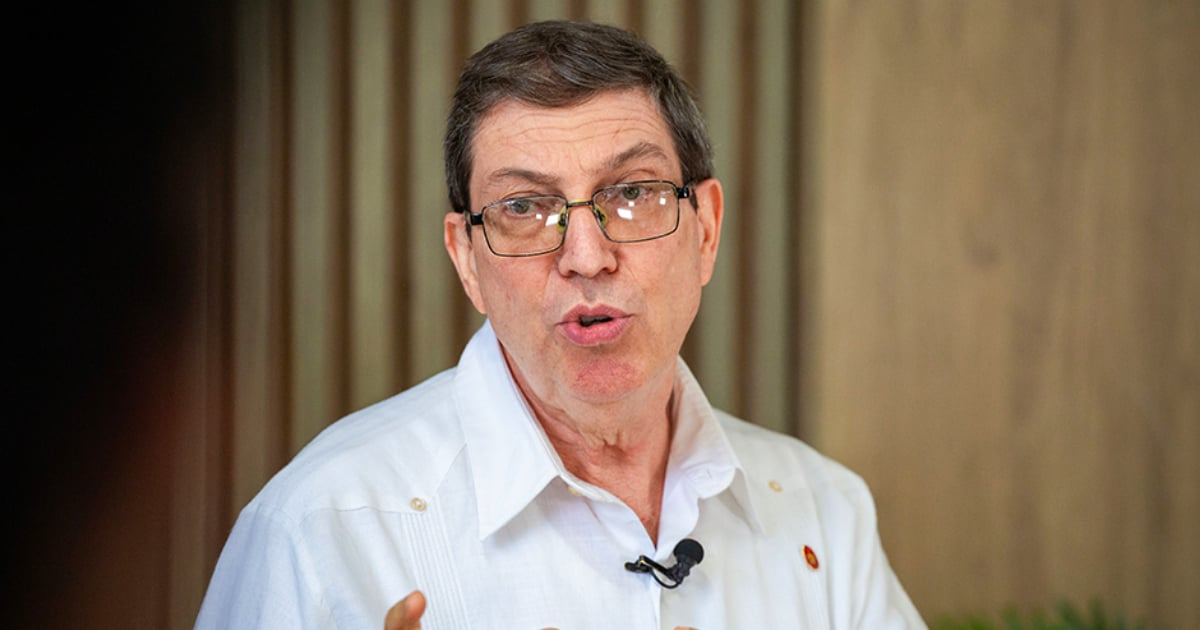
Cuban Foreign Minister Bruno Rodríguez Parrilla spoke out this Saturday to reject any criticism from Washington regarding the measures taken by the regime, posting on his Twitter account that the U.S. government "has no political, legal, or moral authority" to judge Havana's decisions.
The message arrives a day after the Department of State described the 176 economic reforms approved by the National Assembly on June 18 and 19 as mere "superficial smoke signals," denying that they represent a real change in the Cuban political or economic model.
In his post, Rodríguez Parrilla described the U.S. government as a "executioner of collective punishment against the Cuban people" and asserted that it "does not have the right to judge the measures we take to confront, in the exercise of sovereignty and self-determination, the effects of extreme economic aggression, exacerbated by the energy blockade and secondary sanctions against third parties."
The chancellor went further and dismissed any American opinion on the regime's internal management as well: "Their opinion on what should be done to overcome old shortcomings and adapt our indigenous socialist model to new national and international realities is of no consequence either."
The regime's discourse on sovereignty serves as a rhetorical shield against external criticism, but it contrasts sharply with the devastating reality faced by everyday Cubans.
While the chancellor defends the "indigenous socialist model," Cuba is experiencing an unprecedented energy crisis: on Friday, June 19, the maximum impact reached 2,081 MW, with only 950 MW available against a demand of 2,570 MW, and more than 1,200 MW of the deficit directly attributed to a lack of fuel.
The United Nations Organization alerted in May 2026 that more than 100,000 patients are experiencing delayed surgeries on the island, including over 11,000 children, and that around five million Cubans with chronic illnesses are facing interruptions in vital treatments.
The 176 measures approved by the National Assembly include the authorization of private banking, openness to foreign investment, the removal of the 100-employee cap for small and medium-sized enterprises, gradual introduction of VAT, and reduction of universal subsidies. Miguel Díaz-Canel himself insisted that the reforms do not respond to external pressures: "We do not act under the pressures of the Yankees. Cuba sovereignly designs and proposes the changes it needs."
However, critical voices soon emerged. The economist Pedro Monreal labeled the package as "anti-worker" this same Saturday, while the singer Israel Rojas broke the official script on Friday by calling for economic reforms to be accompanied by political changes.
The Trump administration has imposed more than 240 sanctions against Cuba since January 2026, including a tightening of the energy blockade and secondary sanctions against third countries that trade with the island. Rodríguez Parrilla concluded his message with a warning: Cuba "has conquered, defends, and will continue to defend its sovereignty with great effort and total determination, and firmly rejects foreign interference in its internal affairs."
Filed under: