
Related videos:
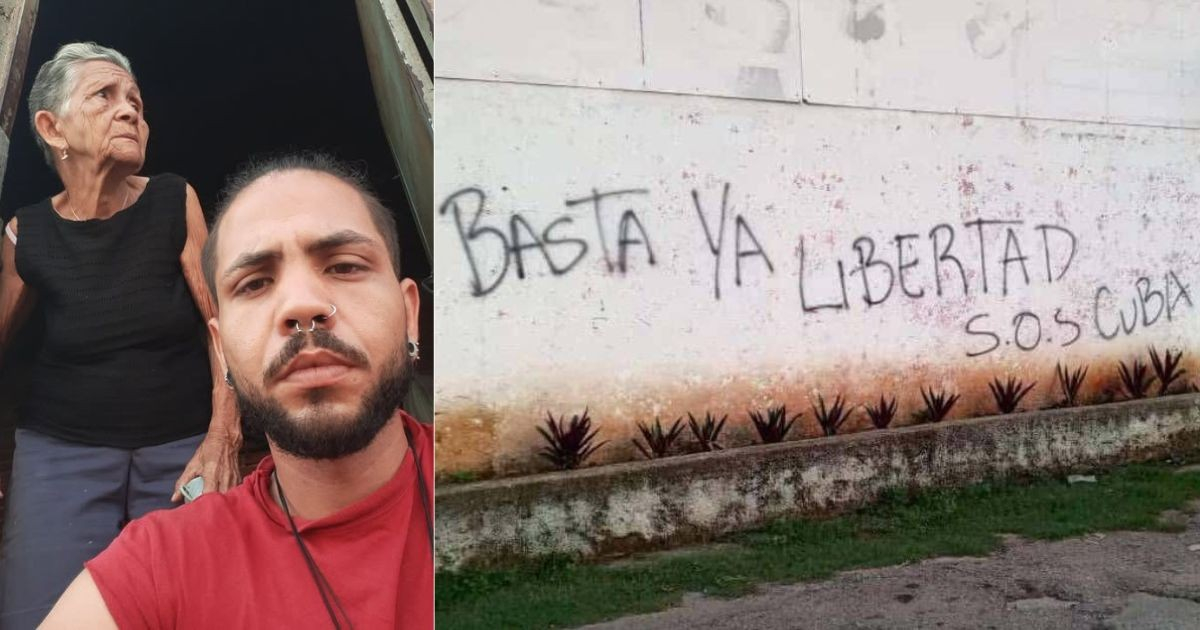
Alexis Hugo Remón Fuentes, a 27-year-old Cuban artist, posted a heart-wrenching testimony on Facebook that summarizes the exhaustion of an entire generation: power outages lasting between 30 and 50 hours, an inability to envision a life plan, and the weariness of having to "endure" without seeing any way out.
"I'm fed up. I don't know how long this indifference will last, on one side talking about negotiations, and on the other side
Without stable electricity, Remón Fuentes charges his equipment thanks to the solar panels of neighbors who lend them to him. "Thank goodness I have neighbors who didn't throw eggs, because thanks to them I can charge my few devices," he said bitterly.
The weight of uncertainty has aged him from within. "I am tired of uncertainty, of not knowing what will happen tomorrow; I can't even make life plans for the next month. My life is slipping away, I'm getting old not in years, but in spirit," he wrote.
His most raw cry points to the most fundamental: "I no longer have the desire to analyze who is right, those from here or those from there, I just want to live, [...]. I don't want more slogans, I don't want to resist." And he added: "I want to have slept with the breeze of a fan, to have breakfast, to eat hot meals; I don't ask for much, just a dignified life, the kind our Constitution once spoke of."
The testimony immediately resonated with hundreds of Cubans. One internet user wrote: "That's what all young people want: to live with dignity, without shortages. I'm not talking about luxury, expensive trips, or bank accounts; I'm talking about what is necessary, the basics." Another commented: "Like you, my youth is slipping away for nothing." A third voice detailed her own routine: "I’m tired of getting up every day to light charcoal to cook whatever is available. I'm tired of working and not having enough money for anything. I'm tired of the simplest things being a luxury. I also want to live like a human being."
The account of Remón Fuentes, a resident of Manzanillo, Granma, reflects an unprecedented systemic crisis. Cuba is experiencing the worst energy crisis in its modern history, with power deficits that have repeatedly exceeded 2,100 MW, leaving more than 60% of the population without electricity at the same time, compounded by the cut in Venezuelan oil supplies and the depletion of Russian crude reserves.
In the darkness, economic misery is compounded. The regime raised the minimum wage to 3,210 Cuban pesos, effective from July 1, which is equivalent to only 4.65 dollars at the informal exchange rate, while a person needs around 96,000 pesos per month to cover their basic needs —about 30 times that minimum wage—. The Cuban Observatory of Human Rights estimates that 89% of Cuban families live in extreme poverty.
That desperation has translated into massive protests and critical expressions: the Cuban Conflict Observatory recorded 1,311 demonstrations in May 2026, the longest wave since July 11, 2021. For those who do not protest, the way out often becomes exile: since 2021, more than 1.7 million Cubans have left the country, the majority of whom are young people between the ages of 15 and 49.
Remón Fuentes concluded his publication with a phrase that encapsulates the feelings of those who remain: "Meanwhile, this town is dying, and no one is doing anything; we don't even have the courage to do it ourselves."
Filed under: