
Related videos:
The announcement on Thursday by the ruling Miguel Díaz-Canel that the ration book will cease to be universal and will be reserved only for retirees, chronically ill individuals, and vulnerable people sparked a wave of criticism, mockery, and outrage among Cubans on social media, who agree on one diagnosis: everyone is vulnerable.
The measure was presented on June 18 during the Extraordinary Plenary of the Central Committee of the Communist Party of Cuba as part of a package of 176 economic measures from the regime, and it represents the largest cut to the rationing system since the establishment of the ration book in 1962.
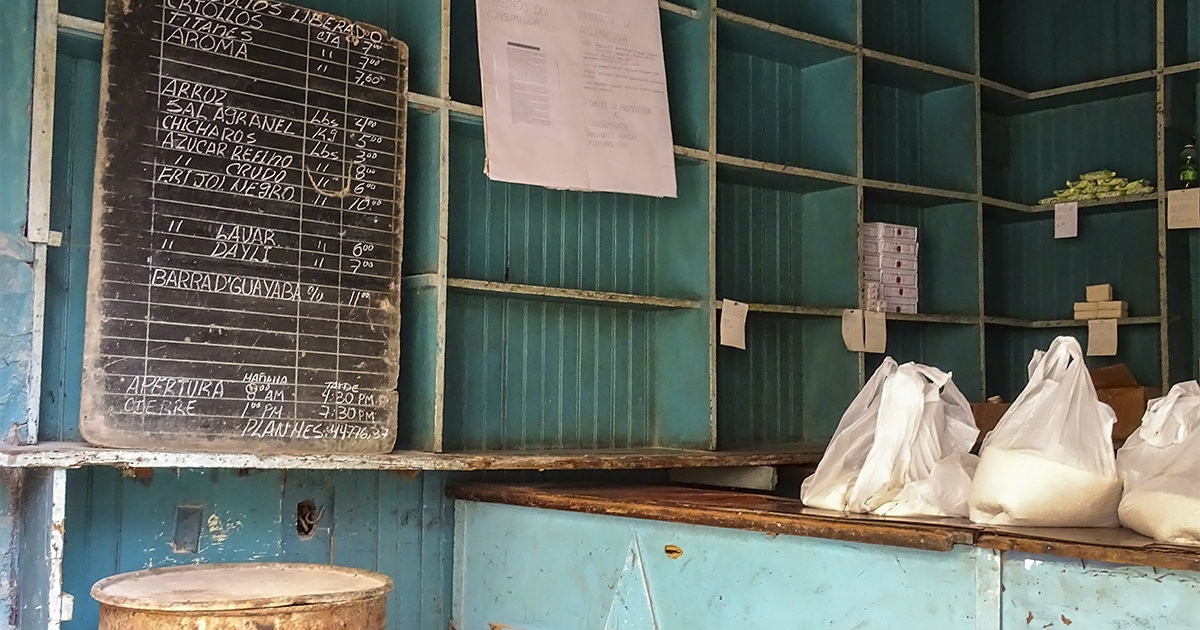
However, for a large part of the population, the news was almost ironic: the basic basket had practically disappeared a long time ago.
"What basket? The one in your mind," wrote a user. "What basket are you talking about? That one disappeared a long time ago," added another. A third comment summed it up bluntly: "Right now, what we're getting is a reduction of the reduction."
The phrase that was most repeated among the comments was a variation of the same idea: "We are all vulnerable." Some directed it straight to the leader: "We are all vulnerable… Mr. Canel." Others added a bitter nuance: "Everyone but them."
A Cuban described the situation in detail: "They are liars. At the United Nations, the president said that for the basic basket we were getting more than 12 items, and by counting everything double, I still don't reach even six."
The reference points to Díaz-Canel's statements at the UN in September 2021, when he stated that the basket included 19 essential food products at affordable prices for all Cubans.
Another person was even more direct: "That notebook expired years ago. What we eat comes from the black market; otherwise, we would have already died. They give nothing to the people, only demand sacrifice, not even for the children."
"We are fed up with lies, promises, and manipulation. They have us suffering from hunger, thirst, and heat," wrote a Cuban woman, summarizing the feelings of thousands who see in this announcement not a solution, but rather another step towards the dismantling of the little that remained of the system that the regime itself had promised for decades as an achievement of the so-called Cuban revolution.
Skepticism is supported by facts. In May, the supply booklet had collapsed to the point that stores in downtown Havana, with thousands of assigned customers, were only offering rice, sugar, and split peas.
A Havana grocer stated to the AP news agency that "no Cuban can truly survive on the products from the ration book."
The gap between official discourse and reality is staggering. The estimated monthly cost of living in Cuba ranges from 40,000 to 50,000 pesos per person, while the minimum pension is just 4,000 pesos, less than 10% of that amount.
Deaths from malnutrition increased by 74% between 2022 and 2023, according to data from the National Office of Statistics and Information of Cuba.
The regime has announced that it will replace subsidies for products with social assistance adjusted based on income, through a platform called SOBERANÍA to identify beneficiaries. However, there is complete distrust among the citizens.
Filed under: