
Related videos:
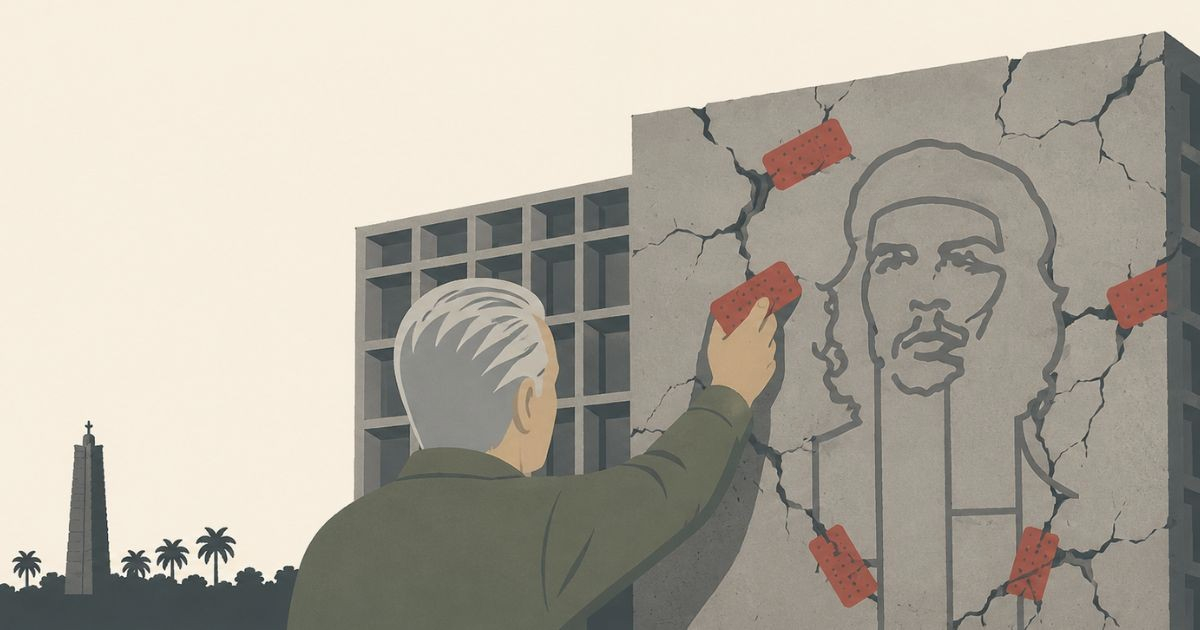
The Cuban economist and journalist Miguel Alejandro Hayes warned that the package of 176 economic measures approved by the National Assembly of Cuba on June 18 and 19 is not a genuine development plan, but rather a political survival maneuver by the regime.
According to Hayes, the deep crisis of credibility that the dictatorship is experiencing has driven it to seek mechanisms to regain its political hegemony, not to improve the living conditions of the Cuban people.
"The regime seeks to rebuild the social and political pact that supports Castroism, creating economic opportunities designed to buy complicity in exchange for political loyalty," stated the analyst.
The package, presented by Prime Minister Manuel Marrero before Parliament, includes the authorization of private banking, private currency exchange, the removal of the limit of 100 workers for small and medium enterprises (mipymes), the possibility for an individual to own multiple companies, and greater openness to foreign investment, including from Cubans residing abroad.
However, Hayes was unequivocal in stating that none of those measures imply a true opening to the free market: "The regime can never allow free enterprise for its own survival."
The analyst explained that in recent years, an opaque process of transferring state and military assets to the private sector has developed, allowing an unidentified elite to manage significant volumes of imports under strict "legal shielding."
In that framework, the access filters to economic activity will not disappear with the new regulations: "They will never eliminate the entry filters to economic activity; any legal business on the island will continue to be subject to clientelism and political silence," he emphasized.
This reading is consistent with previous analyses by the economist. In a previous analysis on GAESA, Hayes had warned that dismantling the military conglomerate would not be enough to dismantle the economic power of the regime, as it can recreate equivalent structures in less than 24 hours.
External reactions to the package of measures were met with widespread skepticism. The United States labeled them as "superficial smoke signals", arguing that they do not represent a real change in the political model.
Manuel Marrero acknowledged before the Assembly that the implementation of the reforms will generate "contradictions" that the government will have to resolve "on the fly," an admission that supports Hayes' thesis regarding the improvised and politically motivated nature of the package.
While the regime presents the 176 measures as the biggest economic opening in decades, the state's monopoly on the Cuban economy — and on who can participate in it — remains intact, according to the economist's analysis.
Filed under: