
Related videos:
The economist and researcher Ileana Díaz Fernández, from the Center for the Study of the Cuban Economy at the University of Havana, questioned this Friday the pace and design of the package of 176 reforms approved by the Cuban regime, warning that the manner in which it was announced and approved "in fast track style shows desperation."
The package, organized into 23 strategic axes, was approved by the National Assembly on June 18 following a process of just six days, considering that the ruling Miguel Díaz-Canel announced it on June 12, the Central Committee of the Communist Party endorsed it on the 17th, and the National Assembly of People's Power ratified it the next day.
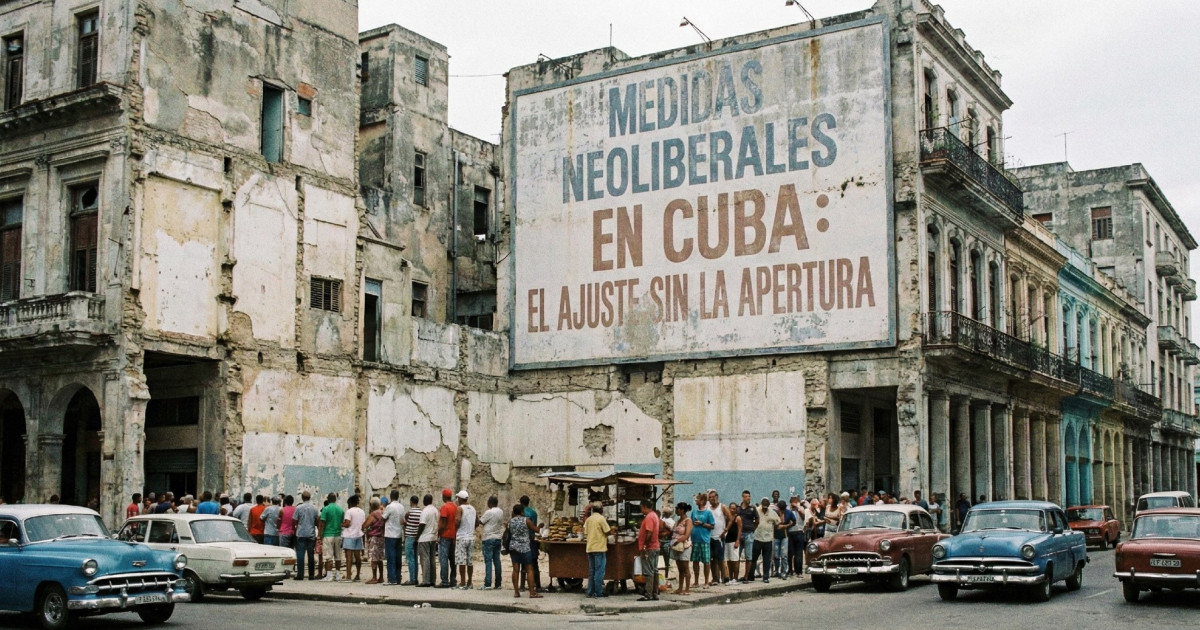
In a reflection titled "And now what?", published on his Facebook profile, Díaz acknowledged the importance of the measures—which include private banking, transforming state enterprises into commercial companies, and eliminating the ceiling of 100 workers for MSMEs—but noted that five years of better conditions to implement them were lost.
"Most of these measures have been proposed over several years but were rejected by capitalists or 'it wasn't the right time,'" wrote the coordinator of the Entrepreneurship and Innovation Network at the University of Havana.
In this regard, he recalled that proposals similar to those in his book Cuban State Enterprises: Situation and Proposal for Transformation (2024), awarded by the Academy of Sciences of Cuba, were labeled as neoliberal at the time.
The economist identified four urgencies that should be the pivots of change: the food crisis, the health crisis —which is not even mentioned in the package—, the energy crisis, and the currency crisis.
"All the axes appear equally important," he warned, while pointing out that this lack of hierarchy was also absent in the previous Government Program.
Regarding the energy crisis, Díaz was straightforward in emphasizing that it is a real constraint for implementing many of the measures, and what the package states about it is "very vague."
The academic also drew a troubling comparison regarding the model that the regime seems to be following: "Now it seems we are moving toward a Chinese model (the existence of a single party), but with a rapid Big Bang method, Russian style," referring to the accelerated privatizations in the 1990s that led to a concentration of wealth in the hands of privileged sectors and oligarchs, most of whom belonged to or were connected with the Communist Party of the Soviet Union.
The economist herself summarized the paradox with a phrase that captures the sentiment of those who have been warning for years about the need for change: "Of course, now I do believe it's a matter of yes or yes, there's no other option, even if it's at the worst possible time."
Citizen skepticism towards the reforms is widespread. Several followers of Díaz's publication agreed that the current pace contrasts with decades of stagnation, and questioned whether there is genuine political will to uphold the changes.
"Now they want to run," wrote a commentator. "If only this had been announced in April 2021, or even in 2016, it would have given me a lot of hope and confidence. But what Cuba needs now are profound political changes."
Another reader pointed out that the "sense of redress is mingled with sadness," upon seeing that proposals defended for years by economists — which cost them discredit — are now being attempted to be implemented "in the worst of circumstances."
A more skeptical voice suggested that the history of announced reforms that were then stalled — the mipymes of 2021 being a striking example — creates an "insecurity" that will hinder rapid implementation.
This distrust is echoed by public figures. The baritone Ulises Aquino criticized the regime's delay in making changes, while the singer-songwriter Israel Rojas called for political reforms not to be delayed as long as the economic ones.
Filed under: