
Related videos:
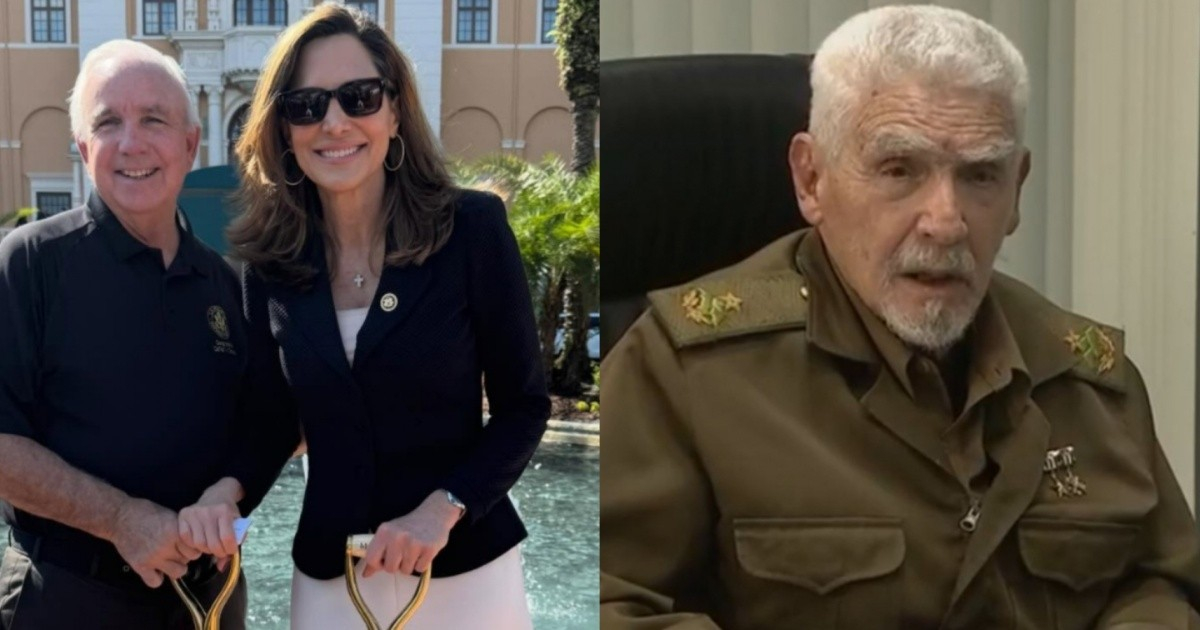
The death this Sunday of Ramiro Valdés Menéndez, founder of the Cuban Ministry of the Interior, triggered immediate reactions from Cuban-American congress members María Elvira Salazar and Carlos A. Giménez, who both noted that the historic repressor of the regime died without facing justice.
Valdés passed away at the age of 94, as confirmed by President Miguel Díaz-Canel. The news emerged just hours after the regime had remained silent for months regarding his whereabouts, as his last verifiable public appearance dated back to September 2025.
Salazar, representative for Florida's 27th district, was one of the first to speak out. On her X account, the congresswoman referred to him as "Pool of Blood" and did not hold back: "Another one who dies and cannot pay on earth for all the damage they caused. I am sure he is already in hell alongside Fidel and all the tyrants who subjected the Cuban people to misery, death, and exile."
The legislator added that Valdés's story "in a free Cuba will be remembered as one of repression, blood, and suffering," and concluded with a call to remembrance: "May the pain they caused the Cuban people never be forgotten."
Minutes later, representative Carlos A. Giménez, from Florida's 28th district and the only member of Congress born in Cuba, posted his own reaction with an equally strong tone: "It's a shame that the henchman Ramiro Valdés passed away without ever having to face justice for the countless crimes against humanity, torture, and atrocities he committed against the Cuban people."
Both Republican lawmakers represent districts in South Florida with a high concentration of Cuban Americans and have maintained a strong stance against the Havana regime throughout their terms.
Valdés was a central figure in the Cuban repressive apparatus since the early years of the dictatorship. He founded the MININT on June 6, 1961 and led it during two distinct periods, building the intelligence and state security structure that was used to persecute and imprison dissidents and opponents for decades.
He was born on March 11, 1932, in Artemisa and participated in the assault on the Moncada Barracks in 1953, in the Granma expedition in 1956, and in Che Guevara's column during the revolutionary war. Since 1976, he held the honorary rank of Commander of the Revolution, being one of the last surviving members of that foundational generation of Castroism.
His dismissal as Minister of the Interior in December 1985, driven by Raúl Castro, did not mean his withdrawal from power: he remained connected to government management, including oversight of the energy sector in his final years of public activity.
The death of historical figures of Castroism without having faced any judicial process for human rights violations is a recurring subject of denunciation among the Cuban exile community and their representatives in Washington, who have closely monitored the official silence regarding Valdés in recent months.
Filed under: