
Related videos:
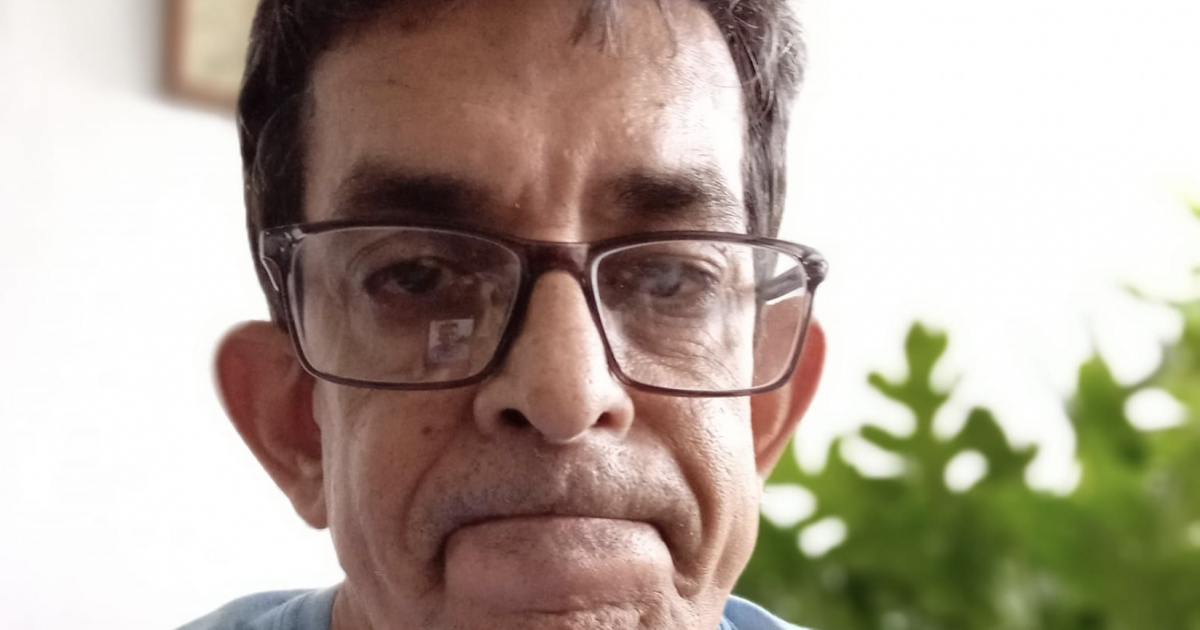
The comedian Ulises Toirac published a new post on Facebook this Tuesday about the 176 economic measures approved by the Cuban regime.
"The chicken in the arroz con pollo of the measures is not in the measures themselves. I think it's very good that by adopting them and referring to what existed before as 'obstacles,' it is acknowledged that the economic policy has always been erroneous," he said in the publication where he referred to the structural distrust of investors towards a system that has historically neither respected nor returned external capital.
For Toirac, the problem does not lie in the content of the measures— which he described as "of the purest capitalist cut"— but in the credibility of the actor promoting them. "No one likes to stake their resources on someone who has historically not returned them, who does not operate transparently, and who is guided more by a political party than by a government or its constitution," he wrote.
The comedian also pointed out the contradiction in the official discourse: a package that includes private banking, the buying and selling of shares in state-owned companies, and partial dollarization, presented as a way to "save socialism." He summarized it with a colloquial image: "Tiger, it's like you saying that to prevent the roof from leaking, we need to tear it down, and that will save the house."
Toirac acknowledged, however, that Cuba possesses real assets to attract investment. He mentioned the cobalt reserves —a strategic mineral used in batteries and technology, with Cuba ranking between fifth and sixth in the world in deposits— and the Port of Mariel, whose location just a few miles from the Panama Canal makes it a premier logistical hub between Asia, the east coast of America, Europe, and Africa. He also cited land for sugarcane and the tourism potential.
"We are not that 'worthless'," he wrote, before adding the "but" that, in his opinion, changes everything: none of those assets are sufficient if there is no legal framework to protect the investor from arbitrariness.
The central question raised is how to generate trust when the one proposing the change is the same actor who has been doing exactly the opposite for decades. "How do you explain that someone who has consistently done one thing for many years suddenly does another? Who guarantees that when the dust settles, they won't revert back to their old ways, as per the law of the old West?" they questioned.
The response, according to Toirac, does not rely solely on a change of government, but rather on building institutions that prevent someone in power from changing the rules to their advantage. "A political and legal framework is needed to ensure that if there is a problem, it won't be manipulated by someone with a badge and three upside-down glasses," he warned.
This publication is the latest in a series of reflections that Toirac has dedicated to the reforms over the past week. On June 19, hedemanded an "exclusion clause" to prevent members of the Communist Party, military officials, and the Ministry of the Interior from participating in the new economic framework, warning about the risk of a Soviet-style oligarchy. Shortly thereafter, hecautioned that the government is merely trying to "buy time" as blackouts worsen and protests multiply.
The context in which these reflections arise is one of maximum tension: the Electric Union reports deficits exceeding 2,000 MW during the night peak, with outages lasting more than 24 consecutive hours in Havana, and the Cuban Observatory of Conflicts recorded 1,311 demonstrations just in May 2026.
Cuba also has a documented history of defaults: it suspended its debt service with the Paris Club in 1987 and has accumulated an estimated external debt of over 29.5 billion dollars, a figure that is hard for any investor to overlook.
Filed under: