
Related videos:
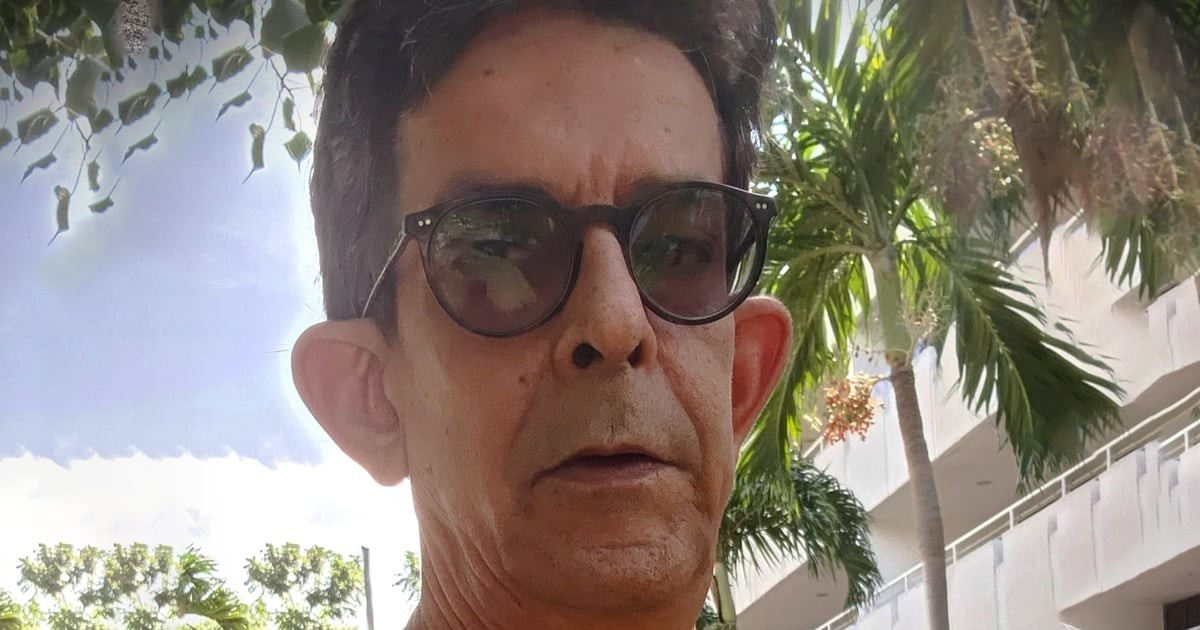
The comedian Ulises Toirac warned that the 176 economic measures approved by the Cuban regime could become a means for the nomenclature of the Communist Party, the Armed Forces, and the Ministry of the Interior to enrich themselves with resources that have cost the Cuban people "lives and hardships."
In a reflection published on Facebook, Toirac opened his text with the saying "In troubled waters, fishermen gain" and drew a parallel with the collapse of the Soviet Union, when former regional secretaries of the CPSU ended up as majority shareholders of strategic resources.
He cited the case of Vagit Alekperov, former Deputy Minister of Oil and Gas of the former USSR, who founded and privatized Lukoil in 1993, and noted that academic studies estimate that 43% of the initial Russian oligarchs came from the Soviet nomenclature.
"I say this because 30 years later, all of that has been studied and re-studied by everyone involved. And when I say 'involved,' I don't forget about the interested parties," he wrote, implicitly warning about Cuba.
The reform package - the most ambitious from the regime in decades - was approved in an unusually expedited process: Díaz-Canel announced the emergency economic agenda on June 12, the Central Committee endorsed it on June 17 with Raúl Castro present via video conference, and the National Assembly ratified it on June 18 and 19.
Toirac described that speed with irony: "The measures, which are in the purest capitalist style, are coming. I have no doubt about it. And they will be implemented at the speed of a fart—just look at how on Wednesday there's the Central Committee, and on Thursday the National Assembly, killing and preserving."
Regarding the real origin of the reforms, Toirac was straightforward: the catalyst is not popular pressure or public protests, but negotiations with Washington.
He pointed out that the U.S. government "continued to talk but tightened the screws," and lamented that "there have not been 'exchanges' with Cuban society."
The actor acknowledged that the new laws "finally do not distinguish between Cubans and non-Cubans, whether from inside or outside," which he deemed correct, but he conditioned any positive assessment on a specific requirement: an exclusionary clause.
"There are Cubans who, in my opinion, should be excluded from investing or participating in any way in the creation of businesses, enterprises, economic organizations, lenders, executors... NO FORM OF PARTICIPATION in the economic framework: those who, until today, are officials of the PCC from the municipalities to the national level, nor of the People's Power, nor officers of the FAR or MININT, nor of any entities that operate at those levels within those organizations. Nor their potential front men," he demanded.
The warning carries particular weight, as the approved measures even allow for the purchase of shares in state enterprises that have been converted into commercial companies, potentially including the military conglomerate GAESA.
Ulises emphasized that there are resources that should not be exploited for personal gain, as they are not private.
"I don't know if an exclusionary clause should be made in the laws, I don't know if it goes against the Constitution that endorses the privileges of the PCC even above the Constitution itself... I don’t know, it’s complicated. But it is unavoidable," he commented.
Just to know if the tough game is coming for the tough. If we’re not going to end up—like it has been happening secretly and on a smaller scale—with big or medium-sized entrepreneurs profiting from our blackouts, our lack of food, and our absence of medicine.
Toirac, who on Thursday launched a satirical contest to name the measures -with ironic prizes such as solar panels and electricity-generating bicycles-, raised the stakes towards a political demand without ambiguity.
"If we are not going to put an end—like it has been happening secretly and on a smaller scale—to big or medium-sized businesses profiting from our blackouts, our lack of food, and our absence of medicine," he wrote.
And he concluded his reflection with two words that sum up his condition for supporting any real openness: "Exclusion clause. And transparency."
Filed under: