
Related videos:
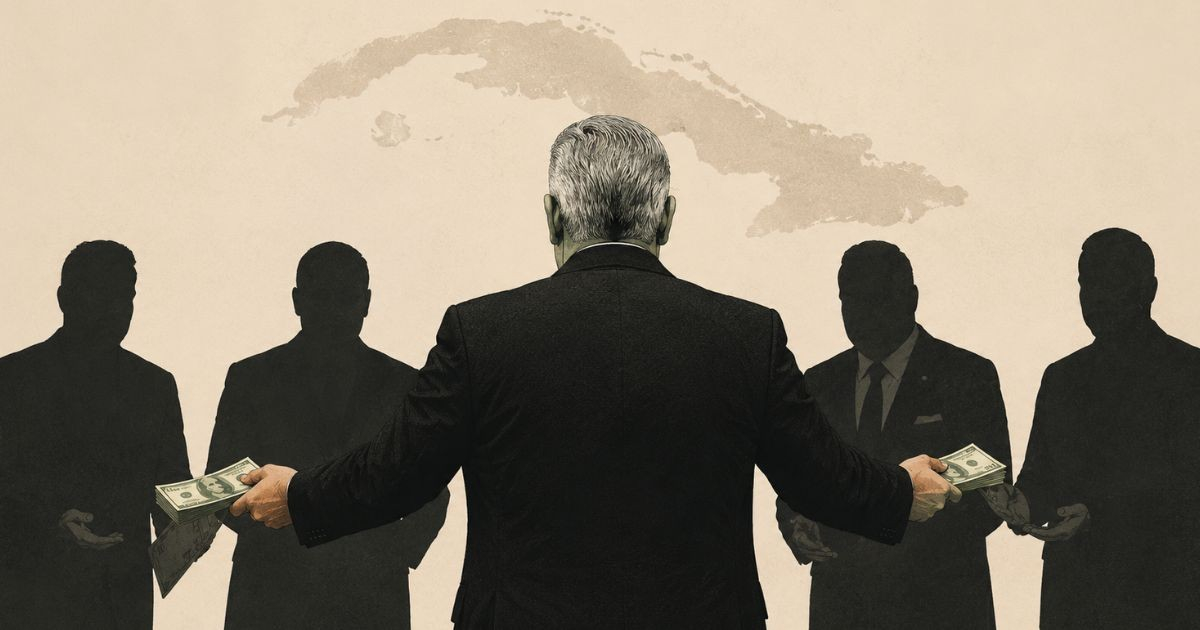
The independent organization Food Monitor Program warned that the package of 176 economic measures approved by the Cuban regime could lead to a "crony capitalism": a process in which wealth accumulated under state control ends up in the hands of individuals connected to power, while the population is excluded from the benefits, in other words, what has been happening until now.
The package was approved by the Extraordinary Plenary of the Central Committee of the PCC on June 17 and ratified by the National Assembly two days later, organized into 23 key areas that include private banking, currency exchange houses, opening to foreign investment, subsidy reform, and the transformation of state enterprises into joint-stock companies.
This last measure is the most critical point for the organization.
According to their Press Release, "the sale of stakes in state-owned enterprises, without transparent bidding processes, independent courts, public audits, and citizen oversight, can reproduce known patterns of 'crony capitalism': a transition in which the wealth accumulated under state control passes into the hands of private entities connected to power, while the population that has borne the costs of the state-controlled economy for decades is excluded from its benefits."
The concept describes a system where business success does not depend on efficiency or innovation, but rather on ties with the government: exclusive permits, tax favors, subsidies, and blocking competitors.
In the Cuban case, the risk has a concrete reference: GAESA, the conglomerate controlled by the Armed Forces that holds between 40% and 70% of the island's economy, with millions of dollars in assets and companies registered in Panama, Cyprus, and Liberia.
The economist Mauricio De Miranda Parrondo describes the process as the first step towards a "patrimonial authoritarian capitalism" led by the PCC, comparable to the post-Soviet Russian transition, where party elites became oligarchs through opaque privatizations.
The actor Luis Alberto García also publicly warned about this danger, demanding that no PCC official, deputy, or military leader could become a businessman or shareholder without an independent audit of their assets.
"Already in the countries of the former communist bloc in Eastern Europe, after its dramatic fall, we witnessed the magical and swift transformation of high-ranking party officials and military personnel into wealthy entrepreneurs with money that did not come from their previous salaries," he wrote on Facebook.
Food Monitor Program also indicates that the regime uses the sanctions from the Trump administration as an excuse to avoid its internal responsibilities: low agricultural productivity, state inefficiency, business opacity, and repression of independent social actors.
The organization is categorical: "The existence of external pressure does not exempt the Cuban state from its internal obligations regarding economic, social, and cultural rights."
The food background intensifies the urgency of the warning. According to the organization's own data, 96.91% of the Cuban population suffers from food insecurity, 33.9% of households had at least one member who went to bed hungry in the last 30 days, and 78% of those surveyed believe that the current crisis is worse than the Special Period of the 1990s.
To prevent the reforms from deepening exclusion, Food Monitor Program demands minimum guarantees: full publication of the 176 measures with timelines and responsible parties, public and independent auditing of any sale of state assets, explicit protection of the right to food in the subsidy reform, and recognition of civil society and independent press as legitimate monitoring actors.
The organization concludes with a direct warning: "Otherwise, the recent changes will lead to an uneven transition that benefits an authoritarian and patrimonial capitalism."
Filed under: