
Related videos:
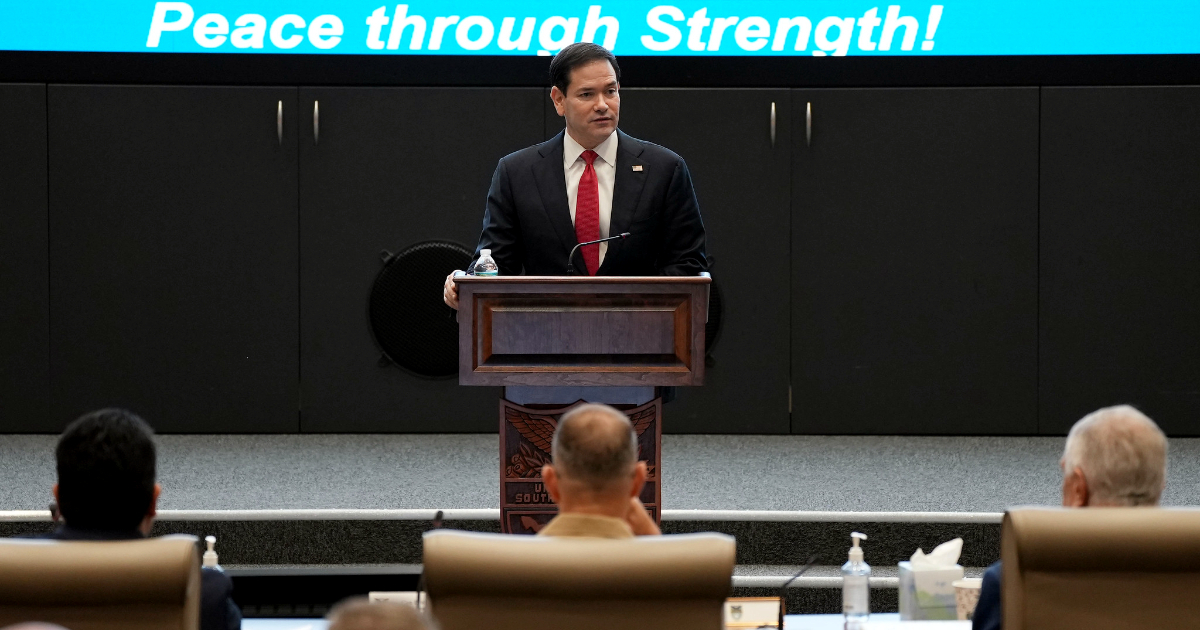
The United States Secretary of State, Marco Rubio, issued a strong critique of the Cuban regime this Tuesday by announcing a new round of sanctions against entities linked to the military conglomerate GAESA, marking Washington's most decisive response to the recent economic reforms promoted by Miguel Díaz-Canel.
According to Rubio, the situation in Cuba continues to deteriorate because the authorities prioritize "their total control over the freedom, opportunities, and basic well-being of the Cuban people", despite presenting an ambitious package of 176 economic measures as a profound transformation of the current model.
The statements were made at the same time that the State Department announced sanctions against five Cuban entities and a member of the Castro family's inner circle under the Executive Order 14404, signed by President Donald Trump on May 1st.
The measure affects three companies associated with GAESA —Almacenes Universales S.A. (AUSA), RAFIN S.A., and Banco Financiero Internacional (BFI)— as well as GeoMinera S.A., the José Martí Steel Company (Antillana de Acero), and Annalie Lilliam Rueda Cardero, wife of Alejandro Castro Espín (known as 'El Tuerto'), former head of Cuban intelligence services and son of Raúl Castro.
The sanctions come just four days after the State Department characterized the reforms approved by the National Assembly as "superficial smoke signals".
In statements released last Friday, a U.S. spokesperson asserted that these measures constitute a typical strategy of the regime to project an image of change while not relinquishing political and economic control of the country.
The Cuban government presented the 176 transformations as the most profound reform since the establishment of the communist model, including proposals to allow private banking, expand foreign investment, relax foreign trade, eliminate restrictions on the private sector, and authorize the buying and selling of shares in state-owned enterprises.
However, for Washington, these measures are insufficient as long as the main sources of income for the economy remain under the control of the state and military apparatus.
Rubio focused a large part of his criticism on GAESA, which he described as the main tool used by the ruling elites to appropriate the country's resources.
"GAESA has persistently served as the main vehicle for the regime's elites to steal the scarce resources of the island," stated the Secretary of State in his statement.
According to the head of U.S. diplomacy, these resources are used to finance repression, espionage, and hostile activities against the United States, instead of being allocated to schools, power plants, and other basic needs of the Cuban people.
The State Department maintains that GAESA continues to operate as the "financial muscle" behind the regime's repressive apparatus.
Beyond the sanctioned entities, Washington issued a direct warning to foreign banks, investors, and companies that maintain relationships with economic structures controlled by the Cuban regime.
Rubio stated that any person or entity providing services to the sanctioned individuals risks being subject to similar measures.
"Foreign banks and other companies providing services to these entities must immediately freeze those activities," he stated.
The warning is especially significant because many of the reforms announced by Havana aim precisely to attract foreign investment, international financing, and new business partners to alleviate an economic crisis that has worsened due to fuel shortages, inflation, declining production, and prolonged blackouts.
The new round of sanctions confirms that the Trump administration maintains a maximum pressure strategy on the economic structures supporting the Cuban regime.
While Díaz-Canel and Manuel Marrero Cruz attempt to present the reforms as a shift capable of rescuing a collapsed economy, Washington insists that the changes lack credibility unless accompanied by political transformations and the end of military control over strategic sectors.
For Rubio, the fundamental problem remains the same: a system that, as he stated, continues to prioritize the preservation of power over the freedom and well-being of Cubans.
Filed under: