
Related videos:
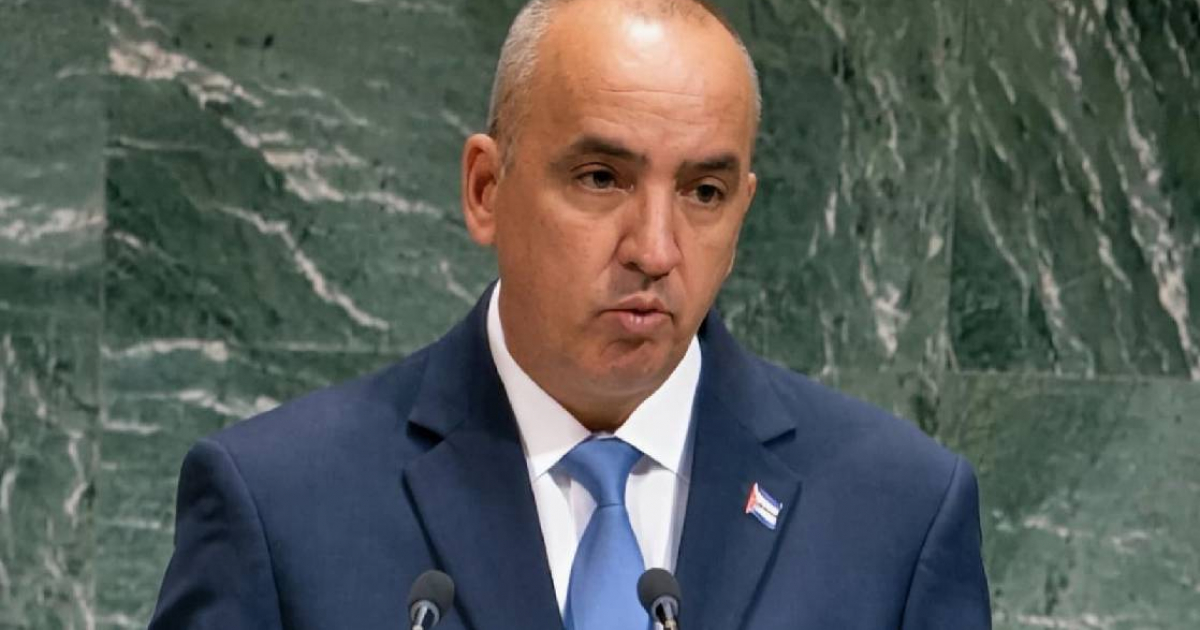
The Cuban ambassador Ernesto Soberón Guzmán appeared on Tuesday before the United Nations High-Level Meeting on HIV/AIDS to proclaim the "achievements" of the Cuban healthcare system, in a speech that starkly contrasts with the documented health crisis within the Island.
From the podium of the UN in New York, Soberón stated that he had "highlighted the achievements of our national health system, including the sustained elimination of mother-to-child transmission of HIV and congenital syphilis, as well as advancements in diagnosis, treatment, and viral suppression."
He also blamed the U.S. embargo for hindering the acquisition of antiretrovirals, diagnostic tests, and essential supplies, and denounced what he referred to as an "energy blockade" that exacerbates the challenges faced by the system.
The reality that the diplomat omitted before the international forum is one that the regime itself has had to acknowledge internally. In July 2025, the Minister of Health José Ángel Portal Miranda admitted before the National Assembly a “unprecedented structural crisis” in the sector, with coverage of barely 30% of the basic medication list.
The indicators are devastating: infant mortality nearly tripled between 2018 and 2025, rising from 3.9 to 9.9 per thousand live births, its highest level in over two decades.
In Havana, it reached 14 per thousand. The survival rate for children with cancer dropped from 85% to 65% due to a lack of essential medications, and the surgical waiting list exceeds 96,000 patients.
Cuban hospitals operate without electricity for 12 to 20 hours a day, with collapsed ceilings and lacking basic supplies such as syringes and gauze. Thousands of doctors have emigrated, leaving services in a state of collapse, with salaries around 30 dollars a month.
In terms of specific HIV matters, the situation does not support official optimism either. Cuba reports more than 35,373 people living with the virus and around 1,708 new diagnoses annually. The chronic shortage of antiretrovirals has been reported since at least 2019.
In April 2026, the case of "Julito", a young man with HIV who relied on social media solidarity to access medications, became a symbol of state abandonment due to the system's lack of response.
Soberón's speech reflects a systematic pattern of the regime: using international forums to project a non-existent image of medical power.
In December 2025, officials in Matanzas boasted about "health achievements" amid a healthcare crisis, while Miguel Díaz-Canel showcased "cutting-edge" hospitals as the overall system collapsed.
The achievement of eliminating mother-to-child transmission of HIV, which Soberón cited before the UN, was recognized by that organization in June 2012, 14 years ago. The regime continues to present it as evidence of a functional healthcare system, while in February 2026, a Cuban official admitted that this same system is "on the verge of collapse."
Filed under: