
Related videos:
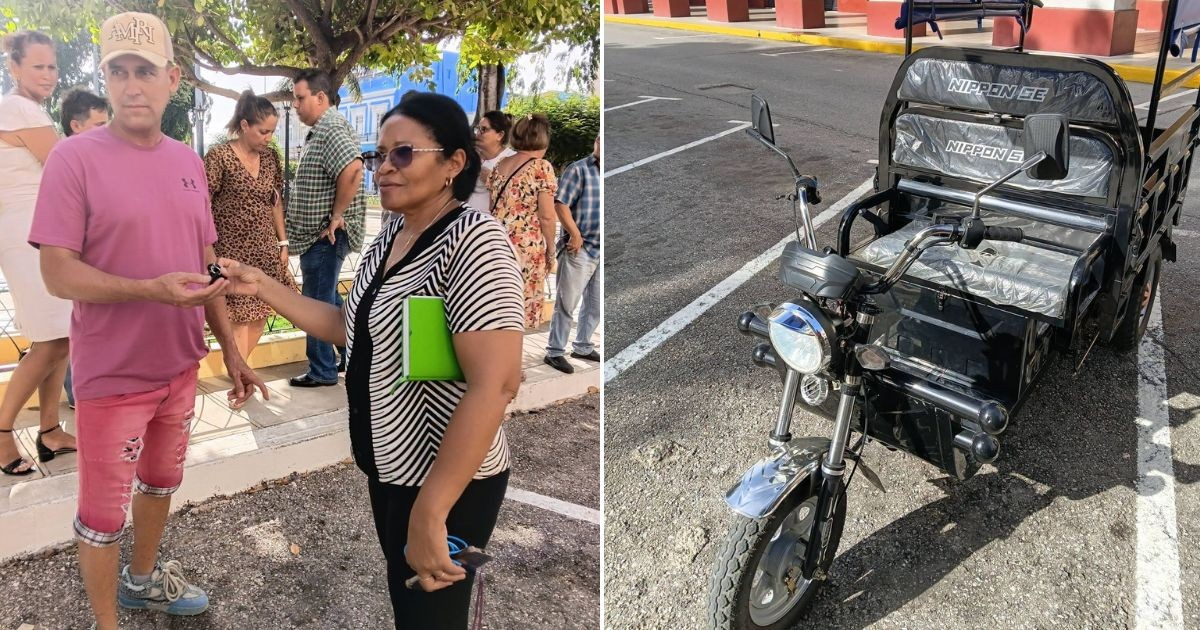
A self-employed worker from Matanzas delivered an electric tricycle to the provincial government this Wednesday to assist with the transportation of patients undergoing hemodialysis treatment, as reported by the state media TV Yumurí.
Rudy Benítez Expósito, identified as the donor, donated the vehicle with the aim of strengthening social impact actions in the territory, and it also highlights the regime's inability to guarantee even the most basic needs.
In addition to transporting renal patients, the tricycle will be used for the transport of doctors and other tasks related to community care and social services, according to the report from the state media.
The donation takes place amid a healthcare transportation crisis that puts the lives of thousands of Cubans with terminal chronic kidney failure at risk, as they rely on multiple dialysis sessions each week to survive.
The fuel shortage has halted the transport of these patients in multiple provinces during 2026.
In Camagüey, patients had gone almost a week without hemodialysis as of June 20 due to a shortage of chemical supplies at the Manuel Ascunce Domenech Provincial Hospital.
In Las Tunas, authorities threatened to suspend the prioritized taxis for these patients due to a lack of fuel in Puerto Padre, while local leaders maintained unrestricted access.
The regime responded in May with the addition of 200 electric cars, model Dongfeng Box 01, for transporting dialysis patients, the first half of a batch of 400 promised by Miguel Díaz-Canel in March.
However, the measure proved insufficient: in Villa Clara, only 10 of those 200 vehicles were operational by mid-June, and many patients continued to pay up to 500 pesos per trip.
In that same context, Villa Clara had already turned to electric tricycles as an emergency measure due to the fuel crisis, making the donation from Matanzas a solution that other regions had adopted out of necessity before any official support arrived.
Estimates for 2026 indicate that there will be over 3,000 kidney patients at risk across the island due to service interruptions, a figure that reflects the worsening of a structural crisis that the Cuban healthcare system has been unable to resolve with its own resources.
TV Yumurí presented Benítez Expósito's initiative as "an example of how the private sector can contribute, from a social responsibility perspective, to projects that directly benefit the community and support essential services," in line with the official narrative that promotes collaboration between the non-state sector and the Cuban State.
The donation of a single tricycle, though modest in the face of the scale of the problem, illustrates the extent to which the collapse of healthcare transportation in Cuba has forced individuals to seek solutions to meet a need that should be guaranteed by the state.
Filed under: