
Related videos:
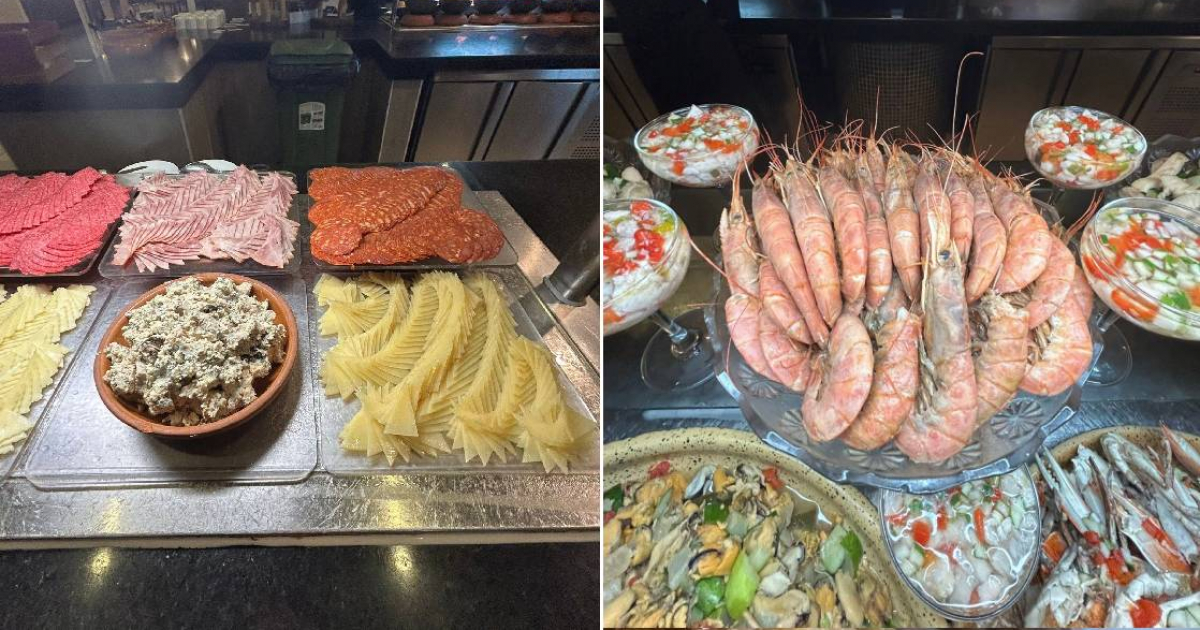
The images that a tourist posted on Facebook this week starkly depict the dual reality of Cuba: while the population struggles to secure three meals a day, the regime's hotels provide lavish banquets for foreign visitors.
Mike Fisher, identified as a guest of the Meliá Internacional de Varadero hotel, shared several photographs of the dinner buffet at the establishment, where more than 1,300 people from Argentina, Portugal, Mexico, Canada, Spain, and Cuba enjoyed a table full of options.
"Lamb, chicken, pork, fish, tuna... absolutely everything at this buffet," wrote Fisher, who also listed breadsticks, pasta, cakes, and desserts among the available options.
The contrast with the reality experienced by the Cuban population could not be more brutal.
According to the report "In Cuba, There Is Hunger 2025" from the Food Monitor Program, 33.9% of Cuban households reported having experienced hunger recently, and 96.91% of the population lost adequate access to food due to inflation and loss of purchasing power.
Only 57.6% of Cubans manage to have three meals a day, while 3.7% barely reach one meal daily, according to the same report.
A national survey revealed that one in three Cuban families went to bed without eating, according to Diario de Cuba.
Rice exceeds 400 Cuban pesos per pound in the informal market, in a country where the average state salary hovers around 7,000 pesos monthly.
This disparity is not coincidental; it reflects a deliberate policy of the regime.
The military conglomerate GAESA, which controls the Cuban economy, has invested 13.8 times more in hotels than in public health over the past 15 years, with a total of 24.2 billion dollars allocated to the tourism sector.
In 2024, the regime allocated nearly 40% of its total investments to tourism, while agriculture received a mere 2.7%.
Meanwhile, up to 20,000 tons of food donated by the UN remain undelivered on the island due to a lack of fuel, and power outages of up to 22 hours a day affect food preparation in 80.4% of households.
The regime's bet on tourism, however, is in collapse.
Hotel occupancy fell to 21.5% in 2026, and Meliá Hotels International announced on June 3 the abandonment of 15 hotels in Cuba due to sanctions imposed by the Trump administration against GAESA, resulting from Executive Order 14404 signed on May 1, 2026.
Despite this collapse, the food crisis forces the regime to change its strategy only in a reactive and delayed manner: the Government itself acknowledged in June 2026 that it had been unable to distribute oil, chicken, or yogurt in the regulated basket.
It is not the first time that images of hotel buffets have generated outrage. In 2025, a TikTok video by the user @kary_y_jony showcased the table at the Meliá Paradisus Los Cayos hotel, which was equally overflowing, sparking similar reactions about the gap between the abundance for tourists and the scarcity experienced by the Cuban people.
Infant mortality in Cuba doubled to 9.9 per 1,000 live births in 2026, a figure that encapsulates the human cost of decades of misallocated priorities by the dictatorship.
Filed under: