
Related videos:
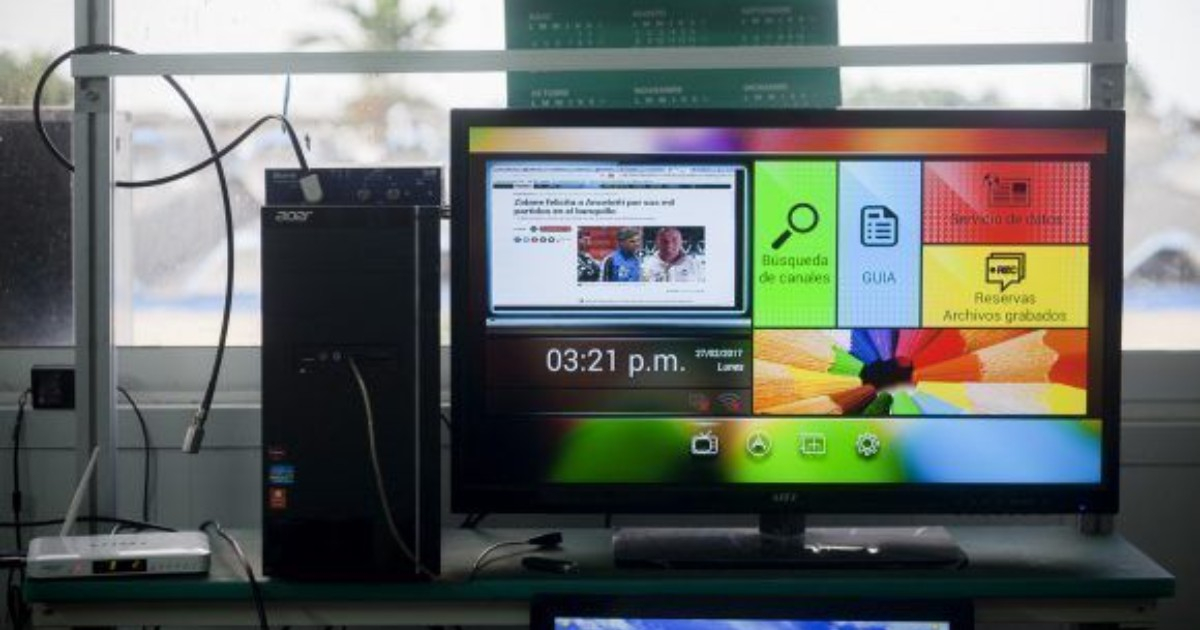
The electrical crisis that is paralyzing Cuba reached the screens of thousands of Habaneros this Friday: Radiocuba División La Habana officially reported that the digital television channels 24, 48, and 50 are experiencing transmission issues due to instability in the electrical supply at the building of Torre de K, located at 23 and K in Vedado.
According to the statement from the state-owned company, "there have been issues with the broadcasting services of digital television channels 24, 48, and 50, which are transmitted from the K Tower building, located at 23 and K in Vedado, due to difficulties and instability with the power supply and energy backup."
The interruption affects the residents of the municipality Plaza de la Revolución and the surrounding areas that rely on this transmission center to receive the digital signal.
As an alternative, Radiocuba recommends realigning the antennas towards the transmitter center of Televilla, in La Lisa, where channels 15, 36, and 38 are available through manual or automatic search.
Users can also call 7 620 3644 or 5 9978 370 for additional information.
What the official statement does not mention is the context that explains the failure: Havana is experiencing one of the worst electrical collapses in its recent history.
The Electric Company of Havana confirmed that the capital was without electricity for 24 hours on Thursday, June 25, with a maximum impact of 640 MW at 11:10 PM.
On a national scale, the electrical deficit exceeded 2,200 MW on Thursday, setting a new historical record by reaching 2,208 MW at 8:50 PM, surpassing the previous high of 2,174 MW recorded on May 14.
This Friday, the situation did not improve: by six in the morning, there were already 1,866 MW affected with only 995 MW available, against a demand of 3,200 MW.
The K Tower is a relatively new infrastructure. Just in March 2026, Radiocuba had expanded digital coverage in Havana, enabling precisely channels 24, 48, and 50 from that building, with DTMB standard transmitters funded by Chinese donations.
Three months later, that expansion is halted by the same energy crisis that is affecting the country.
The pattern is repeated in other provinces. In Las Tunas, power outages and the lack of fuel forced Radiocuba to drastically reduce its broadcasts in June, concentrating the signal on a single channel.
The structural causes of the collapse include 106 distributed generation plants halted due to a lack of fuel—890 MW out of service—, the interruption of Venezuelan oil supply since January 2026, and the chronic deterioration of thermal power plants.
The CTE Antonio Guiteras has accumulated 16 breakdowns so far this year, with the latest recorded on Wednesday, June 24.
The accumulated desperation is already manifesting in street protests. On Wednesday, June 24, Cubans took to the streets in Vedado and other neighborhoods in the capital to protest against power outages lasting nearly 24 hours, while in Santiago de Cuba, loud demonstrations also occurred.
Radiocuba ended its statement with a brief sentence: "We apologize for the inconveniences caused."
Filed under: