
Related videos:
The analyst José Manuel González Rubines published an article this Friday on the platform Cuba X Cuba in which he dismantles the analogy between the recent economic reforms of the Cuban regime and the Soviet perestroika, arguing that the reform lacks the political dimension that made the latter a process of real openness.
The text, titled "Perestroika without Glasnost or the Art of 'ceasing to be in order to continue being'", emerges in the context of the package of 176 economic measures that the regime presented to the National Assembly on June 18, described by official media as "historic."
González Rubines recalls that Mikhail Gorbachev's perestroika did not travel alone; it was accompanied by glasnost, a policy of informational openness that relaxed censorship, tolerated public criticism of the state, and ultimately allowed for partially competitive elections that eroded the monopoly of the one-party system.
That signal is completely absent in Havana. The foundations of the political system remain intact, and the reform focuses on areas that interest those in charge: property and future business ventures, where the nomenclature aims to convert its control over public assets into private wealth, observes the journalist.
The Prime Minister Manuel Marrero Cruz unintentionally provided the most revealing summary of this logic: "do what is necessary to preserve what is essential." González Rubines —co-director of Cuba x Cuba— accurately interprets the phrase: what is necessary refers to the economy; what is essential refers to power.
Reforms do not arise from a mercantile conviction either. The Economist Intelligence Unit projects a contraction of 7.2% for the Cuban economy in 2026, and Washington conditions any relief from the embargo on political opening with an electoral horizon. The model that is taking shape, warns the analyst, replicates the postsoviet "crony capitalism," where the former Russian nomenklatura transformed into a property-owning class without relinquishing political control.
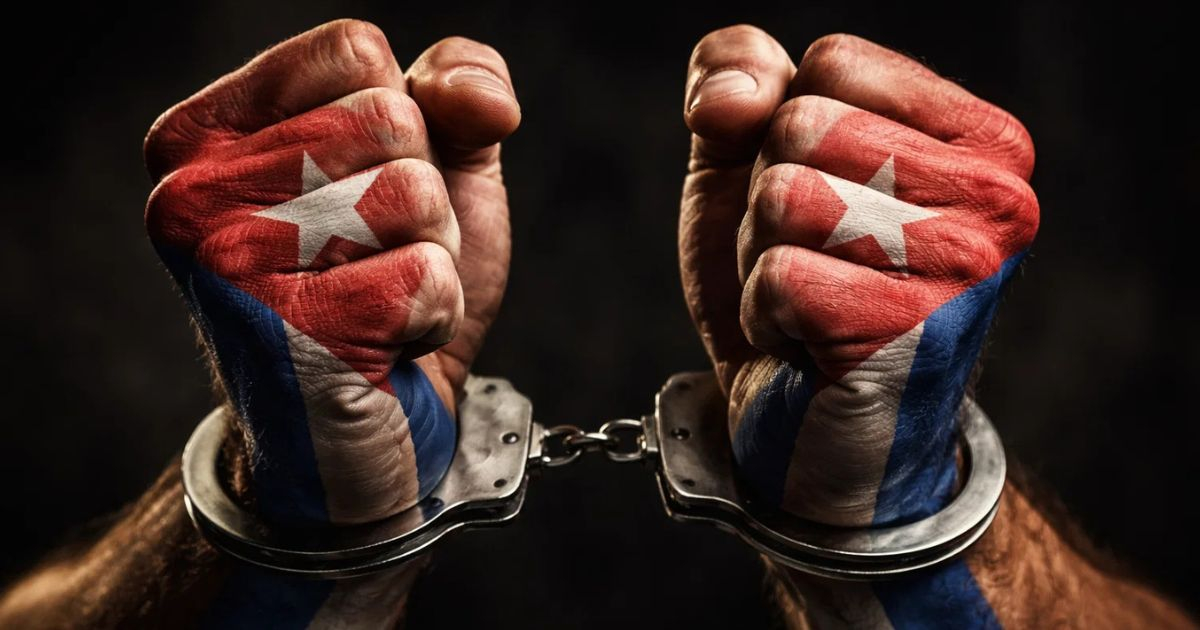
Meanwhile, the regime penalizes all forms of expression, whether digital or physical. Reporters Without Borders placed Cuba at position 160 out of 180 countries in its 2026 Press Freedom Index, noting that the Constitution, by reserving the media for the State, effectively makes any journalism that is not official operate underground, the analyst points out.
The Cuban Institute for Freedom of Expression and the Press documented 1,188 violations in 2025, a 54.7% increase compared to the previous year, along with 386 arbitrary detentions, more than double those recorded in 2024. Its director, Normando Hernández, summarized the apparatus's logic: “The dictatorship does not reform its repressive practices: it perfects them,” the text states.
The persecution does not stop at the borders. At the end of 2025, the regime threatened with extradition and imprisonment 18 executives of the independent media El Toque based abroad, spreading their names and faces as if they were police wanted posters and launched digital attacks against the outlet, González Rubines recalls.
Harassment also affects the young people of El4tico, detained in Holguín since February 6 on charges that could lead to up to nine years in prison, and the activist Anna Bensi, under house arrest since March 25. This Thursday, Bensi posted on her social media: "Silence is no longer an option. There is no time for gray. It's black or white. Freedom or dictatorship."
González Rubines concludes that what is currently known about Cuba—political prisoners, blackouts, corruption, shortages, protests—is a civic achievement wrested from power by independent journalists and citizens who captured reality "phone in hand," not a concession from the State. "More than facing a transition that is beginning," he writes, "we are confronted with a regime that, true to its instinct for self-preservation, aims to 'stop being in order to continue being.'"
Filed under: