
Related videos:
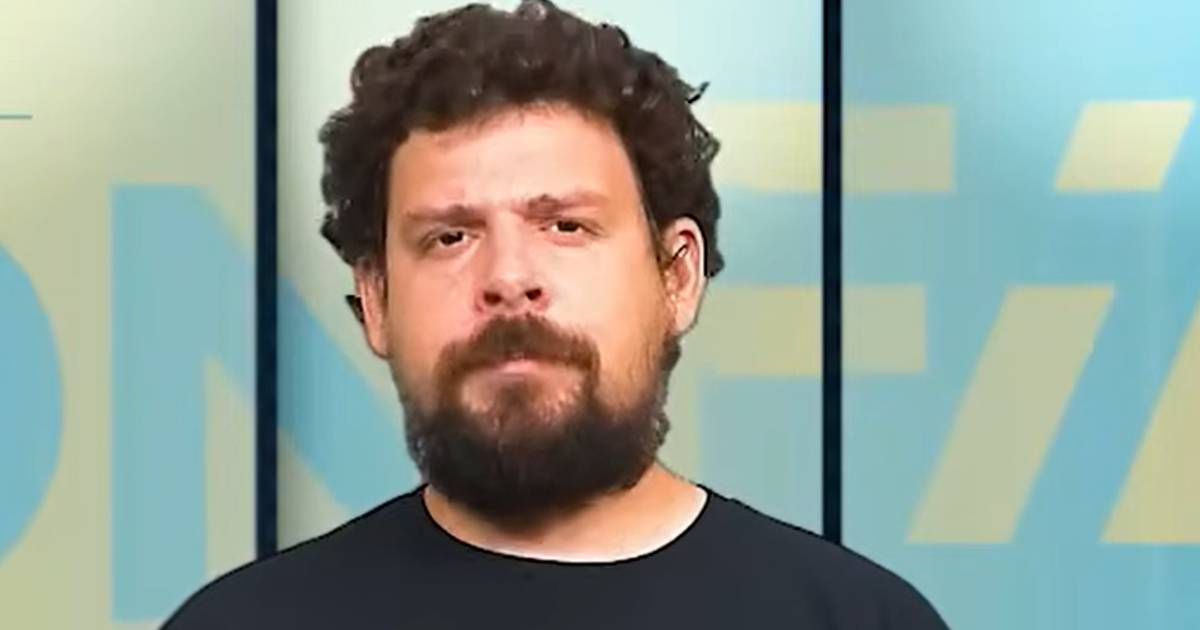
Michel E. Torres Corona, director of the state program "Con Filo" and one of the most active spokespersons for the Cuban regime on social media, published an article this Friday on the portal Alma Plus TV titled "Is Socialism Over in Cuba?", in which he concludes, with the optimism that only party loyalty can bring, that socialism on the island is "more alive than ever." Meanwhile, ordinary Cubans are surviving with endless blackouts and cannot afford to buy a carton of eggs.
The article arrives right after the regime approved, in record time and without public consultation, 176 economic measures that include private banking, the conversion of state enterprises into joint-stock companies, and land use rights of up to 99 years.
Torres Corona himself admits, with an honesty that could complicate matters for him, that these transformations "are unlikely to strengthen the socialist transition" and that "we, the communists, have suffered a defeat in Cuba: the reformists have won this round, they have infiltrated the physical space of the State and, what is even worse, the minds of those who exercise their authority within it."
But don't worry: socialism is still alive. Torres Corona says so.
The approval process was, according to the author himself, of "unusual speed": Miguel Díaz-Canel announced them on June 12 during a surprise appearance; the Plenary of the Central Committee of the Communist Party supported them on June 17 without explicitly publishing any; and the National Assembly voted on them unanimously in a single afternoon during an extraordinary session, preceded by the reading of a letter of support signed by Raúl Castro. Socialist democracy at its finest.
Torres Corona also acknowledges that all of this happened "without popular debate and without the possibility for citizens, not even Party members, to point out inconveniences or suggest changes." In a country that subjected the Family Code to a referendum, the most profound transformations since the Special Period were decided in an afternoon. Revolutionary efficiency.
To justify the shift, the official discourse referenced Martí, Fidel, and Lenin. Torres Corona dismantles each of these usages, pointing out that citing Martí in this case is a "pragmatic reductionism that has little or nothing to do with Martí's altruism," and draws on academic references such as those of researcher Marlene Vázquez.
Also, remember that Fidel proclaimed in 2005: "He dreamed of the empire that many more paladares would be established in Cuba, because it may be that there won't be any left; or what do you think, that we have become neoliberals? None of us has become neoliberal." Today, private banking is one of the 176 standout measures. Times are changing.
The author admits that these transformations "will not alleviate the difficult conditions in which the majority of the Cuban people survive today, with prolonged blackouts and food shortages." The prominent Cuban economist Pedro Monreal has warned of a possible contraction of the Cuban GDP by 15% in 2026. The availability of medications barely reaches 50% of what was planned, and the new minimum wage of 3,210 pesos is not enough to buy a dozen eggs, which costs between 3,000 and 4,000 pesos.
Cubans on social media responded with the starkness that hunger brings: "Download them and eat them, and light up with the measures on paper," wrote one user. Another summed up the package as "the same dog with a different collar." While Torres Corona philosophizes about Gramsci, Trotsky, and Lenin's NEP, the island has been sinking into the crisis produced by that same socialism that is "more alive than ever" for decades.
Days before publishing this article, Torres Corona had already subtly criticized the NTV for announcing the death of Ramiro Valdés after the electrical report, suggesting that the reforms could signify "the end of the process" that this generation built. He now concludes his text with a phrase about socialism that summarizes the ideological gymnastics of the establishment: "Who can deny that today it is more alive than ever? It won't be easy... but it will be."
The U.S. classified the 176 measures as "smoke signals" and continued to impose sanctions against companies and individuals linked to the regime. At least in this regard, Washington and ordinary Cubans seem to agree.
Filed under: