
Related videos:
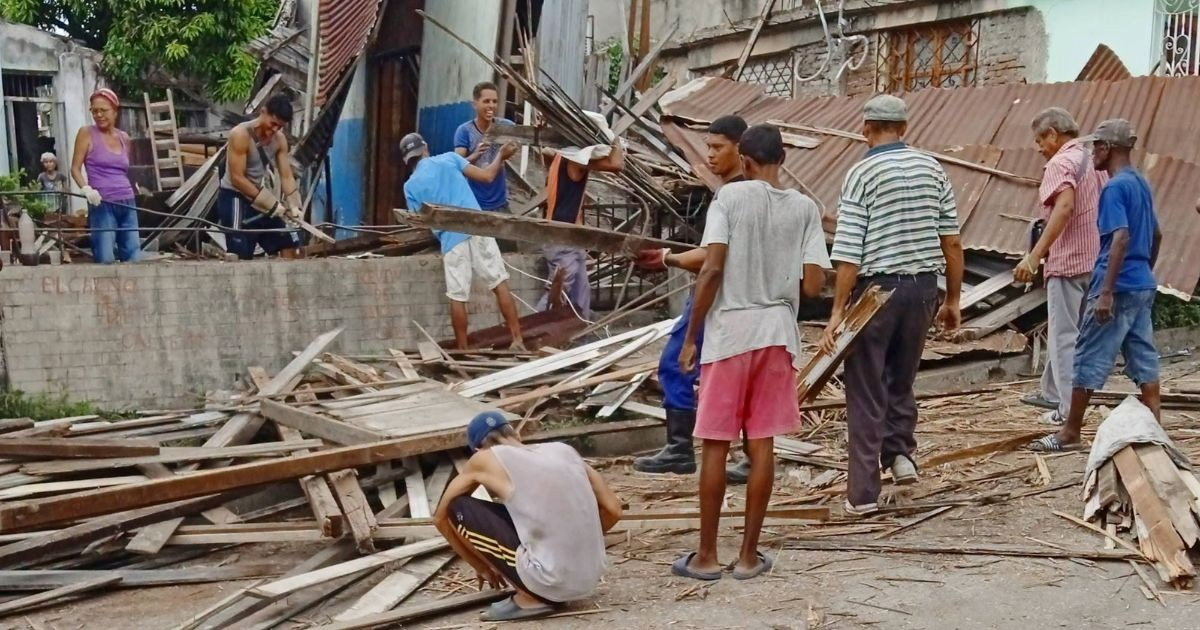
A house in the neighborhood of Mariana de la Torre, in Santiago de Cuba, completely collapsed this Sunday morning, and the wooden remains of the building were distributed among the neighbors to be used as fuel for cooking, according to reported Aris Arias Batalla, provincial head of Operations, Relief, and Aquatic Safety of the Cuban Red Cross in Santiago de Cuba.
The collapse occurred around 7:30 in the morning at house number 406, located on 11th Street between 2nd and 4th Streets in the neighborhood.
The structure, made of wood and covered with zinc, belonged to the young Andrés Hadfeg Villafañe and exhibited a noticeable tilt that had been apparent for some time, an unmistakable sign of its advanced deterioration.
"The wooden house with a zinc roof had been noticeably leaning for some time and sadly collapsed this morning," wrote Arias Batalla, who documented the scene with photographs.
Fortunately, there were no injuries, fatalities, or people trapped under the rubble.
After the collapse, dozens of neighbors spontaneously organized to sort through the materials among the debris.
Andrés Villafañe himself chose to give the wood to those around him so they could use it as firewood for cooking, a gesture that encapsulates in a single image the dual crisis facing Cuba: the housing and energy crises.
This scene is not unusual in Santiago de Cuba.
The province has a housing deficit that has accumulated over decades, worsened by Hurricane Melissa, which in October 2025 damaged more than 137,000 homes in the province, with 22,000 total collapses.
The recovery has been minimal due to a shortage of materials and state bureaucracy.
The Mariana de la Torre neighborhood, where the collapse occurred, is one of the most vulnerable areas in the city, featuring wooden and zinc structures that have accumulated years of neglect and deterioration without any response from the State.
In addition to the housing crisis, there is an energy emergency. Power outages in Santiago de Cuba can last up to 20 hours a day, and the shortage of liquefied gas forces millions of Cubans to rely on firewood, coal, and any available combustible material.
In March of this year, images of wood stoves on balconies of buildings in Santiago went viral as a symbol of that daily desperation.
That the planks from a collapsed house are immediately used to light the stove is not just an anecdote: it reflects a material collapse that the Cuban regime has neither been able to nor has wanted to reverse for decades.
Just on May 6th, the facade of a building on Jagüey Street in downtown Santiago collapsed, fortunately without any injuries but posing an electrical risk to the neighbors.
The housing deficit in Cuba exceeds 800,000 homes nationwide, with Santiago being one of the provinces most affected in the country.
Filed under: