
Related videos:
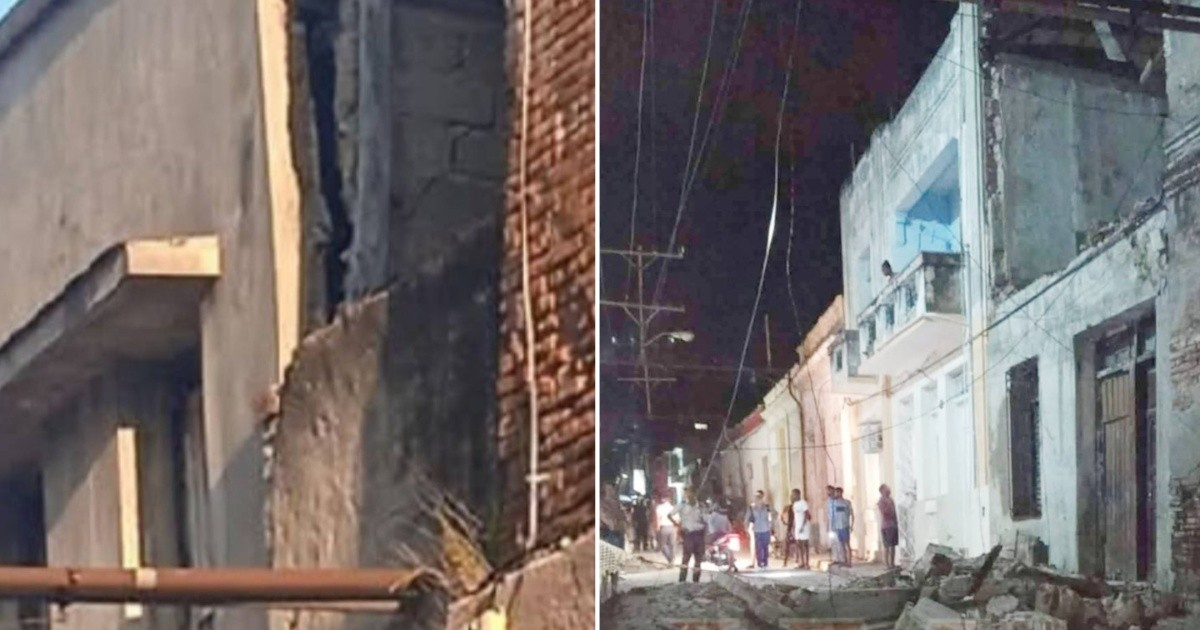
The facade of a building located on Jagüey Street, between Padre Pico and Escudero, in the heart of Santiago de Cuba, completely collapsed on Wednesday night onto the public road, fortunately without causing any injuries but creating an additional electrical hazard for the residents of the area.
The collapse did not come as a surprise to the residents of the area. According to testimonies gathered by independent journalist Yosmany Mayeta Labrada, the wall had been showing clear signs of deterioration for days and had been reported to the authorities multiple times without receiving an effective response. "They have been reporting that wall for days," said an indignant neighbor.
The collapse occurred at night when pedestrian traffic was low, which prevented a larger tragedy. During the day, the area—located behind the Teatro Oriente—experiences heavy foot traffic, including children and the elderly.
The collapse of the structure affected the electrical wiring in the area, which increased the risk for residents. Specialized teams from the electric company, technicians from the Rescue and Salvage Unit of the Fire Department of Command 4 Vista Alegre, and other municipal authorities were present at the scene.
The Head of Operations and Relief at MINSAP, Aris Arias Batalla, had previously documented the dilapidated state of the facade and warned about the danger it posed.
"It looks like a cardboard facade or a set from ICRT or Hollywood, but unfortunately, it isn't," he wrote before the collapse, warning that its falling could endanger the lives of pedestrians of all ages.
Arias Batalla also pointed out that just a few meters away there is another equally alarming case: a balcony and facade on Santo Tomás street, at the corner of Callejón Carmen and Enramadas, behind the Imperial hotel, which has been in a state of abandonment for over 60 years. "A case that dates back more than 60 years, and it stands there as a symbol of neglect, deterioration, and incomprehension," he denounced.
The incident is part of a structural housing crisis that has burdened Santiago de Cuba for decades. The city has over 6,000 cases of damaged homes unresolved since Hurricane Sandy in 2012.
The hurricane Melissa, which struck in October 2025, worsened the situation by damaging more than 106,500 homes in the province. Five months after its passing, only 17% of those homes had been repaired: just 18,400 units out of a devastating total.
In April of this year, the wall of the Church of Our Lady of the Forsaken in Santiago also suffered a partial collapse, putting at risk an image of the Virgin located more than 10 meters high. In February, neighbors from the El Salao neighborhood reported the deterioration of the stairs in a building that had been reported multiple times without a solution.
Cuba records approximately 1,000 collapsed buildings per year nationwide, with Santiago being one of the most affected provinces. In light of this pattern of institutional negligence, Mayeta Labrada posed a question that captures the citizens' outrage: "Do we have to wait for someone to die before action is taken?"
Filed under: