
Related videos:
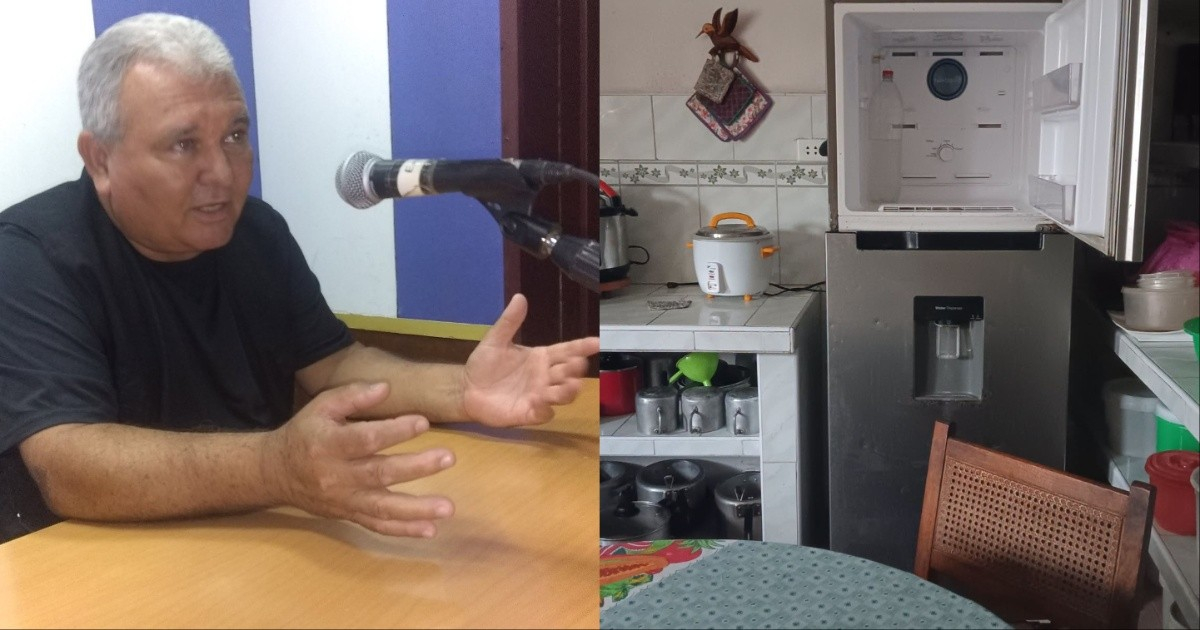
The official journalist Jesús Álvarez López, a radio reporter for the state station CMHW in Villa Clara with over four decades in regime media, posted an impassioned diatribe on Facebook in which he directly blames Donald Trump and Marco Rubio for the empty freezer, comparing U.S. sanctions against Cuba to "a Hitlerian gas chamber, only it doesn't kill in minutes, but it kills just the same."
The post, accompanied by a photograph of her kitchen with the freezer open and empty, sparked a wave of criticism and mockery from Cubans who pointed out that the primary responsibility for the crisis lies with the Castro regime itself, not Washington.
"I don't know if it's hatred, contempt, or disgust, or all three combined, that I feel for Trump and Marco Rubio," wrote Álvarez López, who added that empty refrigerators "become evidence of their heinous crime."
The users' reaction was strong and unwavering.
Keyla Zayas Pozo responded bluntly: "What nonsense... Marco Rubio and Trump?? Why not speak the truth and name those who have plunged Cuba into poverty and despair... say it loud and clear: DOWN WITH THE murderous Castro DICTATORSHIP."
Jorge Díaz was more measured but equally direct: "Do you really believe that your refrigerator is like this because of Trump and Marco Rubio? I won't deny that they may have some influence, but it would be a lack of political and economic insight not to see who bears the greatest responsibility."
Nuria Saura provided a revealing piece of information about the journalist's own situation: "My refrigerator has been like this for light years because the Cumbre de Placetas circuit has been experiencing these blackouts for years, which used to last 19 hours, and now it's 30 and counting... You feel its weight now because it wasn't one of the most affected before."
Luis Bernal ironically reminded him that Álvarez López had previously criticized the supply and demand mechanism, the same one that the regime has just adopted as an official measure within its package of 176 economic reforms announced in June 2026.
Daymel Castellano was more succinct: "Ask Díaz-Canel if he is in the same situation."
The pattern of Álvarez López is not new. In April 2024, he reported the most severe bread shortage in Cuba's history, and in that same month he acknowledged that his monthly salary of 4,680 pesos was insufficient to buy 30 liters of gasoline. In May of that year, he criticized the rise in tomato prices and in 2023, he condemned the sale of boxes of chicken for over 8,000 pesos at state fairs in Villa Clara. However, on all these occasions, he never pointed to the regime as responsible.
In 2026, Cuba is experiencing its worst crisis in decades: blackouts lasting between twenty and twenty-five hours a day in over 55% of the territory, a 60% drop in food production, and rice prices exceeding 400 pesos per pound compared to an average state salary of 7,000 pesos per month.
The Trump administration has imposed more than 240 sanctions against Cuba since January 2026, including Executive Order 14404 from May 1, which has reduced fuel imports by between 80% and 90%. However, analysts and Cubans themselves point out that the crisis has internal structural roots that have been decades in the making, further exacerbated by the collapse of Venezuelan oil supplies.
Álvarez López concluded his publication with a phrase that, perhaps unintentionally, encapsulates the contradiction in his stance: "Produce, stimulate, work, unlock... these should, in my opinion, be the first words of our economic dictionary," words that his critics interpreted as an admission that the problem lies within the Island, not in Washington.
Filed under: