
Related videos:
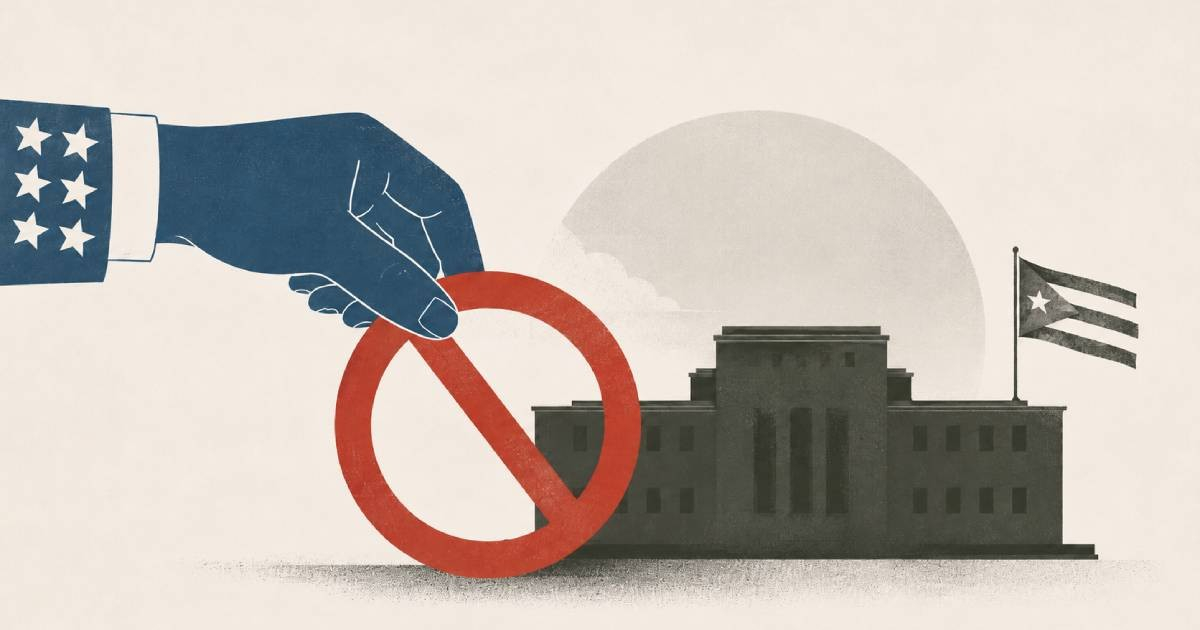
The U.S. Department of the Treasury added five individuals and five Cuban entities to the List of Specially Designated Nationals and Blocked Persons on Thursday, in the third round of sanctions against Cuba under Executive Order 14404 signed by President Trump on May 1, 2026.
Among those designated are the Cuban leader Miguel Díaz-Canel Bermúdez, his wife Lis Cuesta Peraza, her son Manuel Anido Cuesta —who resides in Madrid—, Brigadier General Alejandro Castro Espín (“El Tuerto”), son of Raúl Castro, and the son of Raúl Castro, Raúl Alejandro Castro Calis.
The sanctioned entities are the Ministry of the Revolutionary Armed Forces (MINFAR), the Committees for the Defense of the Revolution (CDR), the Cuban Institute of Friendship with the Peoples (ICAP), the mining company Minera La Victoria S.A. and the travel agency Amistur Cuba S.A.
This is the first time that Washington directly sanctions Díaz-Canel and his wife, which freezes any assets that they may have under U.S. jurisdiction and prohibits U.S. citizens and companies from conducting transactions with them.
Manuel Anido Cuesta, son of Lis Cuesta and residing in Spain, appears on the list connected to his mother, making his case one of the most notable: the sanctions extend to a relative of the Cuban leader living in Europe.
Alejandro Castro Espín, known as "El Tuerto" for having partially lost the vision in one eye during military maneuvers in Angola, is the coordinator of the National Defense and Security Council and has been identified as the Cuban negotiator in secret talks with Washington. His son Raúl Alejandro Castro Calis, born in 1995, was also included on the list and is directly linked to his father.
The designation of MINFAR under EO 14404 has implications that extend beyond Cuba. The Office of Foreign Assets Control (OFAC) simultaneously published Frequently Asked Question 1258, warning that non-U.S. persons — including foreign financial institutions — "are at risk of sanctions for engaging in transactions with designated persons under EO 14404."
The risk of secondary sanctions extends to any entity in which GAESA, the Ministry of the Interior (MININT), or MINFAR own, directly or indirectly, 50% or more of the capital.
The CDR, founded on September 28, 1960, as a neighborhood watch network, and the ICAP, established on December 30 of that same year to manage relationships with foreign organizations sympathetic to the regime, are two of the oldest historical structures of the dictatorship and are now both blocked under the same executive order.
This third round closes the net that started on May 7, 2026, when GAESA and Moa Nickel S.A. were sanctioned, and continued on May 18 with the designation of nine high-ranking Cuban officials and the Intelligence Directorate (DGI/G2).
The Cuban Foreign Minister Bruno Rodríguez rejected the measures and described them as "vile" and "illegitimate," publicly defending Díaz-Canel and Lis Cuesta in the regime's official response to the escalating pressure from Washington.
Since January 2026, the Trump administration has imposed over 240 new sanctions against Cuba, a campaign that systematically aims to dismantle the sources of funding and the pillars of political control of the dictatorship.
Filed under: