
Related videos:
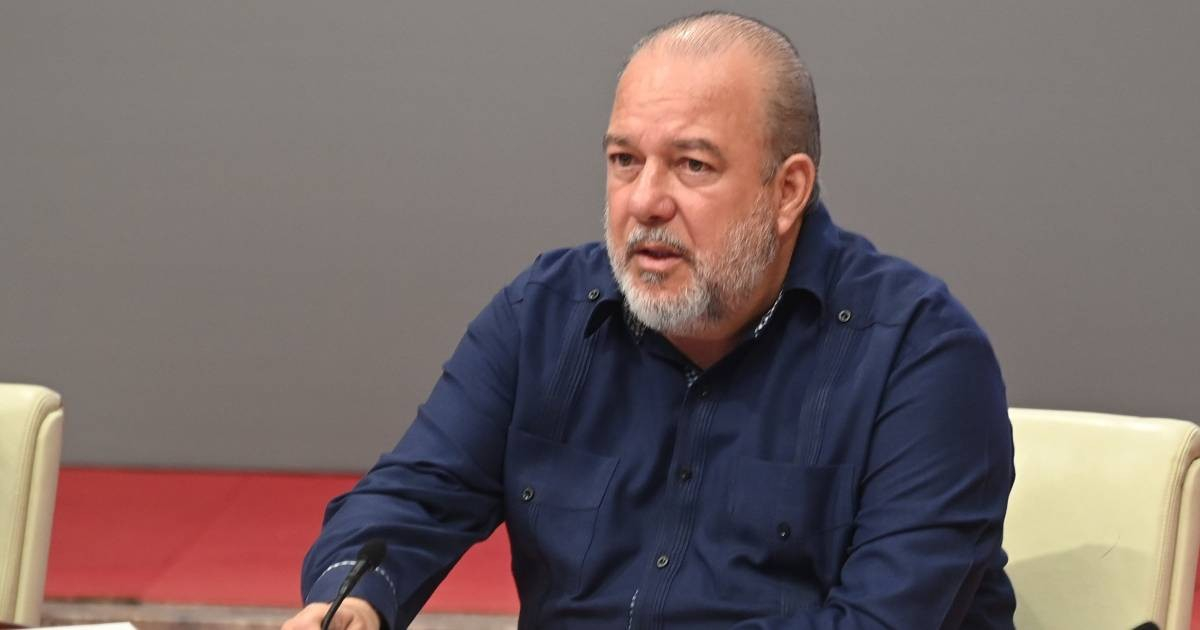
Cuban Prime Minister Manuel Marrero Cruz stated this Tuesday that "the greatest transformation must be in our way of thinking," while presenting the roadmap to implement the 176 economic and social measures approved by the regime, acknowledging that the main obstacles to executing the reforms are also found within the state apparatus itself.
The statement was made during a meeting of the Council of Ministers focused on defining the implementation of a package of measures, organized into 23 thematic axes and ratified by the National Assembly on June 19.
Marrero explained that the document was updated based on 673 proposals received during the consultation process, of which the Government incorporated 79%.
During the meeting, Miguel Díaz-Canel emphasized the political component of the reforms by clearly stating what he considers to be the central objective of the process.
“Above all, it is about saving the Revolution”, stated the leader, as reported by the official site of the Presidency.
Díaz-Canel also acknowledged that several of the actions included in the package are not new, but rather decisions approved previously that were never implemented due to administrative, bureaucratic, and regulatory hurdles.
In referring to the economic context, he reiterated that the U.S. embargo is to blame for the crisis the country is experiencing.
"We are facing a complex dilemma that we can solve: how to ensure the continuity of the socialist construction process on a small island in the Caribbean," he stated.
Among the first measures announced is the expansion of the state enterprise's powers, the decentralization of the approval of wholesale and retail prices, and the authorization for provincial governments to create, merge, or dissolve local state enterprises.
Changes are also anticipated in the private sector. The government will allow small and medium enterprises (mipymes) to hire more than 100 employees, authorize an individual to own more than one private business, reduce the list of prohibited activities, and simplify the procedures for establishing new economic players.
It is not the first time that Marrero has called for a change in mentality among state officials. In January of this year, during a visit to Ciego de Ávila, he requested a "radical change in mentality" and stated that leaders "should not fear change," although he clarified at the time that these transformations did not mean altering "the foundational roots of the Revolution" or the socialist system.
Specialists who have analyzed the reform package believe that the measures represent a relaxation of some economic management mechanisms, but the essential principles of the state model remain intact.
The implementation of the 176 transformations will begin in a particularly complex scenario for the Cuban economy. Poverty, the depreciation of the peso against the dollar in the informal market, prolonged blackouts, and a decline in production continue to shape the daily life of the population, while international organizations project a further contraction of GDP in 2026.
The Minister of Justice, Rosabel Gamón Verde, announced that implementing the measures will require amending numerous existing regulations and creating new ones through a more streamlined process than usual. In the same meeting, the President of the National Assembly, Esteban Lazo Hernández, stated that the time required to draft the legal provisions necessary to initiate the reforms will be reduced.
At the conclusion of the meeting, Díaz-Canel requested that the transformations not only be implemented, but also yield results.
"When I talk about defense, it's not just about implementing them; it's about implementing them well so that they yield results," he expressed.
Filed under: