
Related videos:
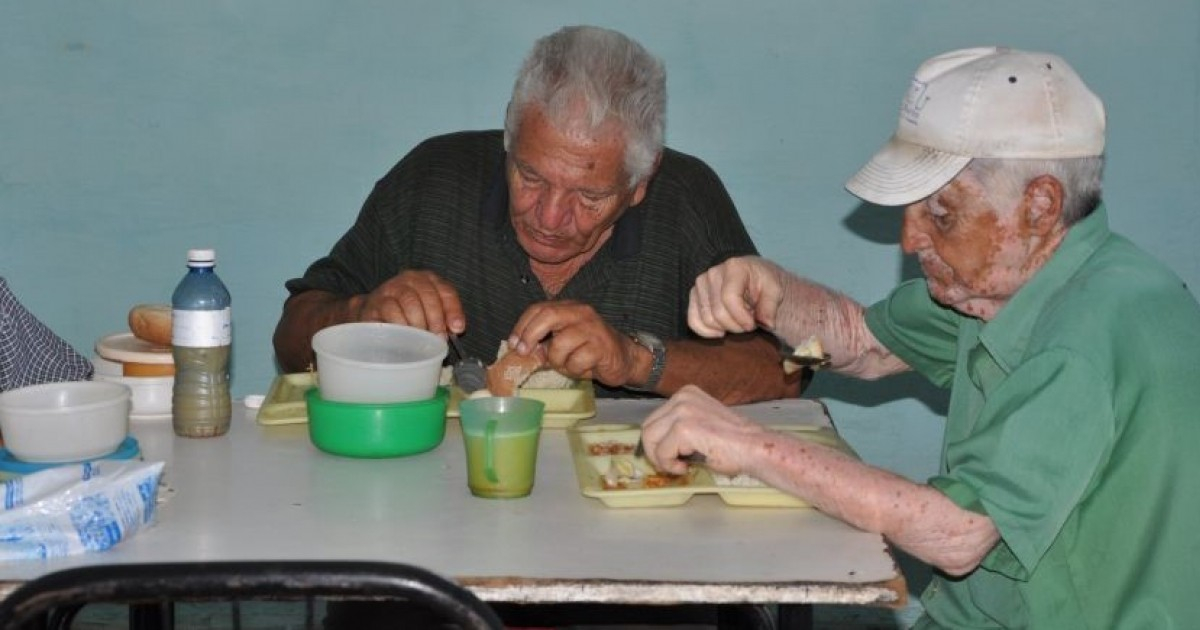
The Cuban regime can no longer sustain the food supply in its own social dining halls for the elderly and vulnerable individuals on its own.
The most recent evidence of that collapse came on Monday, when private businesses in the area of the 100 Bridge and Boyeros in Havana donated rice, eggs, chicken, and cleaning supplies to the Family Care System (SAF) of Alturas de La Habana, in the municipality of Boyeros.
The event was covered by the pro-government Tribuna de La Habana as a "humanitarian gesture" framed within the centenary of Fidel Castro and the Popular Movement My Neighborhood for the Homeland. However, the news inadvertently reveals something the regime would rather not admit: the State needs private individuals to finance its own social assistance programs.
The SAF was established in 1998 to ensure food and socialization for the elderly, people with disabilities, and other groups lacking resources or family support. Today, it serves over 76,000 people in approximately 1,445 units across the country, but the demand far exceeds the state's capacity.
In March of this year, officials from the Ministry of Labor and Social Security acknowledged in the National Television News that "the budget is not extensive and does not allow us to reach all individuals, which is why a study is being conducted to identify only the most vulnerable."
The situation in the dining halls is critical. The SAF 0204 Villanueva dining hall, also in Boyeros, has been cooking with firewood for five months due to a lack of liquefied gas, using old tires as support for the fire in the hallway, while 129 elderly people rely on that food as their only source of daily nutrition.
The demand for the system continues to grow: it increased from 59,000 people served in 2023 to 67,000 by mid-2025, with between seven and eight new applications for enrollment each day, according to data from the government itself.
To fill the gaps, the regime has turned to external donations. Last May, the World Food Programme delivered 106 tons of canned meat to 130 SAF dining halls in Villa Clara, benefiting over 8,000 people. In April, the Canary Islands donated 75 tons of canned chicken intended for those same dining halls.
The energy collapse worsens the situation. Since January 2026, the shortage of liquefied gas has spread throughout the country, and in May, the Minister of Energy, Vicente de la O Levy, admitted that Cuba has exhausted all its fuel reserves: "we have absolutely nothing."
In this context, the government announced in June 176 adjustment measures that include eliminating generalized subsidies and formalizing the obligation for private companies to co-finance pensions, nursing homes, and social dining halls, which makes official what has previously been presented as voluntary.
Meanwhile, 99% of retired Cubans do not meet their basic needs for food, housing, and medication, according to a survey from November 2025. The minimum pension, increased in September of that year to 4,000 Cuban pesos, is equivalent to less than 10 dollars on the informal market, roughly the price of a dozen 30 eggs.
The administration of the SAF of Alturas de La Habana expressed gratitude for the donations from private individuals and reminded that the program "was conceived by Commander in Chief Fidel Castro Ruz, with the aim of creating facilities for the nutrition and socialization of elderly individuals in disadvantaged situations."
What he didn't say is that, nearly three decades later, that program can no longer function without the help of those whom the regime's own ideological system considered its adversaries for decades.
Filed under: