
Related videos:
The Cuban regime presented a measure on Thursday before the Third Extraordinary Session of the National Assembly of People's Power (ANPP) that requires all economic actors—both state and private, national and foreign—to directly finance and support the country's social assistance system, from pension payments to funeral services for families in need.
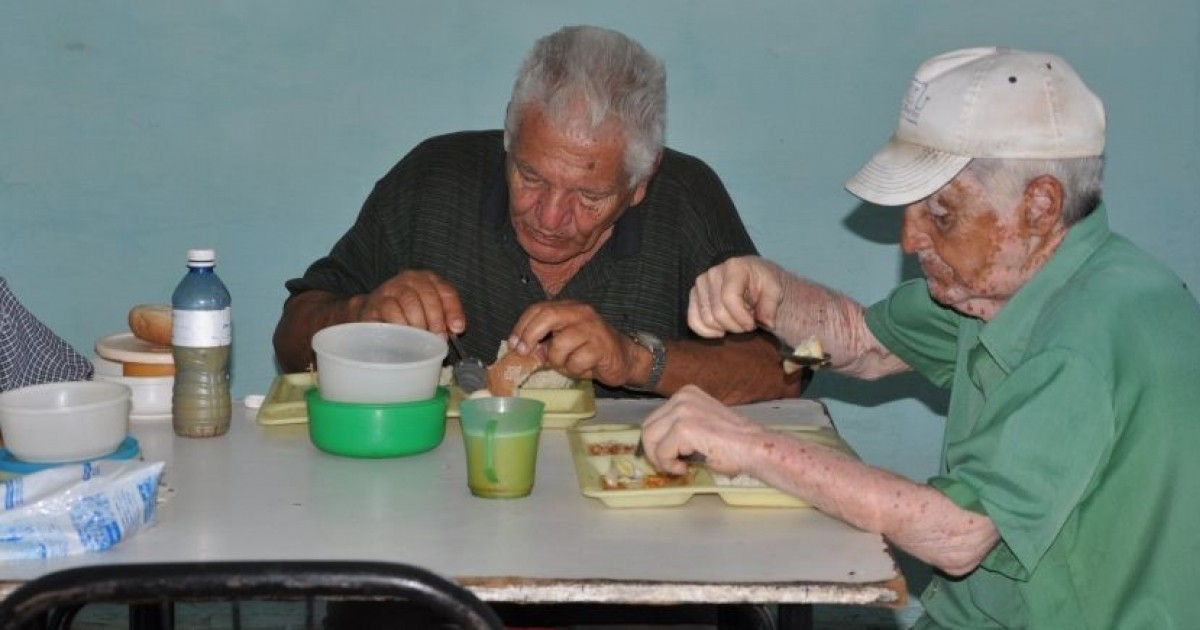
The provision, identified as measure 70 within a package of 176 transformations presented by Prime Minister Manuel Marrero Cruz, stipulates that private companies must support the payment to pensioners through agreements with banks, back dining facilities of the Family Care System, sustain nursing homes, maternal homes, and homes for the elderly, and support shelters for children without parental care.
The list of obligations does not end there: companies will also have to establish differentiated prices, discounts, or solidarity quotas for vulnerable individuals; create local emergency funds with private contributions; designate their premises as collection points in crisis situations; contribute to healthcare and social transportation; support public health institutions and educational centers; and even cover funeral services for families in need.
What the regime presents as "social responsibility" is, in reality, the formalization of its own institutional bankruptcy.
Examples abound. The provincial government of Granma admitted on Wednesday that it did not have the more than 400 million pesos necessary to pay its 111,000 retirees this month.
In May, the government of Holguín had already turned to around 20 private small and medium-sized enterprises (mipymes) to deliver cash pensions to about 5,000 retirees due to the collapse of the banking system. And in March, the Ministry of Labor and Social Security itself candidly acknowledged: "There are no resources to assist vulnerable individuals."
The minimum pension, set at 4,000 Cuban pesos since September 2025, is equivalent to less than 10 dollars in the informal market, while the basic basket in Havana averages around 12,000 pesos per person per month, according to the Cuban Citizen Audit Observatory.
A survey conducted by the organization ASIC among 506 retirees in five provinces revealed that 98.8% perceive institutional abandonment and that 99% claim their pension does not cover their basic needs.
The demographic background worsens the situation: Cuba is the most aged country in Latin America, with 25.7% of its population being 60 years or older at the end of 2024, out of a total of just 9.7 million inhabitants.
There are only 156 nursing homes with 12,697 beds for the entire country, and 51 municipalities lack any services for the elderly.
In February, the regime had already authorized non-state actors to open and manage residences for the elderly, an unmistakable sign that the State acknowledged its inability to meet that demand.
Marrero Cruz described the measures before the ANPP as a "sovereign exercise to preserve the achievements of the Revolution without renouncing socialism," in what he characterized as the most complex situation Cuba has faced since the Special Period of the 1990s.
To justify the changes, he referenced a quote from Fidel Castro in 1993: "Life, reality, the dramatic situation the world is experiencing compels us to do what we would not have done otherwise."
The package of 176 measures - which also includes the authorization of private banking for the first time since 1959 and the elimination of the limit of 100 workers for small and medium-sized enterprises - was presented as the solution to decades of prohibitions that the regime itself imposed on the private sector.
What the regime does not propose is to increase the state budget for social assistance or to structurally reform the pension system; instead, it shifts that burden onto the same private companies that it has pursued, restricted, and stigmatized as a threat to socialism for decades.
Filed under: