
Related videos:
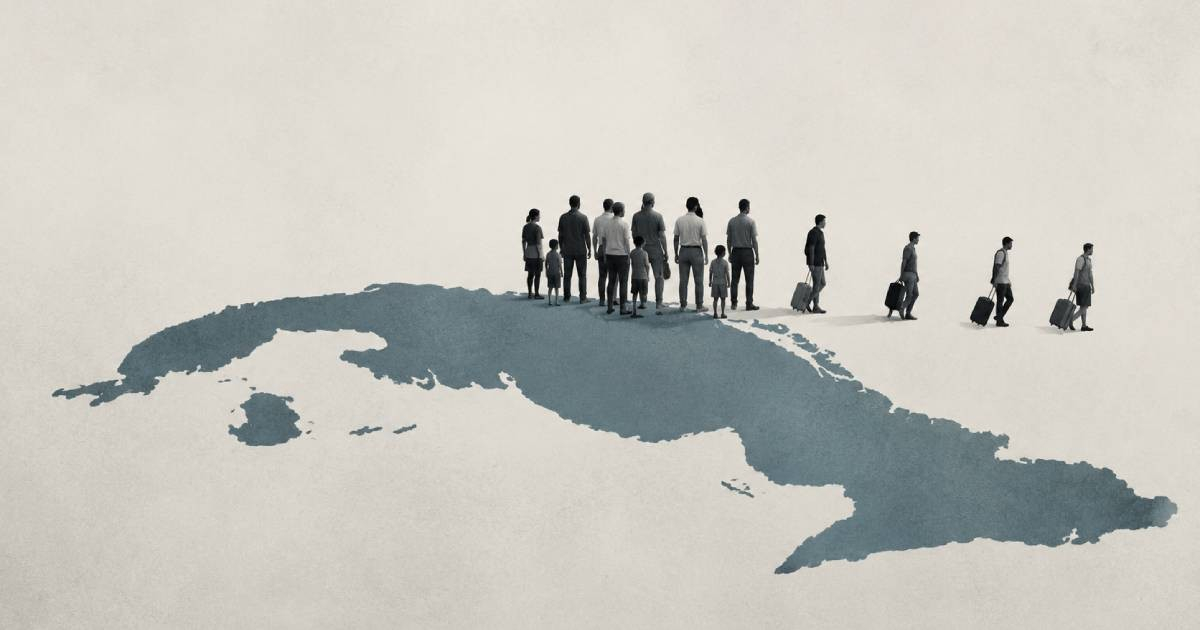
The United Nations Population Fund (UNFPA) has issued a serious warning about the demographic future of Cuba: if current trends continue, the island could end the century with only 5.6 million inhabitants, nearly half of the population it had just five years ago.
The projection was reiterated during a meeting held on June 29 in Havana between representatives of the international organization and officials of the Cuban regime, according to the state-run magazine Bohemia. Far from showing signs of recovery, the official figures presented at the meeting confirm that the demographic crisis continues to accelerate.
The deputy head of the National Office of Statistics and Information (ONEI), Juan Carlos Alfonso Fraga, acknowledged that Cuba's population decreased from 11 million at the end of 2020 to only 9.4 million by the end of 2025, a reduction of more than 1.6 million people in just five years.
"There is no similar experience," admitted the official, noting that no country in the so-called Global South has experienced a population contraction of that magnitude outside of a war context.
The data on births illustrate the decline. In 2025, only 68,051 children were born in Cuba, the lowest figure since records began and even lower than the number reported in 1899, when the country was emerging from the War of Independence. The fertility rate dropped to 1.29 children per woman, well below the level needed to ensure generational replacement.
At the same time, the population is aging rapidly. More than a quarter of Cubans are already 60 years old or older, while deaths nearly double the number of births.
But the decline in the population is not solely due to aging. The massive exodus continues to be one of the main factors contributing to the demographic collapse.
Official figures indicate that 251,221 people emigrated in 2024. However, the Cuban demographer Juan Carlos Albizu-Campos argues that the actual number exceeded 545,000 and estimates that the effective population of the country is already around eight million inhabitants, well below the official estimate.
The new warning from UNFPA comes just a few days after Miguel Díaz-Canel downplayed the exodus, stating that emigration is "a global problem" and attributing the departure of Cuban professionals to the appeal of capitalist economies, without mentioning the economic crisis, low wages, power outages, or the lack of opportunities that thousands of Cubans cite as reasons for leaving the country.
The Cuban government approved a Policy for Addressing Demographic Dynamics in 2014 with the aim of curbing aging and boosting birth rates. More than a decade later, official figures themselves show that none of those goals have been achieved.
This is compounded by the lack of updated statistical information. Cuba has not conducted a national census since 2012. The one scheduled for 2022 was postponed several times due to a lack of resources, and although the new census operation began this year, the results will not be available until 2027, leaving the country with over a decade without complete demographic data.
Filed under: