
Related videos:
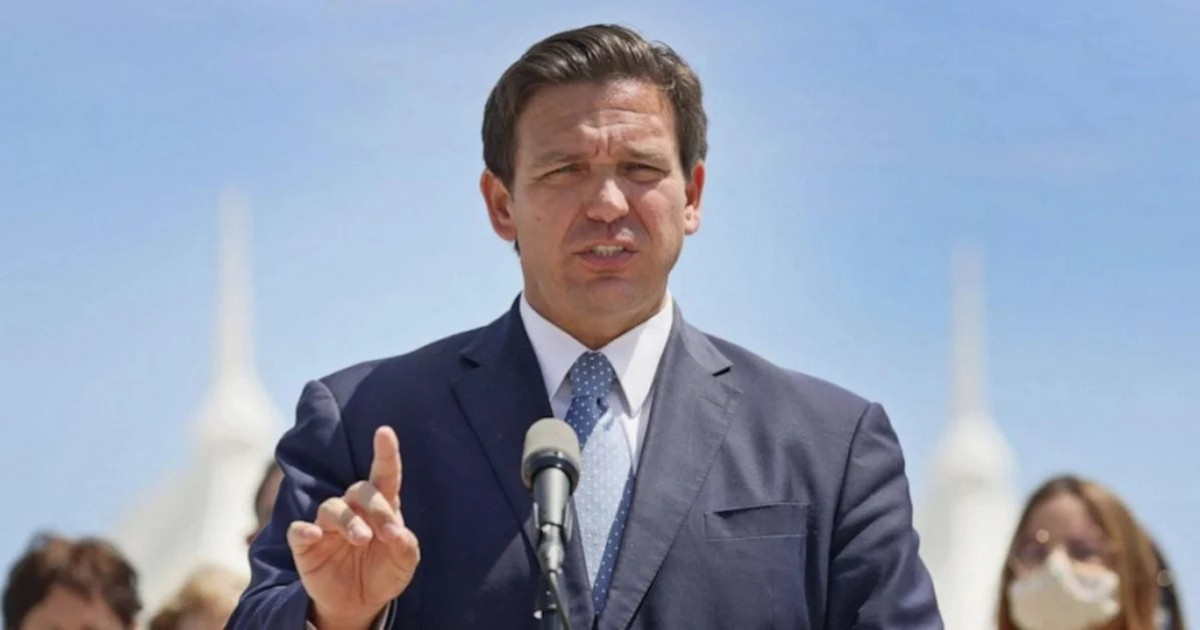
The Governor of Florida, Ron DeSantis, activated the first designations of terrorist organizations under the new state law HB 1471 on July 1, which took effect the same day, announcing his intention to label the Council on American-Islamic Relations (CAIR), the Muslim Brotherhood, Antifa, and more than 90 foreign organizations with that designation.
The announcement was made at the Tampa State Processing Office of the Attorney General and represents the first formal use of legislation that DeSantis signed on April 6 as a response to a court injunction that halted a previous executive order.
"Last December, I signed an Executive Order to eliminate the influence of radical terrorist ideologies and the organizations that promote them in Florida. This year, I signed legislation to strengthen those protections and provide Florida with permanent statutory tools to combat terrorism while defending the constitutional rights of our citizens," DeSantis stated on X.
"Today, we are officially designating terrorist organizations under Florida law. In addition to CAIR and the Muslim Brotherhood, we are adding Antifa to the list, along with over 90 Foreign Terrorist Organizations, including cartels," he added.
According to NBC Miami, the designations are not immediate: they still need to be ratified by the three members of the Florida Cabinet, Attorney General James Uthmeier, Chief Financial Officer Blaise Ingoglia, and Agriculture Commissioner Wilton Simpson. All three are Republicans and will be competing in the elections in November.
Among the foreign organizations included in the list are the Venezuelan Aragua Train, the Sinaloa Cartel, the Gulf Cartel, and the Islamic Revolutionary Guard Corps of Iran, all of which have already been recognized as terrorist organizations by the federal government.
"We need to draw a very firm line here. We have seen how this has spread across the country for many, many years," DeSantis declared during the event.
The governor justified the inclusion of Antifa—a decentralized political movement without a formal structure or membership—pointing out that the designation is based on behaviors, not ideology: “Although I don’t like Antifa’s ideas, they are militant leftists. It is their actions and what they are involved in that is very destructive.”
The HB 1471 law was approved by the Republican-controlled legislature with votes of 80-25 in the House and 25-11 in the Senate, and emerges as a legislative response to the block imposed by Federal Judge Mark Walker in March on an executive order that DeSantis had signed in December 2025 against CAIR and the Muslim Brotherhood.
That executive order was halted because the judge ruled that DeSantis was usurping the federal government's exclusive authority regarding terrorist designations and violating the constitutional rights of CAIR.
The new law goes beyond designations: it prohibits state courts from applying religious or foreign laws—with an explicit emphasis on Islamic sharia—demands the expulsion of university students who "promote" designated organizations, and cancels scholarships and state benefits for those expelled.
CAIR announced that it will take the designation to court, calling it a "dangerous political action aimed at stigmatizing American Muslims."
Scott McCoy, legal deputy director of the Southern Poverty Law Center (SPLC), which represents CAIR, was unequivocal in his rejection: "Governor DeSantis seeks to unilaterally silence a prominent nonprofit civil rights organization and punish those who support it."
Democrats in the Legislature had warned during the debate that the law could lead to unintended accusations against university students, and that a parallel measure - HB 1473 - restricts access to the documents explaining how a terrorist designation is determined, depriving those affected of due process.
A substantive hearing on CAIR's original lawsuit against DeSantis' executive order is scheduled for January 2027 before Judge Walker.
Filed under: