
Related videos:
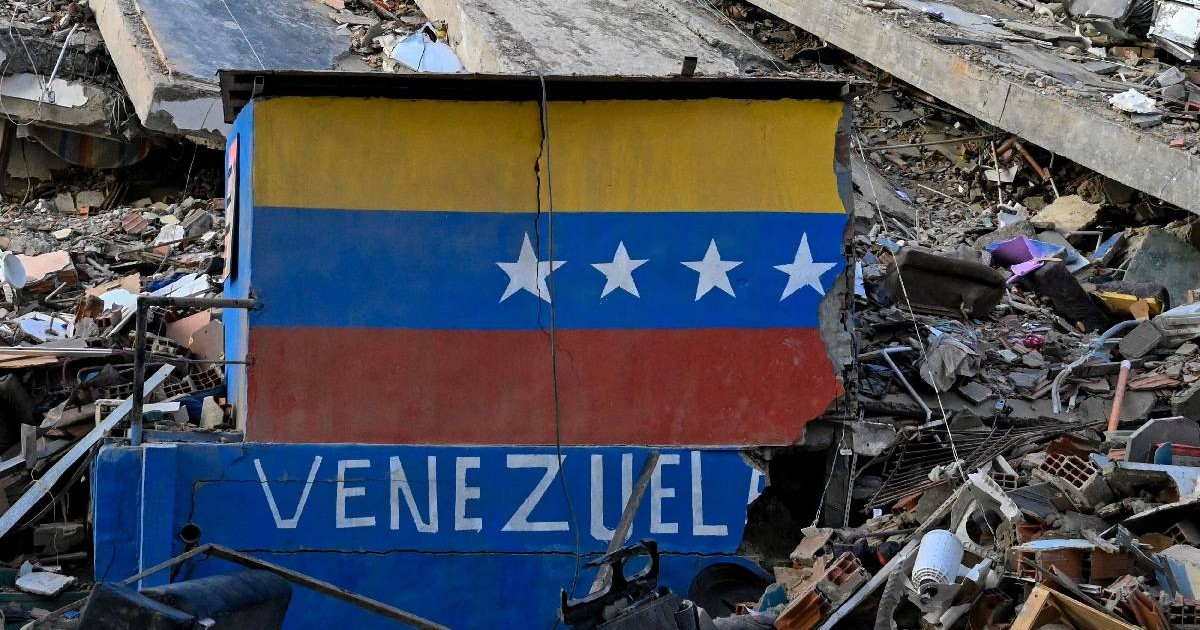
Almost a week after the devastating earthquakes of June 24 in Venezuela, the official victim counts are generating growing distrust among international organizations, human rights groups, and analysts, while the government of acting president Delcy Rodríguez refuses to publish any estimates of the missing.
The latest official report, from Wednesday, recorded 2,295 deaths and over 11,000 injuries in the affected states, a figure significantly lower than the estimate of 10,000 fatalities that the United States Geological Survey projected just hours after the earthquake.
The greatest concern is not the dead, but the missing. The International Rescue Committee estimated on Tuesday that this number could reach 50,000 people, a figure that was validated by the United Nations Office for the Coordination of Humanitarian Affairs (OCHA).
Tom Fletcher, the UN Under-Secretary-General for Humanitarian Affairs, described it as "frighteningly plausible," although he clarified that not all individuals with unknown whereabouts are under the rubble.
The citizen platform Encuéntralos reported on Wednesday over 71,000 people unaccounted for, a figure that stands in stark contrast to the official silence.
The UN resident and humanitarian coordinator in Venezuela, Gianluca Rampolla, was emphatic: "There are at least 2,500 affected buildings, most of which have completely collapsed. Therefore, we are undoubtedly facing a number higher than what has already been reported."
The UN also acquired 10,000 body bags in agreement with the Venezuelan authorities.
The numbers from the official spokesperson of the tragedy, Jorge Rodríguez, president of the National Assembly and brother of Delcy, also leave an inexplicable void.
It was revealed that around 30,000 people were in Caraballeda and Catia La Mar at the time of the earthquake; of these, between 13,400 and 13,500 managed to get out on their own, and another 6,461 were rescued. This leaves a difference of nearly 10,000 people for which the official provided no explanation.
The human rights organization Provea was one of the first to raise its voice. On Sunday, June 28, it reported that "the official figures from the earthquake raise more doubts than certainties" and demanded "zero opacity in the response to this national tragedy," questioning how the official count increased by only 20 deaths in a single day.
Days later, the same NGO warned that “discrepancies between official figures and estimates are increasing”.
The sociologist Rafael Uzcátegui, director of the Peace Laboratory, attributes the lack of transparency mainly to political control.
"There is a crisis of confidence within the Armed Forces since January 3, when the U.S. captured Nicolás Maduro in Caracas. The Government is aware that this could delegitimize Delcy Rodríguez due to the impact of the tragedy, raising questions about the State's capability and the management of resources," she said in a conversation with CNN.
Uzcátegui also pointed out the absence of technical criteria in crisis management: "There is no mechanism for information. The situation exceeds not only in magnitude but also in dogmatism and sectarianism: it would be different if the Government had called on people with technical expertise to lead, but it is run by loyalists."
Other incidents further erode trust. Agents from the Scientific, Criminal and Forensic Investigations Corps (CICPC) were filmed taking belongings from the debris in La Guaira, and the agency reported that they were expelled and arrested.
Additionally, the Ministry of Communication temporarily suspended access for correspondents to La Guaira, according to a report by the National Union of Press Workers, citing "health reasons and to reduce noise."
Among the missing are at least 21 Cubans concentrated in Caraballeda, Catia La Mar, and Los Corales, while eight compatriots have been confirmed as deceased.
Uzcátegui warned that the legitimacy crisis of the regime "will hinder" the country's reconstruction phase, just as the constitutional deadline of 180 days for an interim government is about to expire.
Filed under: