
Related videos:
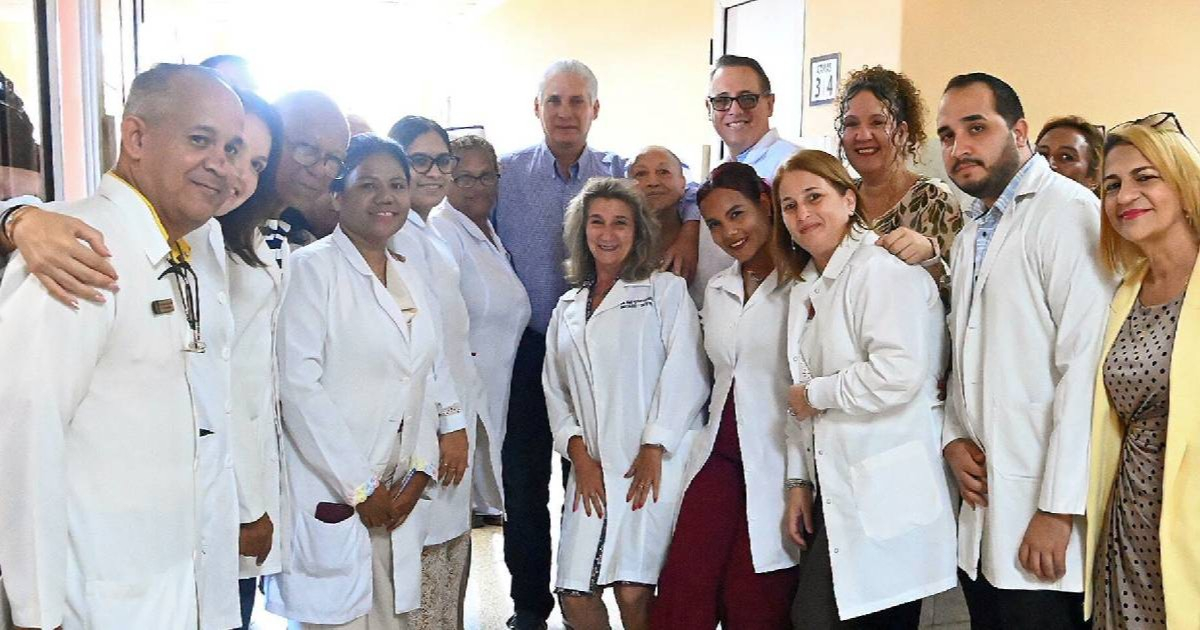
Miguel Díaz-Canel visited the "Ramón González Coro" University Gyneco-Obstetric Hospital in Havana on Friday and posted a message on his social media that sparked an outcry among Cubans, who described the visit as a propaganda act disconnected from the country’s health reality.
In his account on X, the leader wrote: “I visited the 'Ramón González Coro' hospital, where heroism becomes a part of everyday life. In the midst of the severe shortages imposed by the hostile policies of the United States government, they continue to pave the way for life. It was an uplifting meeting.”
The publication, which has garnered only 123 likes and 12 comments, was met with widespread criticism. Cubans pointed out that González Coro is one of the best-equipped centers in the island's healthcare system, and that choosing it as the venue for an official visit presents a distorted image of what most hospitals in the country are experiencing.
While Díaz-Canel posed with medical staff, other healthcare centers in Cuba reported collapsing ceilings, sewage water under the beds, blackouts of up to 20 hours, and a lack of basic medications.
During the visit, the president himself acknowledged figures that demonstrate the severity of the crisis: more than 67,000 newborns without special medications, 34,000 pregnant women without full care, and over 100,000 cancer patients —including 1,200 children— with limited treatments. The national surgical waiting list exceeds 96,500 patients, among them 12,000 minors.
She coined the term "creative resistance" to describe the efforts of doctors who walk to work, often in the early morning due to a lack of transportation, and who work without constant electricity or sufficient supplies. "No blackout can extinguish hope, and no shortage can break the will," she asserted.
To conclude the visit, he referred to Fidel Castro: "These are difficult times, but Fidel always told us that in crises we must find the opportunity to grow, develop, and perfect ourselves, and sooner or later we will overcome this situation."
The popular reaction was swift. Cubans on social media remembered that this is the eighth visit of Díaz-Canel to health centers in 2026, all to reference hospitals or those undergoing rehabilitation, and that each visit follows the same pattern: triumphant official images contrasting with reports of collapse in the remainder of the system.
The context surrounding the visit is devastating. The infant mortality rate closed 2025 at 9.9 per 1,000 live births, the highest in over twenty years, compared to 4.0 in 2018, an accumulated deterioration of 148% over seven years. In Havana, that figure reached 14 per 1,000 in the first two months of 2026.
The maternal and child health crisis under scrutiny is also reflected in maternal mortality, which reached 44.1 per 100,000 in 2025, nearly double that of 2023. The Minister of Public Health, José Ángel Portal Miranda, acknowledged in February 2026 that the system is "on the brink of collapse" and that the basic medicine supply covers only 30% of national demand, with 461 out of 651 essential drugs missing from state pharmacies.
Díaz-Canel attributed all the shortcomings to the U.S. embargo and Washington's "maximum pressure" policy, an official narrative that the regime reiterates in the face of each piece of evidence of deterioration, while economists and the population themselves point to decades of internal management as the main cause of the collapse.
Filed under: