
Related videos:
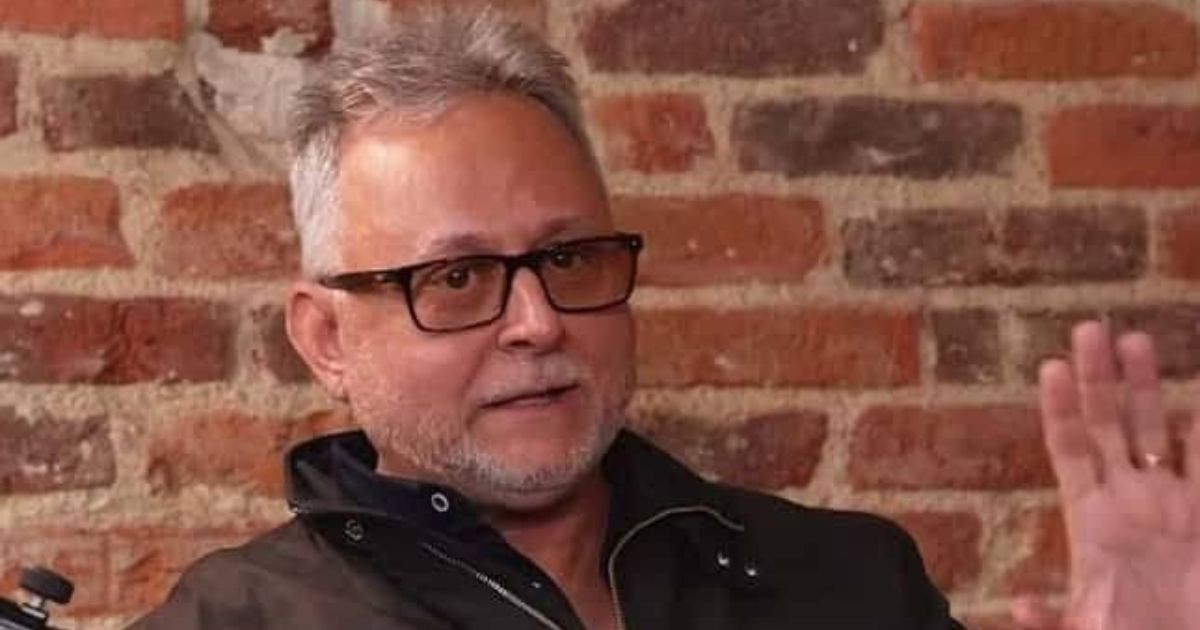
The Cuban political scientist and lawyer Roberto Veiga González reported this Saturday that on Friday evening, he was intercepted by two immigration officers upon returning home, which he described as a pressure tactic to force him to leave the island. Veiga himself communicated this on his Facebook profile, titling his post with a straightforward phrase: "Pressure to leave Cuba."
The incident occurred just after Veiga participated via videoconference in an event organized by Casa de América in Paris, alongside the Association France for Democracy in Cuba. As he approached his home, he was taken to what the agents referred to as an "interview."
"Throughout the meeting, they persistently asked when I would buy my ticket back to Europe and advised me, in an imperative manner, to leave the Island quickly," wrote the political scientist, who categorically rejected that pressure.
His response was emphatic: "There will be no return ticket to Europe. I reaffirm that I have returned to Cuba to settle permanently in my country."
This episode is not the first he has faced since his return. Veiga returned to Cuba on May 30, 2026, after more than six years in exile in Spain, without requesting permission from the regime or assuming any commitments, as he has recounted. Upon landing at José Martí airport, he was detained for three hours by State Security agents, whose sole interest was to find out who was financing him and who was giving him instructions. His response at that time was equally direct: "Nobody pays me, nobody commands me." During the following two weeks, he lived under obvious surveillance and without contact with anyone, he recently recounted to 14ymedio.
The pattern described by Veiga reflects a common practice of the regime: instead of openly arresting internationally prominent figures, the authorities resort to "interviews" with immigration officials or State Security to intimidate them and persuade them to leave the country without drawing much attention.
Founder and director of Cuba Próxima, an organization created in 2021 following the protests of July 11, Veiga has transformed this platform into a center for direct political action with its own constitutional proposal and a roadmap for democratic transition. On Thursday, a day before being intercepted, the aforementioned interview was published with 14ymedio in which he warned that Cuba could face a "North Korean Haitianization" if profound changes do not occur in the political-institutional system.
Regarding the 176 economic measures approved by the National Assembly on June 19, Veiga expressed skepticism: "To implement the reforms, they are compelled to simultaneously institute institutional and political reforms, otherwise, it won't work. And I would add, they would need to change 99% of the people currently in the Government."
His conviction to remain on the island, despite the pressure, is rooted in a logic he has explained several times: "We need to work here, because this is where things are going to happen." "We are determined to pay whatever price and bear whatever political cost to help get this country out of the situation it is in," he stated.
The complaint arises in the context of the most severe crisis Cuba has faced in decades: a projected GDP decline of between 6.5% and 15%, an estimated inflation rate of around 70% year-on-year, and power outages exceeding 24 hours in several provinces, exacerbated by the interruption of Venezuelan oil supply. Numerous supporters expressed their solidarity with Veiga on social media and referred to the actions of the officials as yet another example of the systematic repression against those returning to Cuba to work for political change from within. "Time is running out, but I believe that before this year ends, the process that makes it possible to save Cuba must begin, one way or another," the political scientist warned.
Filed under: